
Arthur Koestler
The subject of the only essay in the book that had not been printed anywhere before. Orwell reads the five books Koestler had then published in England and asks why England produced no literature of disillusionment about the Soviet Union of its own.
In Orwell's account Koestler wants the Earthly Paradise, the Sun State his gladiators set out to build, and his intelligence tells him it is receding. That contradiction is what Orwell thinks has left him without a political position and calling himself a short-term pessimist.
The book

At a glance
- The subject of "Arthur Koestler", the eighth essay
- 1944
- Written for Focus; effectively new when the collection was published
- 130–141
- Spanish Testament, The Gladiators, Darkness at Noon, Scum of the Earth, Arrival and Departure
- Whether the corruption of one revolution proves that revolutions are corrupting by nature
Who they are in the book
Spoiler-freeGeorge Orwell begins "Arthur Koestler" with a national grievance. English writers had poured out political literature for a dozen years and produced almost nothing of aesthetic value and very little of historical value either; the good books about totalitarianism are all translations. The reason he gives is a difference of experience rather than of talent. In Europe, things had been happening to middle-class people that in England do not happen even to the working class. The writers he lists, Silone and Malraux and Borkenau and Victor Serge and Koestler himself, had broken laws to do politics at all, been imprisoned, crossed frontiers on forged papers. England, he writes, has no concentration-camp literature, and for an Englishman to have written Darkness at Noon would have been as unlikely an accident as a slave-trader writing Uncle Tom's Cabin.
Koestler is a Hungarian who wrote his earlier books in German, and Orwell takes the five published in England in order. Spanish Testament came out of his capture at Malaga in early 1937, when he was the News Chronicle's correspondent, nearly shot out of hand, then held for months in a fortress listening every night to the rifle fire as batches of Republicans were executed. Orwell calls the prison passages remarkable and the rest of the book definitely false in places, coloured by the Popular Front orthodoxy of the moment and possibly doctored for the Left Book Club. The sin of nearly all left-wingers from 1933, he writes, is that they wanted to be anti-Fascist without being anti-totalitarian, and in 1937 Koestler knew that and did not feel free to say it.
The Gladiators put it in a costume. Spartacus builds the City of the Sun, where nobody is to be a slave or hungry or flogged, and the turning point comes when he has to crucify twenty of his oldest followers. Orwell thinks the allegory falters, since the republic is wrecked by hedonism and looting rather than by the impossibility of combining power with righteousness, and that Spartacus is a modern man dressed up. Darkness at Noon he calls the masterpiece. Rubashov confesses to crimes he knows he did not commit, and Koestler chooses the third of the three available explanations: not guilt, not torture, but despair, mental bankruptcy and the habit of loyalty to the Party.
The argument Orwell has with him begins there. To answer why the accused confessed is to make a political decision, and Koestler's answer comes near to saying that revolutions are corrupting by their nature, that Rubashov in power would have been no better than his interrogator, that Lenin leads to Stalin. Scum of the Earth, the account of being interned in France by the Daladier government and imprisoned again on reaching England, moves further in that direction; Arrival and Departure, which Orwell thinks a tract pretending to be a novel, argues that revolutionary creeds are rationalisations of neurotic impulses.
Orwell's objection is that motives do not settle results. Marx's ultimate motives may well have been envy and spite, which proves nothing about his conclusions; history has to move in a certain direction even if neurotics push it there. He diagnoses Koestler as a hedonist who cannot give up the Earthly Paradise and cannot believe in it either, and who has settled on calling himself a short-term pessimist. Against that he sets one sentence: all revolutions are failures, but they are not all the same failure.
How Arthur Koestler Is Portrayed
- Why the essay existsOrwell's premise is that England produced no concentration-camp literature and almost no literature of disillusionment about the Soviet Union, only ignorant disapproval and uncritical admiration, with very little in between. Koestler is the writer who supplies what is missing, and is not English.
- The five booksSpanish Testament, The Gladiators, Darkness at Noon, Scum of the Earth and Arrival and Departure. Orwell notes that none escapes the atmosphere of nightmare for more than a few pages, and that three of the five take place entirely or almost entirely in prison.
- MalagaCaptured in early 1937 as the News Chronicle's correspondent when the Fascists took the city, nearly shot on the spot, then months in a fortress in acute danger of execution. Orwell's comment is that this was not a chance adventure but in accordance with Koestler's life-style.
- Where Spanish Testament failsDefinitely false in places, in Orwell's judgement, and coloured by Popular Front orthodoxy. One or two passages look as though they had been doctored for the Left Book Club. Koestler was still, or had recently been, a Communist Party member, which made honesty about the Government side impossible.
- The City of the SunIn The Gladiators the slaves win for years, build a city where nobody is to be flogged or hungry, and then have to revive the cross to punish offenders. Orwell dates the doom of the republic from the moment Spartacus crucifies twenty of his own oldest followers.
- Why Rubashov confessesOrwell lays out the three possible answers, which are guilt, torture, or despair and the habit of Party loyalty, and notes that Koestler picks the third, as the Trotskyist Boris Souvarine had. He also notes what follows from it: that Rubashov in power would have been no better than Gletkin.
- Scum of the EarthStraight autobiography: interned in France as an enemy alien by the Daladier government, escape during the collapse, then prison again in England. Orwell calls it a reminder of the depths bourgeois democracy can descend to, and notes it did not have a good reception.
- Where Orwell parts from himArrival and Departure argues that revolutionary conviction is a rationalisation of neurosis. Orwell answers that actions have results irrespective of motives, that Marx's motives prove nothing about his conclusions, and that making the hero act on instinct alone is a sudden loss of intelligence.
- The short-term pessimistKoestler's own phrase, which Orwell takes as the sign of a hedonist unable either to keep the Earthly Paradise or to give it up. His counter-proposal is that some suffering may be ineradicable and the aim of Socialism is not perfection but improvement.
- Unpublished when it appearedWritten for the magazine Focus. Orwell's prefatory note says it will probably not have appeared there before the book is published, which makes it the one essay in the collection new to every reader.
If you like Critical Essays


If you like George Orwell
Explore authors with a similar voice, perspective, and influence.
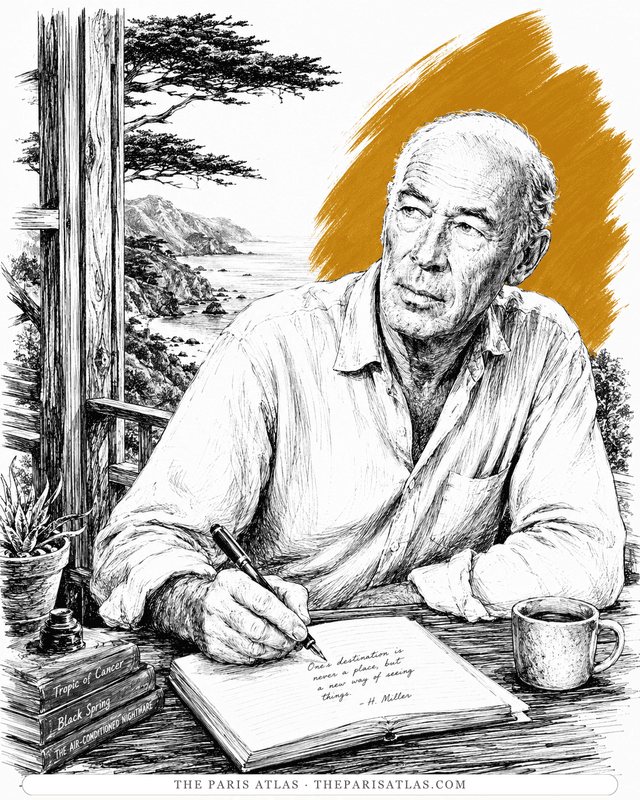
Henry Miller
The Brooklyn dropout who arrived in Paris broke at thirty-eight and wrote the exuberant, banned books that ended American censorship.
View author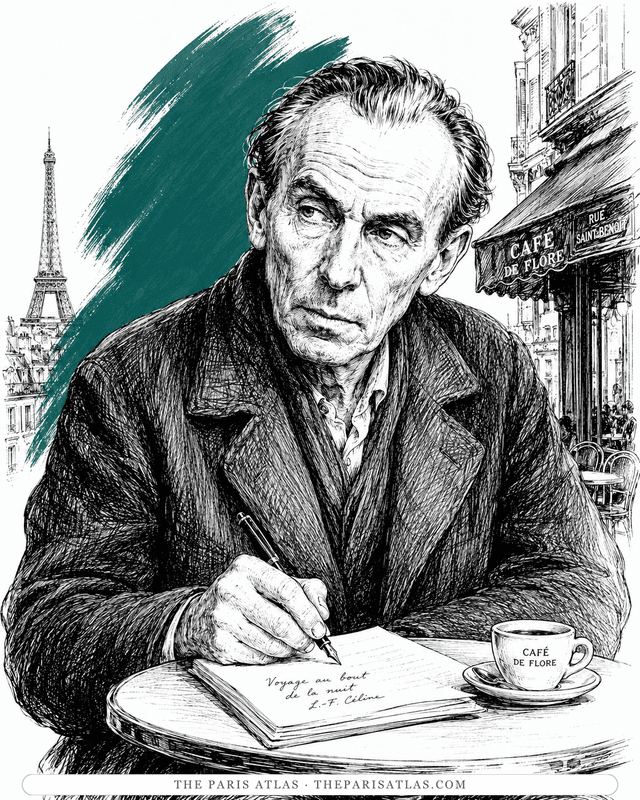
Louis-Ferdinand Céline
The doctor of the Paris slums who wrote the century's blackest, funniest novel — and changed the sound of French prose.
View author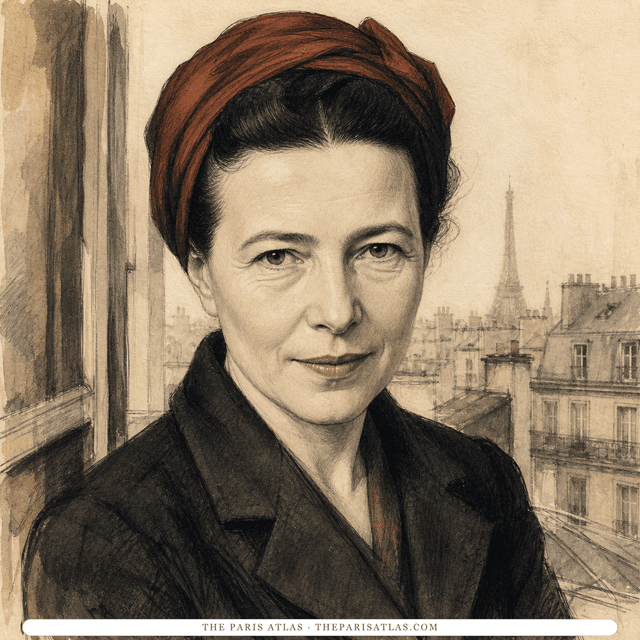
Simone de Beauvoir
French writer and philosopher whose novels, memoirs, and social analysis examined freedom, gender, responsibility, aging, and the material conditions that shape a life.
View author