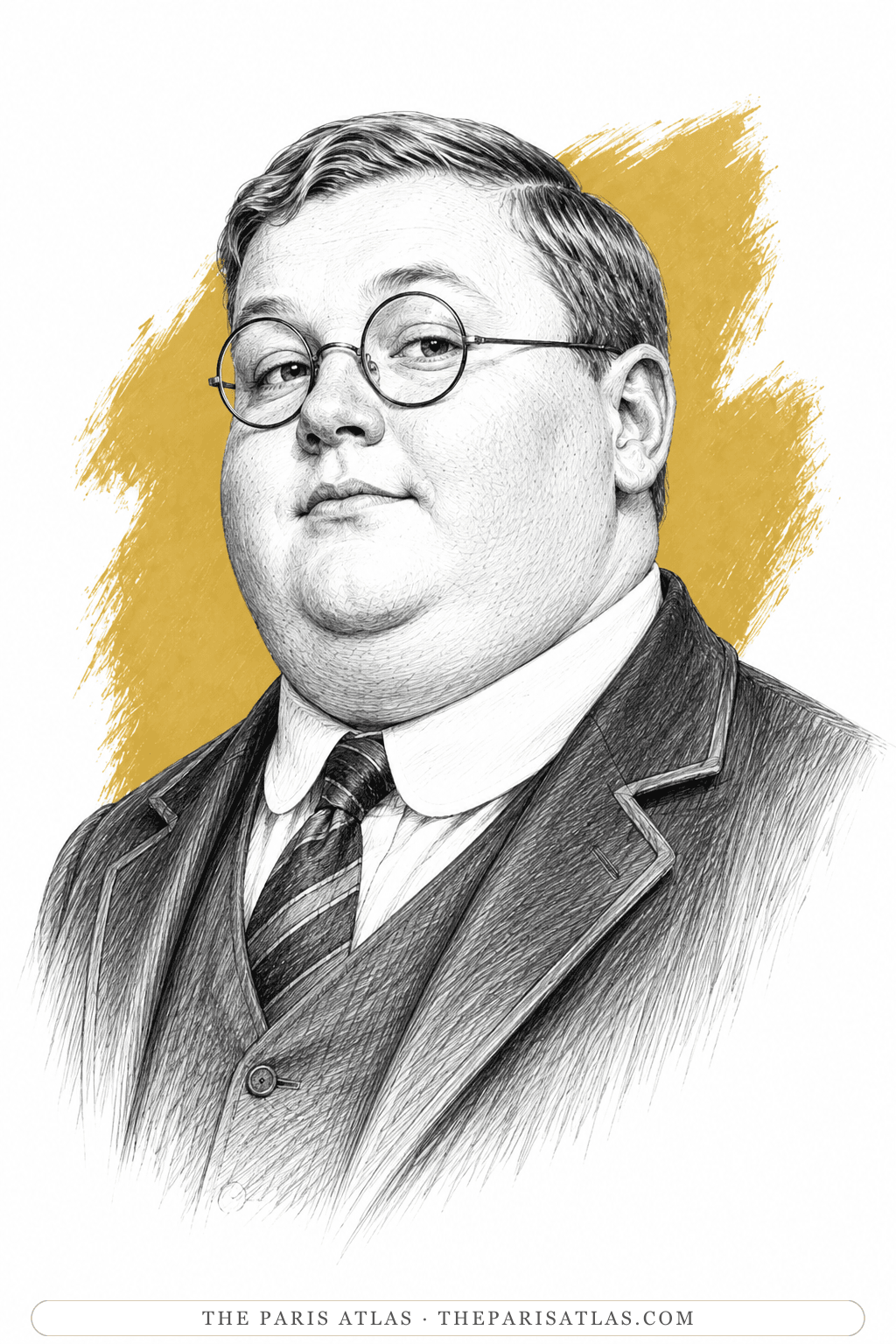
Billy Bunter
A fictional schoolboy, the fat Owl of Greyfriars, invented for the Magnet. Orwell calls him a real creation and one of the best-known figures in English fiction, famous for his tight trousers, his astuteness in the search for food and a postal order that never turns up. Orwell adds that he is the one character in the paper that no reader wants to be.
Food, and the postal order that never arrives. Both are running jokes in the paper rather than plot, and Orwell lists them among the things that made the character famous.
The book

At a glance
- Discussed in "Boys' Weeklies", the second essay, dated 1939
- A character in the Magnet's Greyfriars stories, not a real boy
- William George Bunter
- The fat Owl of the Remove
- The Remove, aged fourteen or fifteen, and never any older
Who they are in the book
Spoiler-freeBilly Bunter is an invented schoolboy in the Greyfriars stories carried every week by the Magnet, one of the ten twopenny boys' papers George Orwell surveys in "Boys' Weeklies". William George Bunter in full, he is known in the paper as the fat Owl of the Remove, and Orwell says the Magnet has always been the better known of the two sister papers, probably because it possesses a really first-rate character in the fat boy.
Orwell's interest in him is technical. The Gem and the Magnet work, he argues, because their casts are graded so carefully that almost every reader can find someone to identify with: the athletic boy, the studious boy, the scholarship boy, the aristocrat, the dare-devil. Bunter is the exception that proves it. He is famous and nobody wants to be him.
How Billy Bunter Is Portrayed
- The groaningOrwell quotes the passage in full. Shutting up was not really in Bunter's line; he groaned, and groaned, and went on groaning. It runs to a hundred and twenty-five words, Orwell notes, and could be compressed into about thirty.
- What he is known byThe tight trousers against which boots and canes are constantly thudding, the astuteness in the search for food, and the postal order that never turns up. Famous, Orwell writes, wherever the Union Jack waves.
- Where he comes fromHe probably owes something to the fat boy in Pickwick, but Orwell calls him a real creation all the same, and ranks him for sheer recognisability with Sexton Blake, Tarzan and Sherlock Holmes.
- Nobody dreams of being himStudying the correspondence columns, Orwell finds a reader who identifies with almost every character in either paper except the out-and-out comics: Coker, Fisher T. Fish, the masters, and Bunter. He is not a subject for day-dreams.
If you like Critical Essays


If you like George Orwell
Explore authors with a similar voice, perspective, and influence.
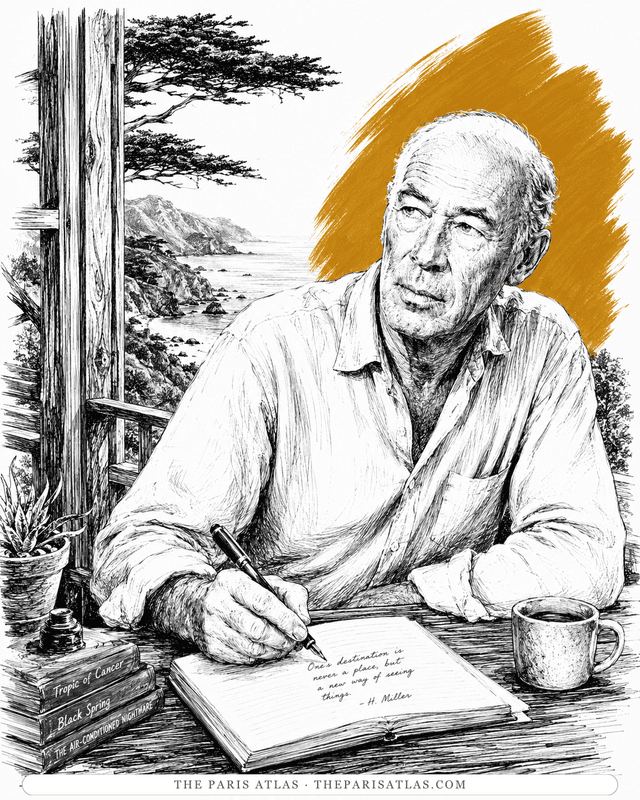
Henry Miller
The Brooklyn dropout who arrived in Paris broke at thirty-eight and wrote the exuberant, banned books that ended American censorship.
View author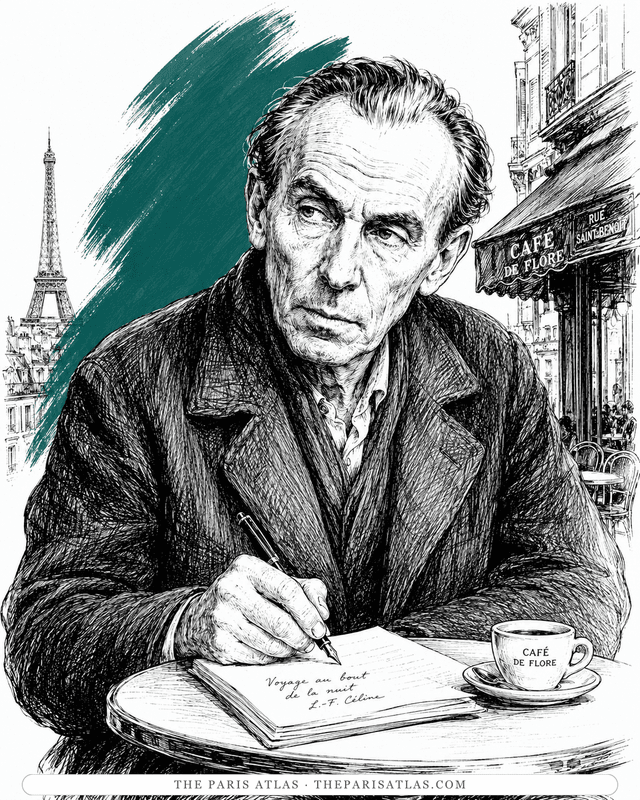
Louis-Ferdinand Céline
The doctor of the Paris slums who wrote the century's blackest, funniest novel — and changed the sound of French prose.
View author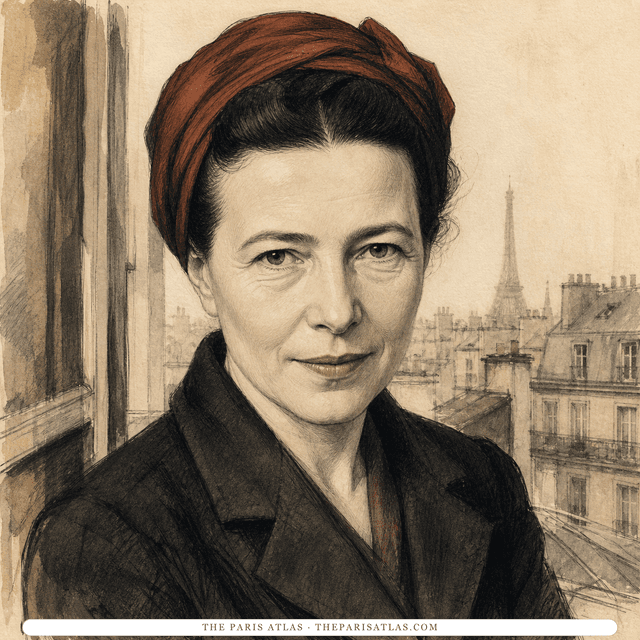
Simone de Beauvoir
French writer and philosopher whose novels, memoirs, and social analysis examined freedom, gender, responsibility, aging, and the material conditions that shape a life.
View author