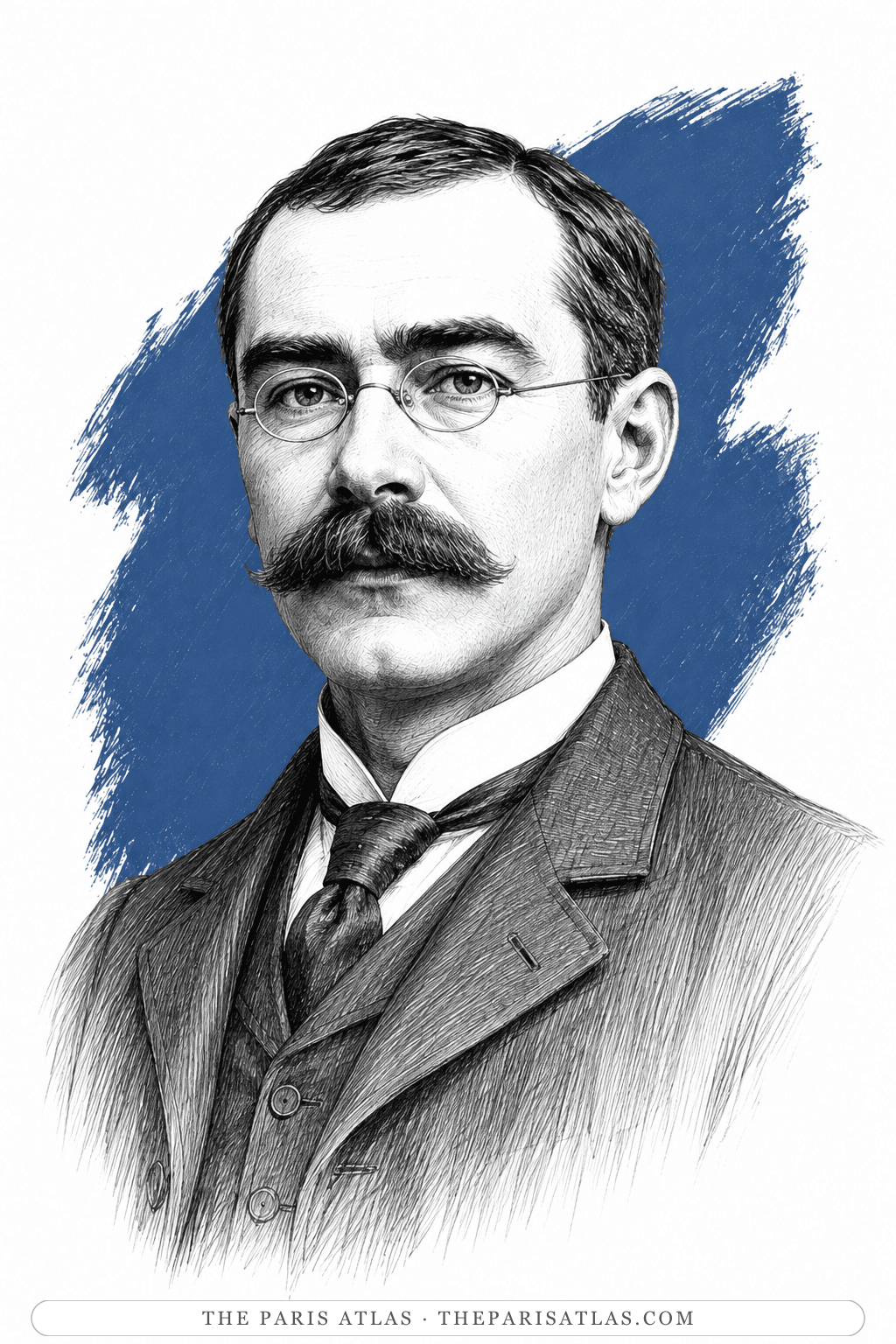
Rudyard Kipling
The subject of an essay written as a review of T. S. Eliot's selection of his verse. Orwell concedes the case against Kipling in his first paragraph, calling him a jingo imperialist who is morally insensitive and aesthetically disgusting, and spends the rest of it explaining why he outlives the people who sneer at him.
In Orwell's account Kipling wanted to belong to the people who did things. Some streak in him, Orwell suggests, led him to prefer the active man to the sensitive one, and he sold out to the British governing class emotionally rather than financially, imagining a ruling class that was not what he took it to be.
The book

At a glance
- The subject of "Rudyard Kipling", the fifth essay
- 1942
- A Choice of Kipling's Verse, made by T. S. Eliot (Faber & Faber)
- Horizon
- 100–113
- That Kipling was a Fascist, which Orwell calls shallow and familiar, and denies
- The good bad poem
Who they are in the book
Spoiler-freeGeorge Orwell wrote "Rudyard Kipling" as a review of A Choice of Kipling's Verse, made by T. S. Eliot for Faber & Faber, and thought Eliot had gone wrong by being on the defensive. Before anyone can discuss Kipling at all, Orwell says, a legend put about by two sets of people who have not read him has to be cleared away. So he clears away his own half first. It is no use pretending Kipling's view of life can be accepted or forgiven by any civilised person; there is a definite strain of sadism in him, over and above the brutality a writer of that type has to have. Having granted that, the question he wants to answer is why Kipling survives when the refined people who sniggered at him wear so badly.
The defence is narrow and specific. Kipling was not a Fascist, and Orwell thinks the charge blocks any understanding of him. He takes the line about "lesser breeds without the Law" from "Recessional", always good for a snigger, and shows that in context the lesser breeds are almost certainly the Germans and the poem is a denunciation of power politics, British as well as German. Kipling's outlook is pre-Fascist: he still believes that pride comes before a fall and that the gods punish hubris, and he does not foresee the tank, the bombing plane or the secret police. He belongs, Orwell says, very definitely to the years 1885 to 1902, and shows little sign of having learned anything from any event later than the Boer War.
What Kipling has that the enlightened do not, in this account, is a sense of responsibility. He identified himself with the ruling power rather than the opposition, which warped his political judgement and gave him a grip on reality, because the ruling power is always faced with the question of what it would actually do. Orwell is unsparing about the price. The soldier poems are spoiled by an air of patronage: the officer is idealised to an idiotic extent and the private has to be a comic, speaking a stylised Cockney with all the aitches removed. Orwell demonstrates by restoring them, and points out that "follow me home" is a better line than the one Kipling printed.
The essay's lasting contribution is a category. Rather than juggling with the words verse and poetry, as Eliot does, Orwell proposes that Kipling is a good bad poet: a writer of graceful monuments to the obvious, recording in memorable form some emotion very nearly every human being can share. He is as a poet, Orwell says, what Harriet Beecher Stowe was as a novelist. He then observes that Kipling is the only English writer of his time to have added phrases to the language, and lists half a dozen that people quote without knowing whose they are.
How Rudyard Kipling Is Portrayed
- The occasionA review of A Choice of Kipling's Verse, made by T. S. Eliot and published by Faber & Faber at eight shillings and sixpence. Orwell thinks Eliot too defensive to say plainly whether any of it is good.
- The concession, made firstOrwell states the case against Kipling in his opening paragraph rather than saving it: a jingo imperialist, morally insensitive, aesthetically disgusting, with a definite strain of sadism. Everything after that is written on top of the admission.
- Not a FascistThe first clue to understanding him, in Orwell's view. Kipling still believes the gods punish hubris and that pride comes before a fall; he cannot foresee the tank, the bombing plane, the radio or the secret police. The nineteenth-century imperialist and the modern gangster are different animals.
- "Lesser breeds without the Law"Orwell's example of a line quoted without its context. It is assumed to mean colonial subjects; he argues it almost certainly means the Germans, and that "Recessional", taken for an orgy of boasting, is a denunciation of power politics.
- The stage CockneyWhat Orwell says spoils the soldier poems: the private has to be a comic, and speaks with every aitch and final g removed. Orwell restores them in two refrains to show the poems improve, and notes that most people make the correction instinctively when they quote him aloud.
- The good bad poetOrwell's proposed category, offered instead of arguing about verse and poetry. A good bad poem is a graceful monument to the obvious, and Kipling is as a poet what Harriet Beecher Stowe was as a novelist. Orwell admits to being seduced by it and says pretending otherwise is snobbery.
- The phrasesEast is East and West is West; the white man's burden; the female of the species; somewhere east of Suez; paying the Dane-geld. Orwell notes how often the New Statesman reached for the Dane-geld line during Munich while despising the man who wrote it.
- The Freudian errorA footnote records that Middleton Murry had quoted Kipling's lines about the nine and sixty ways of constructing tribal lays and attributed them to Thackeray. Orwell's reading: a civilised person would prefer not to feel that Kipling had expressed his thought for him.
- The army on recordOrwell credits Kipling with the only literary picture we have of the pre-machine-gun army and of nineteenth-century Anglo-India. It is crude and vulgar, but the sole surviving account, and possible only because Kipling was coarse enough to sit in the messes and keep quiet.
If you like Critical Essays


If you like George Orwell
Explore authors with a similar voice, perspective, and influence.

Henry Miller
The Brooklyn dropout who arrived in Paris broke at thirty-eight and wrote the exuberant, banned books that ended American censorship.
View author
Louis-Ferdinand Céline
The doctor of the Paris slums who wrote the century's blackest, funniest novel — and changed the sound of French prose.
View author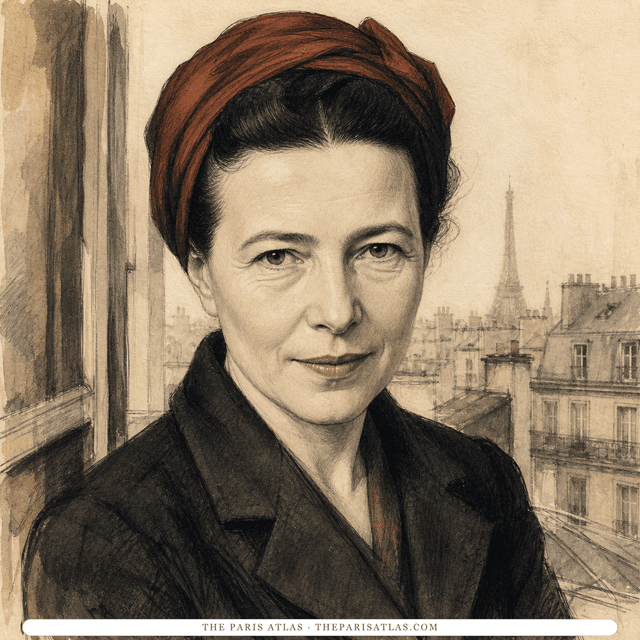
Simone de Beauvoir
French writer and philosopher whose novels, memoirs, and social analysis examined freedom, gender, responsibility, aging, and the material conditions that shape a life.
View author