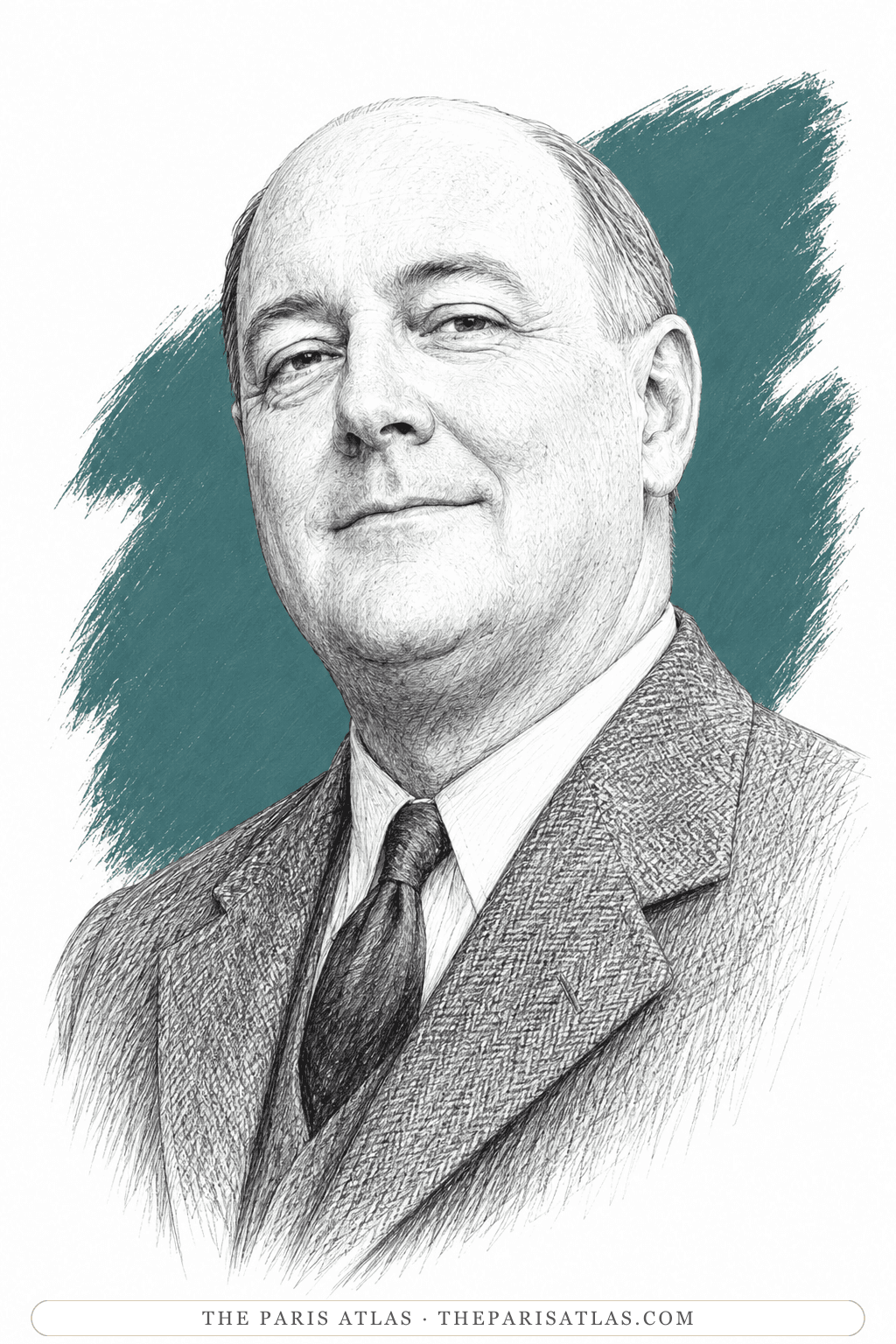
P. G. Wodehouse
The subject of the last essay, written in 1945 while there were still calls in Parliament to try him as a traitor for five broadcasts he made from Berlin in 1941. Orwell reconstructs what was actually said and argues the offence was stupidity.
In Orwell's account the broadcasts were not a bargain but a comedian's reflex: Wodehouse wanted to keep in touch with his public and, in the comedian's ruling passion, to get a laugh. Flannery had warned him it would be unwise, but not very forcibly.
The book

At a glance
- The subject of "In Defence of P. G. Wodehouse", the last of the ten essays
- 1945
- The Windmill
- 156 to the end
- Five, between 26 June and 2 July 1941, from Berlin
- The texts of the broadcasts, press cuttings, and Assignment to Berlin by Harry W. Flannery
- That the incident be regarded as closed
Who they are in the book
Spoiler-freeP. G. Wodehouse was captured at his villa at Le Touquet when the Germans came through Belgium in the summer of 1940, and seems not to have realised until the last moment that he was in any danger. George Orwell's essay begins with the record, laid out with dates. Wodehouse was released from internment on 25 June 1941 and installed at the Adlon Hotel in Berlin. He made five broadcasts between 26 June and 2 July, the first of them not on the German radio at all but as an interview with Harry Flannery of the Columbia Broadcasting System, and the Germans then took him off the air.
Orwell quotes the offending passages in full, which turns out to be most of his case. They are about internment, not politics: that he had never been interested in politics and could not work up a belligerent feeling, that internment kept you out of the saloon and helped you keep up with your reading, that in return for a loaf of bread and the guards looking the other way he was prepared to hand over India, an autographed set of his books and the secret process of cooking sliced potatoes on a radiator. The phrase that caused most of the trouble was "whether Britain wins the war or not".
The reaction is set out with the same care: questions in Parliament, angry editorials, a violent BBC postscript on 15 July by "Cassandra" of the Daily Mirror accusing Wodehouse of selling his country, lending libraries withdrawing the books, a council in Northern Ireland banning them from its public library within twenty-four hours, the BBC banning his lyrics for years afterwards, and demands as late as December 1944 that he be tried as a traitor. Flannery's own book supplies the mechanism from the German side: Goebbels's assistant Plack found an author completely without political sense and proposed the broadcasts. Wodehouse, Flannery wrote, was his own Bertie Wooster.
The rest of the essay is a reading of the fifty-odd books, and it does two things at once. It shows that there are no post-1918 tendencies in them at all: the word Fascism never appears, the political consciousness is nil, and the scenes and characters people think of as belonging to the twenties and thirties had almost all arrived before 1925. And it corrects the foreign misreading that made the propaganda idea look plausible. Wodehouse does not make fun of the English in any hostile sense; his snobbishness is mild and admiring, and his real sin, Orwell says, has been to present the English upper classes as much nicer people than they are.
The conclusion is not an aesthetic one. Orwell writes that it was excusable to be angry in 1941 and is not excusable to go on denouncing him four years later, and that few things in the war have been more morally disgusting than the hunt after traitors, which is largely the punishment of the guilty by the guilty. He suggests the incident be regarded as closed, and adds that there are culprits nearer home better worth chasing.
How P. G. Wodehouse Is Portrayed
- What happened, with datesCaptured at Le Touquet in the summer of 1940. Released from internment on 25 June 1941 to the Adlon Hotel in Berlin. Five broadcasts between 26 June and 2 July, the first an interview with Harry Flannery of CBS, after which the Germans took him off the air.
- What he actually saidOrwell prints the samples. Internment keeps you out of the saloon and helps you keep up with your reading. For a loaf of bread and the guards looking the other way he will hand over India and the secret of cooking sliced potatoes on a radiator. The offer holds good till Wednesday week.
- The phrase that did the damage"Whether Britain wins the war or not", said in the CBS interview. Flannery had coached him out of several other remarks beforehand; this one got through.
- The reactionQuestions in Parliament, a BBC postscript by "Cassandra" of the Daily Mirror on 15 July using the words Quisling and worshipping the Führer, libraries pulling the books off the shelves within a day, the BBC banning his lyrics, and demands in December 1944 for a treason trial.
- The German calculationFrom Flannery's book. Goebbels's assistant Plack visited the camp, found a man completely without political sense, and proposed broadcasts about his experiences with no censorship. The release came two or three days before the invasion of the Soviet Union, when keeping America out of the war still mattered.
- The three periodsSchool stories, then an American period turning on the contrast between English and American manners, then the country-house period. Orwell notes how little develops: Psmith 1909, Blandings 1915, Jeeves and Wooster 1919, Ukridge 1924, and Mike Jackson turning into Bertie Wooster, who is richer and lazier and holds the same ideals.
- Not a satiristThe point a German or American reader misses. A harmless old-fashioned snobbishness runs through the books; nobody who genuinely despised titles would write about them so much. Orwell's charge is the opposite of the one made in 1941. It is that Wodehouse made the English upper classes nicer than they are.
- Out of date on purposeYoung Men in Spats was published in 1936, when spats had been out of fashion for ten years. Bertie Wooster, conceived around 1917, belongs to the pre-1914 "knut" and, Orwell writes, was killed round about 1915. Wodehouse had not set foot in England for sixteen years before his internment.
- No sex jokes anywhereOrwell's evidence for how conventional the morality is: nowhere in the whole output is there anything in the nature of a dirty joke, and hardly a compromising situation. He calls it an enormous sacrifice for a farcical writer to make.
- The verdictThe events of 1941 convict Wodehouse of nothing worse than stupidity. Orwell's closing argument is about the accusers: the hunt after traitors is largely the punishment of the guilty by the guilty, and the fiercest tirades come from people who were practising appeasement in 1938.
If you like Critical Essays


If you like George Orwell
Explore authors with a similar voice, perspective, and influence.

Henry Miller
The Brooklyn dropout who arrived in Paris broke at thirty-eight and wrote the exuberant, banned books that ended American censorship.
View author
Louis-Ferdinand Céline
The doctor of the Paris slums who wrote the century's blackest, funniest novel — and changed the sound of French prose.
View author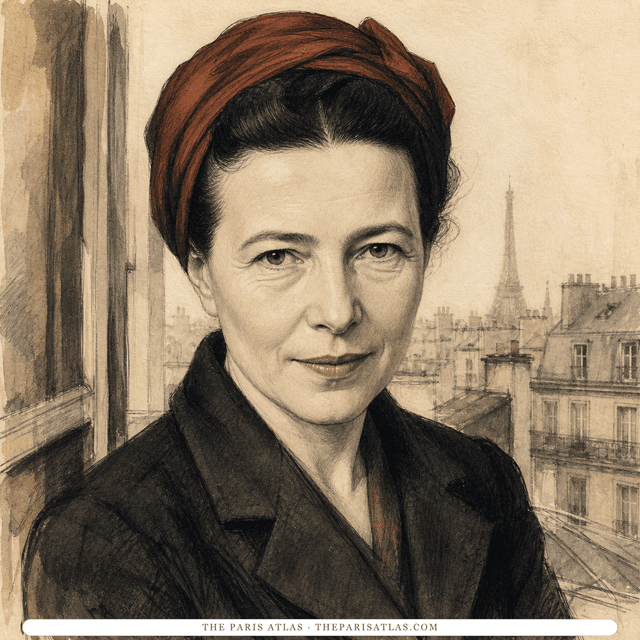
Simone de Beauvoir
French writer and philosopher whose novels, memoirs, and social analysis examined freedom, gender, responsibility, aging, and the material conditions that shape a life.
View author