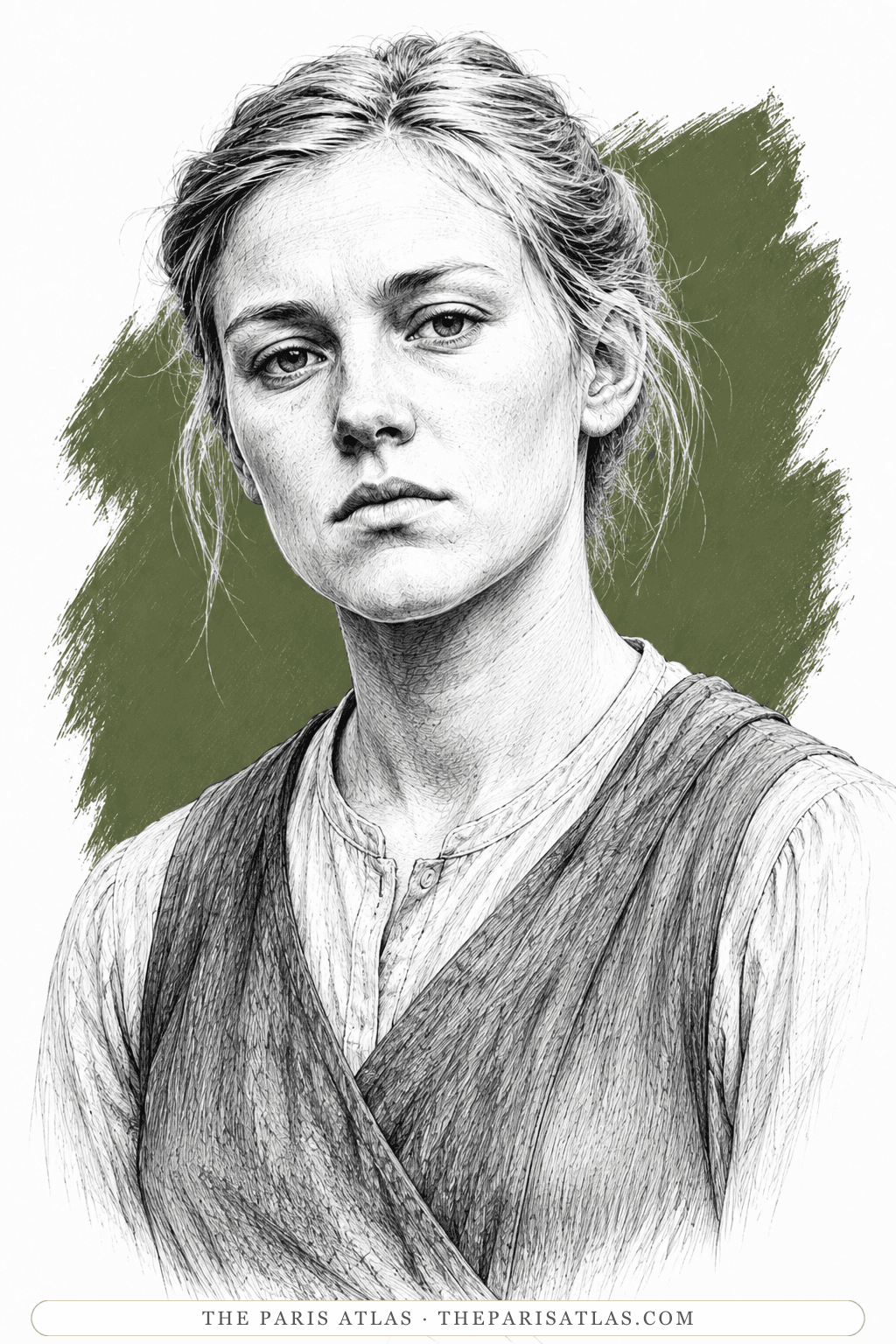
Emmie
A fair-haired, sharp-nosed, unhappy-looking girl engaged to a Brooker son who lived in London. She worked at one of the mills for a starvation wage and spent her evenings doing the cooking and laundry at the Brookers'. Orwell gathered the marriage was constantly postponed and would probably never take place.
The book

At a glance
- Does most of the work at the Brookers' lodging house
- Fair-haired, sharp-nosed, unhappy-looking
- A mill by day for a starvation wage, the Brookers' kitchen by night
- Engaged to a son who lived in London; not a lodger, not family, not paid
- Part One, chapter 1
Who they are in the book
Spoiler-freeEmmie is the young woman who did the work in the house George Orwell lodged in for the first chapter of the book. She was engaged to one of the Brookers' sons, who lived in London. Most of the Brooker children had left home years before, some as far as Canada, and only one son lived near by. Emmie was not a member of the family and not a lodger, and she was not paid for the work she did in the house.
She had a job as well. She worked at one of the mills for what Orwell calls some starvation wage, and the book gives the scale of such a wage elsewhere: a census of the Lancashire cotton mills had found more than forty thousand full-time employees taking home less than thirty shillings a week. Then she spent her evenings at the Brookers', where she and the near-by son's wife did most of the cooking and laundering for the household and its lodgers. Orwell's word for the arrangement is bondage.
He describes her in a single line, and gives nothing else of her appearance. What he does report is her position in the house. Mrs Brooker, permanently ill on a sofa in the kitchen, had already appropriated Emmie as a daughter-in-law and nagged her in what Orwell calls the peculiar watchful, loving way that invalids have. He gathered that the marriage was constantly being postponed and would probably never take place.
How Emmie Is Portrayed
- How the book describes herFair-haired, sharp-nosed and unhappy-looking. That is the whole of it. Orwell gives no age, no height and no clothing, and never quotes a word from her.
- The millShe worked at one of the mills for what Orwell calls some starvation wage. Chapter 5 supplies the scale: a census of the Lancashire cotton mills found over forty thousand full-time employees receiving less than thirty shillings a week each.
- Her eveningsAll of them, at the Brookers'. She and the wife of the son who lived near by did most of the cooking and laundering there. Orwell writes that she spent those evenings in bondage in the house.
- The engagementShe was the fiancée of a Brooker son who was in London. Orwell gathered that the marriage was constantly being postponed and would probably never take place.
- Claimed in advanceMrs Brooker had already appropriated her as a daughter-in-law and nagged her accordingly, in what Orwell calls the peculiar watchful, loving way that invalids have.
If you like The Road to Wigan Pier


If you like George Orwell
Explore authors with a similar voice, perspective, and influence.

Henry Miller
The Brooklyn dropout who arrived in Paris broke at thirty-eight and wrote the exuberant, banned books that ended American censorship.
View author
Louis-Ferdinand Céline
The doctor of the Paris slums who wrote the century's blackest, funniest novel — and changed the sound of French prose.
View author
Simone de Beauvoir
French writer and philosopher whose novels, memoirs, and social analysis examined freedom, gender, responsibility, aging, and the material conditions that shape a life.
View author