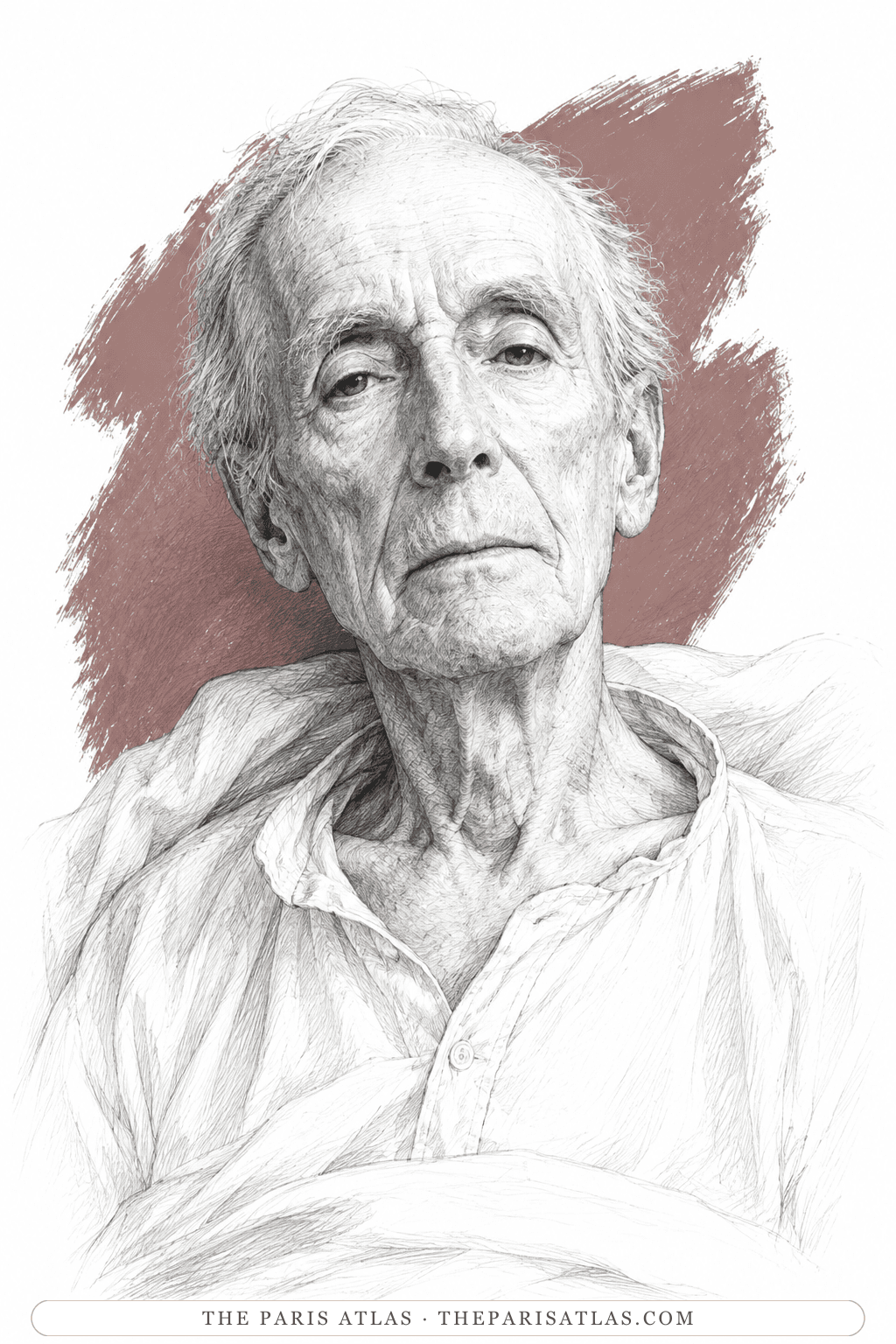
Old Hooker
The second old-age pensioner in the house, bedridden and dying of what Orwell believed was cancer, who got up only on the days he went to draw his pension. He never speaks in the book and is described entirely through the Brookers' complaints about him, and about how long he was taking to die.
The book

At a glance
- The bedridden old-age pensioner at the Brookers'
- Hooker; no first name is given, and Mr Brooker said it 'Uker'
- The old-age pension, ten shillings a week, handed to the landlady
- Dying of what Orwell believed was cancer
- Upstairs in bed, except on pension days
- Not described; he never appears in person
- Part One, chapter 1
Who they are in the book
Spoiler-freeThe lodging house George Orwell stayed in for the first chapter of the book held two old-age pensioners. One, called by everyone Old Jack, was an ex-miner of seventy-eight who kept out of doors most of the day. The other was bedridden upstairs, and Orwell gives his name as Hooker. He is the one person in the chapter who never appears on the page. Everything the book says about him was said by somebody else.
Both men were in the house for the same reason. The Means Test docked a family's relief if an old man's pension counted as household income, so old men left home and took lodgings instead. They handed ten shillings a week to the Brookers and got a bed in the attic and meals chiefly of bread-and-butter. Hooker was of what Orwell calls superior type, and he was dying, of some malignant disease that Orwell believed was cancer. He got out of bed only on the days he went to draw his pension.
The Brookers could just tolerate Old Jack, because he was out of the house. Hooker they hated. Orwell heard about his fractiousness, the nuisance of making his bed, the things he would not eat, his ingratitude, and above all the obstinacy with which he refused to die. Mr Brooker said the name without the H and with a long U, which Orwell describes as a queer way of pronouncing it. Sometimes he would look up from peeling potatoes, catch Orwell's eye and jerk his head at the ceiling. "It's a b-, ain't it?" Orwell writes that there was no need to say more, because he had heard it all already.
The Brookers had insured the lives of both pensioners with one of the tanner-a-week companies, and were openly waiting for Hooker to die so that they could collect. It was said locally that they had been overheard asking the insurance tout how long people live when they have got cancer. Orwell reports what the household felt about the two old men, which was that they were a kind of parasite fastened on the house and eating its substance day after day. He does not agree with it. He says he doubts the Brookers were losing money on the pensioners at all, and that the profit on ten shillings a week was simply very small.
How Old Hooker Is Portrayed
- He never appearsOrwell never meets him on the page. Hooker does not speak, and the book gives no description of him at all: no face, no age, no history before the house. What is known about him is what the Brookers said about him.
- Why he was thereThe Means Test docked a family's relief if an old man's pension counted as household income, so old men left home. Hooker handed his ten shillings a week to the Brookers and got a bed in the attic and meals chiefly of bread-and-butter.
- Dying upstairsOrwell calls him of superior type and says he was dying of some malignant disease, cancer as he believed. The book carries no diagnosis beyond that belief.
- Out of bed only for the pensionHe was bedridden, and got up on the days he went to draw it. Those are the only occasions the book records him leaving the room.
- UkerMr Brooker's way of saying the name, without the H and with a long U. Orwell calls it a queer way of pronouncing it and repeats it as he heard it.
- The list of complaintsHis fractiousness, the nuisance of making his bed, the things he would not eat, his endless ingratitude, and, in the Brookers' telling, the selfish obstinacy with which he refused to die.
- The insuranceBoth pensioners' lives were insured with one of the tanner-a-week companies. The Brookers were openly pining for Hooker to die so that the money would come, and it was said locally that they had been overheard asking the insurance tout how long people live when they have got cancer.
- What Orwell makes of itHe sets down the Brookers' view of the two old men and does not share it. He doubts they were really losing money on the pensioners, and says the profit on ten shillings a week must simply have been very small.
If you like The Road to Wigan Pier


If you like George Orwell
Explore authors with a similar voice, perspective, and influence.
Henry Miller
The Brooklyn dropout who arrived in Paris broke at thirty-eight and wrote the exuberant, banned books that ended American censorship.
View author
Louis-Ferdinand Céline
The doctor of the Paris slums who wrote the century's blackest, funniest novel — and changed the sound of French prose.
View author
Simone de Beauvoir
French writer and philosopher whose novels, memoirs, and social analysis examined freedom, gender, responsibility, aging, and the material conditions that shape a life.
View author