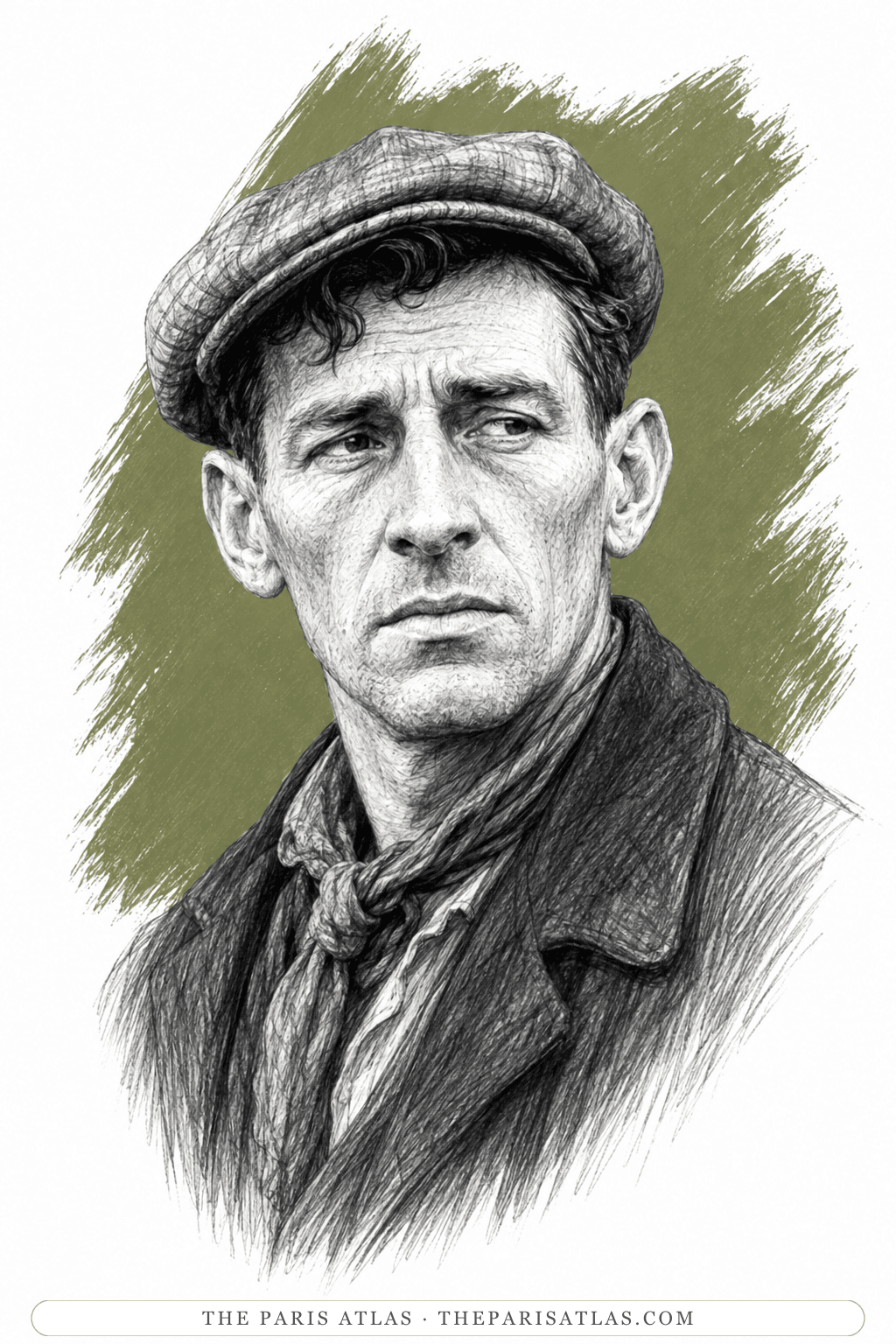
The Cockney traveller
A little black-haired, sharp-nosed traveller for a cigarette firm, new to the North and used to commercial hotels, who slept one night in the double bed at the Brookers' and left. He is the only lodger Orwell ever heard complain: seeing Orwell was a fellow southerner, he said what he thought of the place, packed, and told the Brookers this was not the kind of house he was accustomed to. They were astonished and hurt, and added it to their grievances.
In Orwell's account he wants the standard of lodging he had been used to before his luck turned, and he is the one man in the house who says so out loud.
The book

At a glance
- A one-night lodger at the Brookers'
- Never given
- Traveller for a cigarette firm
- Little, black-haired, sharp-nosed
- London; Orwell identifies him as a fellow Southerner
- One night
- Part One, chapter 1
Who they are in the book
Spoiler-freeHe is in the book for one night and one paragraph, and George Orwell uses him to settle a question about the house. Orwell had begun to wonder whether the lodging house above the tripe shop was unusually bad or perfectly ordinary for the industrial areas. He concluded it must be about normal, because on the whole the lodgers did not complain. The single exception was a traveller for a cigarette firm, who arrived, slept one night and left.
Orwell describes him as a little, black-haired, sharp-nosed Cockney. He had never been in the North before. Orwell's reading of him was that until recently he had been in better employ and was used to staying in commercial hotels, and that this was his first sight of really low-class lodgings, the kind of place in which the poorer touts and canvassers have to shelter on their endless journeys.
He was given the double bed, which was the best in the room. Orwell had slept in it himself on his own first night and been manoeuvred out of it to make room for the next arrival, and he believed all newcomers got it and that it was used as bait. In the morning, while the two of them were dressing, Orwell watched him look round the room with what he calls a sort of wondering aversion. Then the man caught Orwell's eye, worked out from it that he was talking to a fellow Southerner, and said what he thought of the place.
He packed his suitcase, went downstairs and told the Brookers that this was not the kind of house he was accustomed to and that he was leaving immediately. Orwell credits him with great strength of mind for saying it to their faces. The Brookers could not understand it. They were astonished and hurt, went over it repeatedly afterwards in all its bearings, and added it to their store of grievances.
How The Cockney traveller Is Portrayed
- How the book describes himLittle, black-haired and sharp-nosed. Orwell also calls him a Cockney and a traveller for a cigarette firm. There is no age and no clothing.
- Recently come down in the worldOrwell's reading of him: until lately in better employ and used to commercial hotels, and seeing really low-class lodgings for the first time. He had never been in the North before either.
- The double bedThe best bed in the four-bed room, and the one every newcomer was put in. Orwell had slept in it his first night and been moved out for the next arrival, and believed it was used as bait.
- The morningOrwell watched him look round the room while the two of them dressed, with what the book calls a sort of wondering aversion.
- What he saidHe caught Orwell's eye, divined that he was a fellow Southerner, and said feelingly: "The filthy bloody bastards!" It is the only line the book quotes from him.
- One night, then outHe packed his suitcase, went downstairs and told the Brookers that this was not the kind of house he was accustomed to and that he was leaving immediately. Orwell says it took great strength of mind.
- What his complaint provedHe is the only lodger Orwell ever knew to complain, which is why the chapter reports him at all. Orwell takes everyone else's silence as evidence that the house was fairly normal for a lodging house in the industrial areas.
- How the Brookers took itThey were astonished and hurt, could not see what was wrong, and discussed it over and over in all its bearings. It went onto the same list as the two old-age pensioners and the lodgers who brought in their own food.
If you like The Road to Wigan Pier


If you like George Orwell
Explore authors with a similar voice, perspective, and influence.

Henry Miller
The Brooklyn dropout who arrived in Paris broke at thirty-eight and wrote the exuberant, banned books that ended American censorship.
View author
Louis-Ferdinand Céline
The doctor of the Paris slums who wrote the century's blackest, funniest novel — and changed the sound of French prose.
View author
Simone de Beauvoir
French writer and philosopher whose novels, memoirs, and social analysis examined freedom, gender, responsibility, aging, and the material conditions that shape a life.
View author