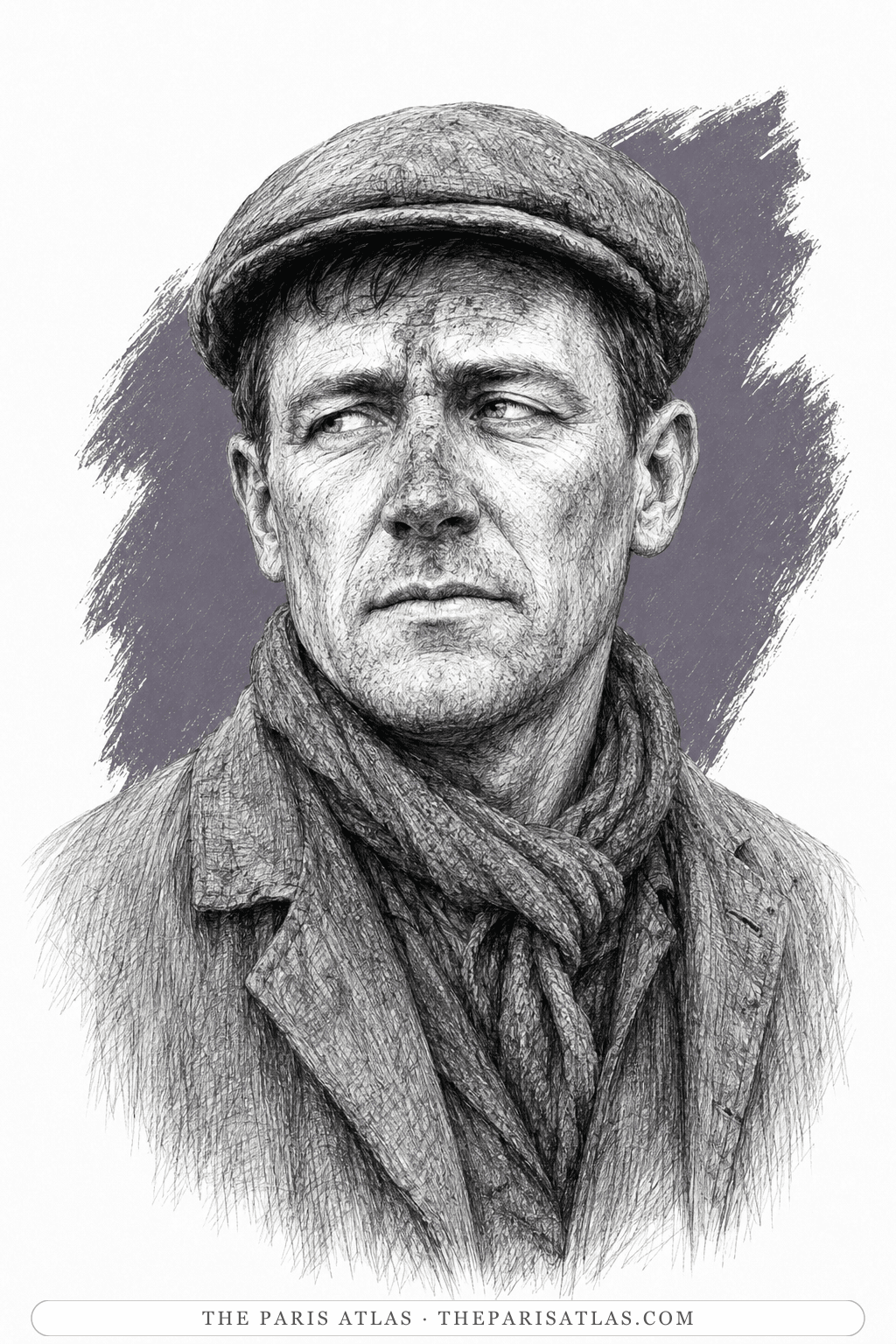
The miner with nystagmus
A Wigan miner George Orwell lodged with who had been half blinded underground. He could see across a room and not much further, and drew twenty-nine shillings a week in compensation that the colliery company was proposing to cut to fourteen.
In Orwell's account he wants to keep the twenty-nine shillings. The doctor's verdict on whether he is fit for light work decides it, and there is no light work either way.
The book

At a glance
- A miner Orwell lodged with in Wigan
- Nystagmus; half blinded
- Compensation of twenty-nine shillings a week
- Part One, chapter 3
Who they are in the book
Spoiler-freeNystagmus was the characteristic disease of the pits. George Orwell explains it plainly: an eye disease that makes the eyeballs oscillate when they come near a light, caused by working in half-darkness, and sometimes ending in total blindness. A miner disabled by it was compensated by the colliery company, at up to twenty-nine shillings a week and no more.
In Wigan, Orwell stayed for a while with a man in exactly that position. He could see across the room but not much further. He had been drawing the full twenty-nine shillings for nine months, and the company was now talking of moving him to partial compensation of fourteen. Whether it happened turned on whether the doctor passed him fit for light work on top. Orwell notes that even if the doctor did pass him there would be no light work to be had, but the company would have saved fifteen shillings a week.
What Orwell went to watch was the payment itself. The man had to come to the colliery once a week at a time the company named, and then wait about for hours in the cold wind: an afternoon gone and sixpence in bus fares, for money he was entitled to. Orwell sets that beside his own position, in which a bank pays a smaller income into an account he can draw on when he likes and is passably polite when it is empty. The chapter uses the contrast to make a point about status rather than about wages.
How The miner with nystagmus Is Portrayed
- The eyesNystagmus, the industrial disease of the pits, which makes the eyeballs oscillate near a light and sometimes ends in blindness. Orwell writes that this man could see across the room but not much further.
- How the book draws minersHe gets no face of his own. Orwell describes the type instead: shortish men who walk very upright and square-shouldered, a reaction against bending underground all day, with blue coal-dust scars healed permanently into the nose and forehead. He also notes that a miner's face comes up from the pit pale enough to show through the coal dust.
- Twenty-nine shillingsThe most a disability pension ever came to. He had been drawing it for nine months when Orwell stayed with him, and the company was talking of putting him on partial compensation of fourteen.
- Waiting for itOnce a week at the colliery, at a time the company named, kept standing about for hours in the cold wind. An afternoon and sixpence in bus fares each time.
- Why Orwell reports himAs a comparison. Orwell says he himself earns little more, gets it paid into a bank in a gentlemanly manner, can draw it when he chooses, and is treated politely when the account runs out.
If you like The Road to Wigan Pier


If you like George Orwell
Explore authors with a similar voice, perspective, and influence.

Henry Miller
The Brooklyn dropout who arrived in Paris broke at thirty-eight and wrote the exuberant, banned books that ended American censorship.
View author
Louis-Ferdinand Céline
The doctor of the Paris slums who wrote the century's blackest, funniest novel — and changed the sound of French prose.
View author
Simone de Beauvoir
French writer and philosopher whose novels, memoirs, and social analysis examined freedom, gender, responsibility, aging, and the material conditions that shape a life.
View author