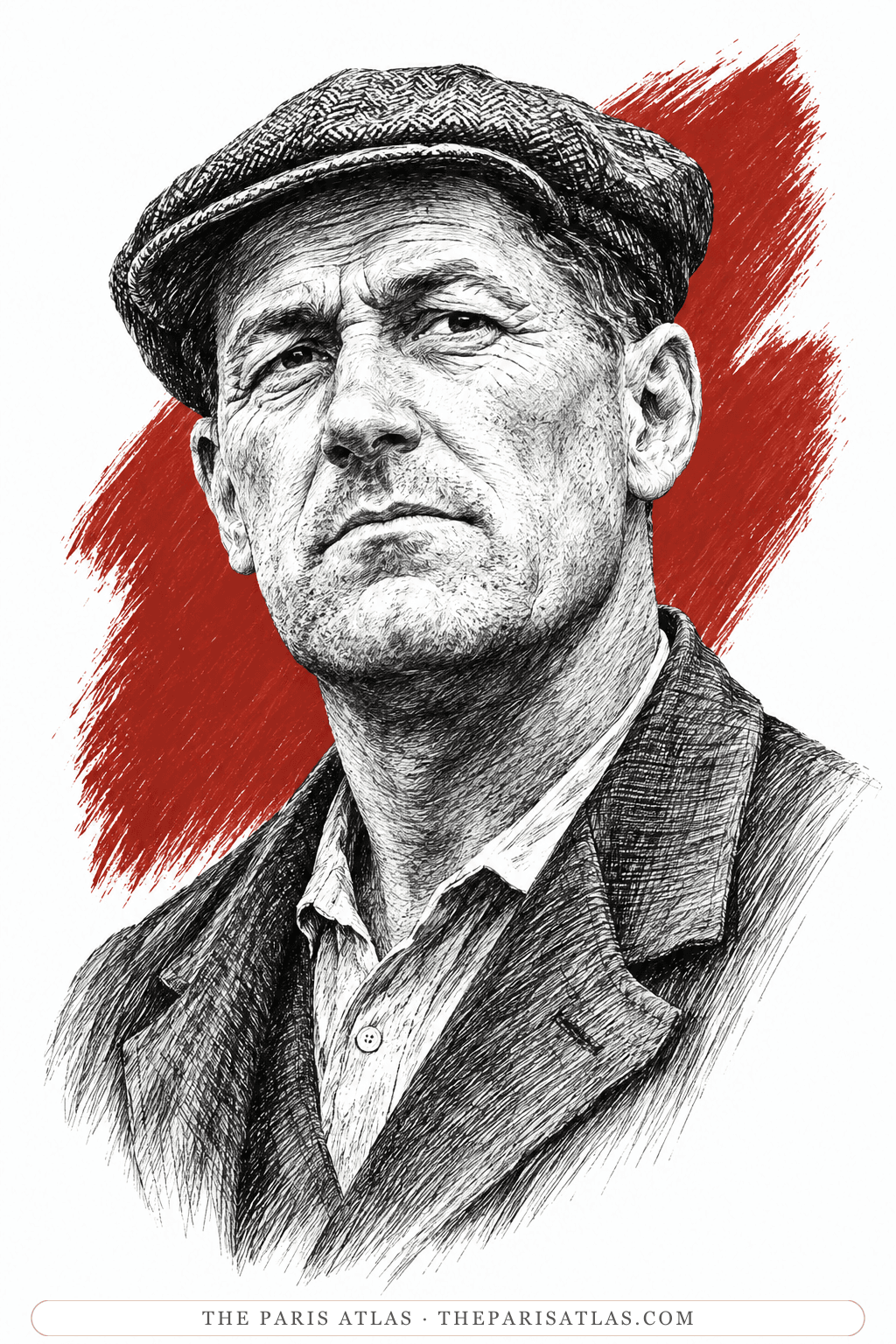
The American missionary
A Nonconformist missionary George Orwell knew fairly well in Burma, who walked into a police station Orwell was inspecting while one of the sub-inspectors was bullying a suspect. He watched, then said thoughtfully that he would not care to have Orwell's job. Orwell reports the shame it caused him, and says he would have felt it even with nobody there to say so.
In Orwell's account he wants no part of the work he has just watched, and he says so to the police officer standing beside him.
The book

At a glance
- An American missionary George Orwell knew in Burma
- Never given
- Nonconformist — a Protestant church outside the Church of England
- The American Middle West
- Teetotal
- Part Two, chapter 9
Who they are in the book
Spoiler-freeThe Road to Wigan Pier, published in 1937, is in two halves. The first is George Orwell's report on the coal-mining towns of northern England. The second is about his own life and about why he became a socialist, and one chapter of it covers the five years he spent as a police officer in Burma, which was then governed by Britain as part of India. The American missionary belongs to those years.
Orwell's argument in that chapter is that he came to hate the empire he was working for, and that he could not say so to anyone. He was in the Indian Imperial Police, which he describes as part of the actual machinery of despotism, and he notes that even the other Europeans in Burma looked down on the police a little because of the brutal work they had to do. Most people approve of capital punishment, he writes, but most people would not do the hangman's job.
The missionary was an American who ran a Nonconformist mission, meaning a Protestant church outside the Church of England. Orwell knew him fairly well. One day, while Orwell was inspecting a police station, the missionary came in for some purpose the book never explains. One of the Burmese sub-inspectors was bullying a suspect at the time; Orwell adds in brackets that he used the scene in his novel Burmese Days. The American watched it. Then he turned to Orwell and said, thoughtfully, that he wouldn't care to have his job.
That is the whole of him. Orwell's own reaction takes up more space in the book than the man does. It made him horribly ashamed, and part of what shamed him was who had said it. He describes the missionary contemptuously: an ass, teetotal, sexually innocent, from the American Middle West. The point of listing all that is that even a man Orwell rated so low had the right to look down on him and pity him. He adds that he would have felt the same shame with nobody there to bring it home to him.
How The American missionary Is Portrayed
- Who he wasAn American running a Nonconformist mission in Burma, which is to say a Protestant church outside the Church of England. Orwell gives him no name, no age and no physical description at all.
- What Orwell thought of himLike most Nonconformist missionaries, Orwell writes, he was a complete ass but quite a good fellow. The rest of the description is teetotal, sexually innocent and from the American Middle West, and Orwell means all of it dismissively.
- How they knew each otherOrwell says he knew him fairly well. That is as far as it goes: no meetings, no conversations, no shared work. The man walks into the police station Orwell is inspecting for some purpose the book never explains.
- What he walked in onOne of Orwell's Burmese sub-inspectors bullying a suspect. Orwell notes in brackets that he had already described the same scene in his novel Burmese Days, which came out in 1934.
- The one thing he saysHe watched it, and then turned to Orwell and said thoughtfully, "I wouldn't care to have your job." It is his only line of speech in the book, and he does not stay to argue it.
- What it did to OrwellIt made him horribly ashamed. So that was the kind of job he had, he writes: even an American missionary he thought a fool had the right to look down on him and pity him. He also says he would have felt the shame even if there had been nobody there to bring it home to him.
If you like The Road to Wigan Pier


If you like George Orwell
Explore authors with a similar voice, perspective, and influence.

Henry Miller
The Brooklyn dropout who arrived in Paris broke at thirty-eight and wrote the exuberant, banned books that ended American censorship.
View author
Louis-Ferdinand Céline
The doctor of the Paris slums who wrote the century's blackest, funniest novel — and changed the sound of French prose.
View author
Simone de Beauvoir
French writer and philosopher whose novels, memoirs, and social analysis examined freedom, gender, responsibility, aging, and the material conditions that shape a life.
View author