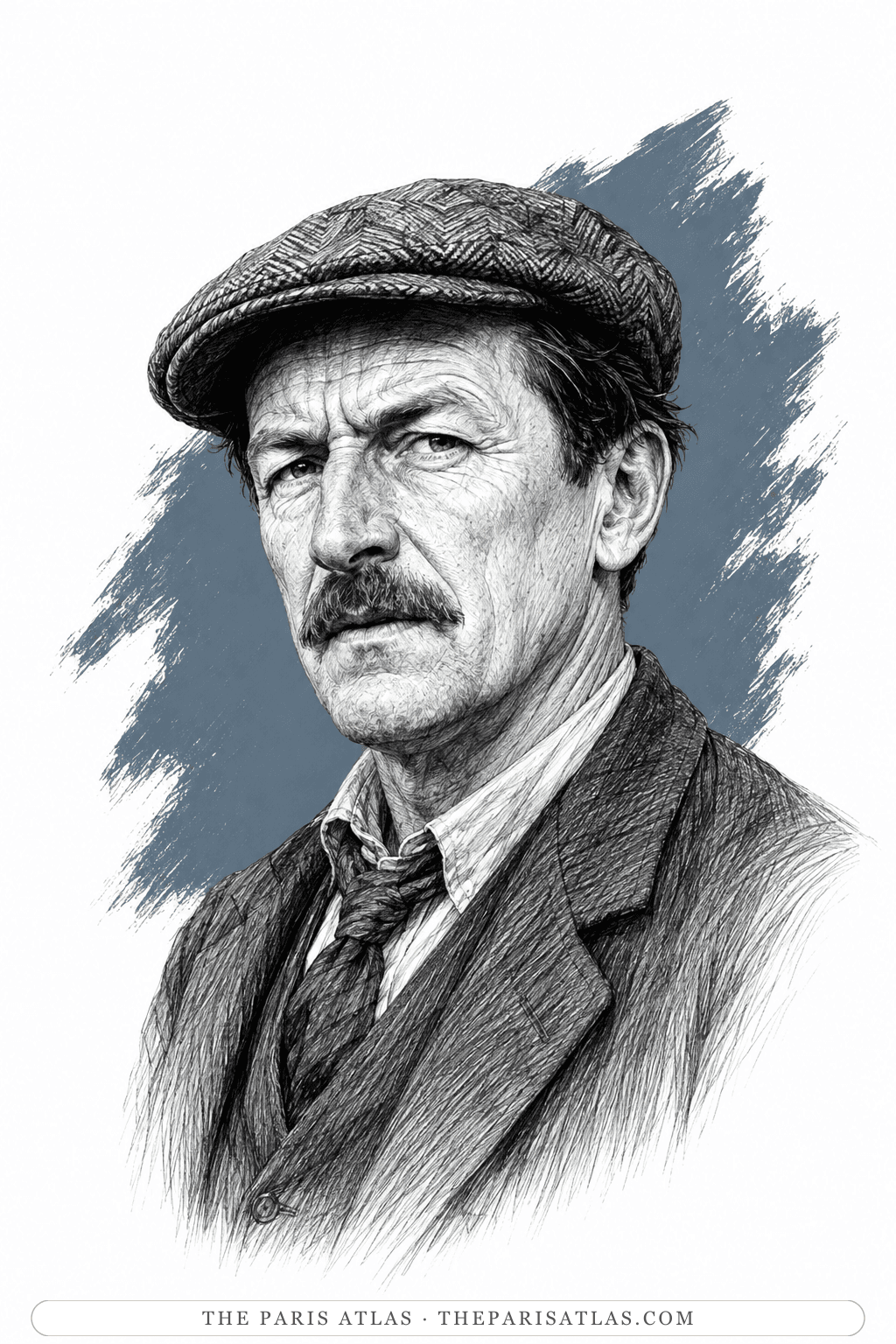
The Irish tramp
The man George Orwell went on the road with for several days through the northern outskirts of London, on his first expedition as a tramp. They shared a cell at night and took it in turns to beg at likely-looking houses, dividing what they got. The tramp told Orwell the history of his life; Orwell told him a fictitious one.
The book

At a glance
- The man George Orwell went on the road with, on his first spell of tramping
- Never given
- Not described
- Several days
- The northern outskirts of London
- Part Two, chapter 9
Who they are in the book
Spoiler-freeGeorge Orwell's account of his first spell on the road runs to a few sentences, and the Irish tramp is in all of them. Orwell had stayed two or three days in a common lodging house in the East End of London, picking up what he could about how destitute people lived, and a few weeks later went tramping for the first time. For several days the two of them walked together through the northern outskirts of London. Orwell's phrase for the arrangement is that he was the man's mate, temporarily.
They shared the same cell at night, and by day they took it in turns to beg at likely-looking houses and divided up what they got. The tramp told Orwell the history of his life. Orwell told him a fictitious history of his own. The book reports none of what the tramp said.
Orwell explains why the episode is in the book at all. A tramp is not a typical working-class person, he writes, but among tramps a man is merged into one section of the working class, which he says can happen in no other way. That is what he had gone looking for, and he says he was very happy. Looking back he calls the feeling of release and adventure absurd, and says it was vivid enough at the time. He describes the sub-world he had got into as squalid and, in his own phrase, horribly boring.
How The Irish tramp Is Portrayed
- What the book gives of himThat he was Irish, that he was a tramp, and that Orwell walked with him for several days. There is no name, no age and no description. The whole of him is four clauses.
- Mates, temporarilyOrwell's own word for the arrangement. It covered several days on the road through the northern outskirts of London, on his first expedition as a tramp.
- The same cellThey shared it at night. That is the whole of what the book says about where they slept.
- Two historiesThe tramp told Orwell the history of his life, and Orwell told him a fictitious history of his own. Not a word of what the tramp said is passed on.
- Begging by turnsThey took it in turns at likely-looking houses and divided up the proceeds between them.
If you like The Road to Wigan Pier


If you like George Orwell
Explore authors with a similar voice, perspective, and influence.

Henry Miller
The Brooklyn dropout who arrived in Paris broke at thirty-eight and wrote the exuberant, banned books that ended American censorship.
View author
Louis-Ferdinand Céline
The doctor of the Paris slums who wrote the century's blackest, funniest novel — and changed the sound of French prose.
View author
Simone de Beauvoir
French writer and philosopher whose novels, memoirs, and social analysis examined freedom, gender, responsibility, aging, and the material conditions that shape a life.
View author