The woman in the slum backyard
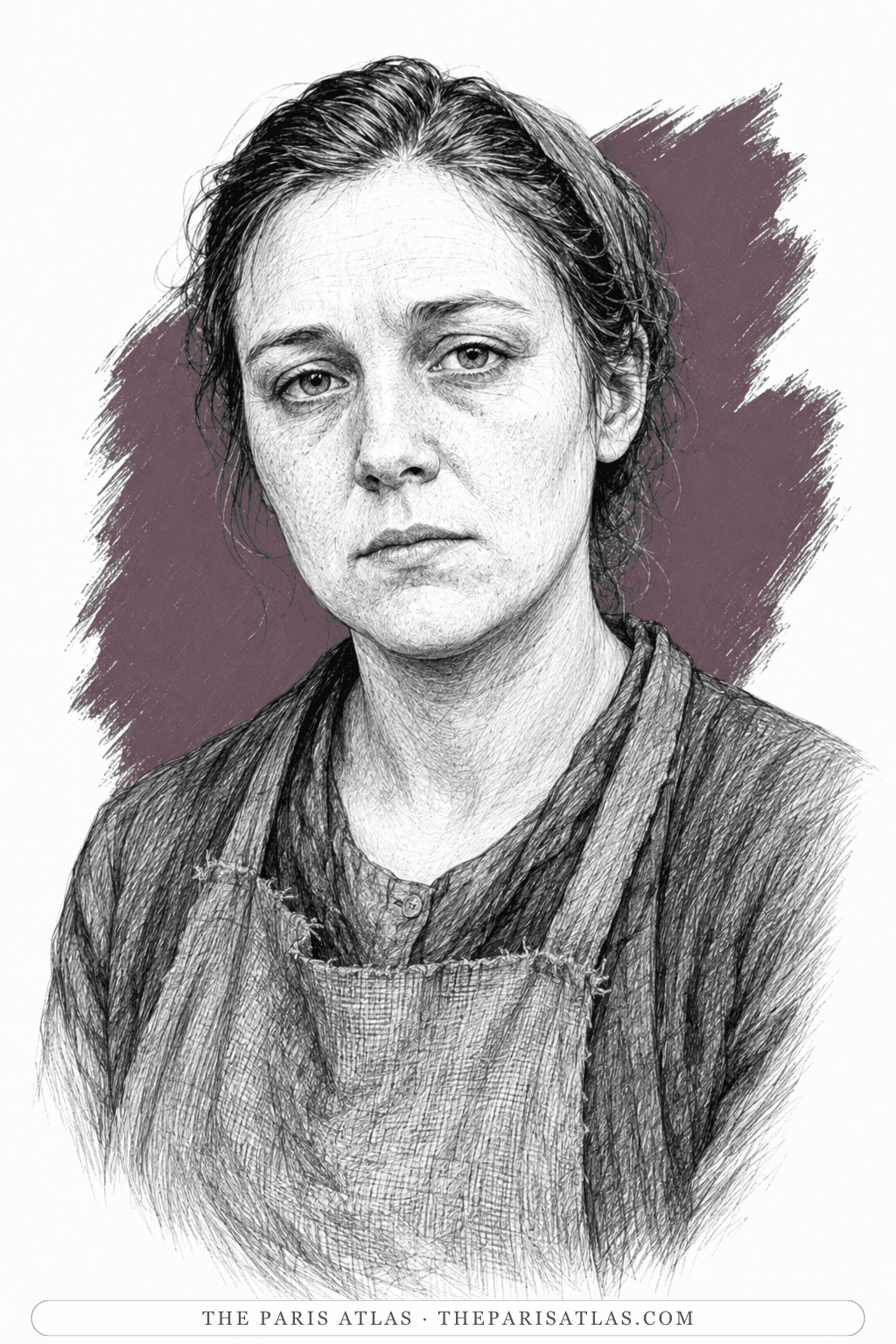
A young woman Orwell sees for a second or two from a moving train as he leaves Wigan, kneeling on the stones behind a slum house and poking a stick up a blocked waste-pipe. She is unnamed and never appears again, and one of the book's central arguments turns on her face.
The book

At a glance
- Seen from a train leaving Wigan at the end of chapter 1
- None; the book gives her no history either
- Twenty-five, by Orwell's guess, looking forty
- March 1936, with blackened snow still on the ground
Who they are in the book
Spoiler-freeShe closes the first chapter. George Orwell has left the Brookers' house and the train is moving slowly through the outskirts of the town, past rows of little grey slum houses running at right angles to the embankment. At the back of one of them a young woman is kneeling on the stones, poking a stick up the leaden waste-pipe that runs from the sink inside, which he supposes is blocked. The train is close enough and slow enough that he has time to see everything about her, and she looks up as it passes.
The whole encounter is a few seconds and Orwell gives it a paragraph. What he does with it is argue. The received middle-class comfort of the period was that "It isn't the same for them as it would be for us", and that people bred in the slums can imagine nothing but the slums. He says the face he saw settles it: what was in it was not the ignorant suffering of an animal. She knew perfectly well what was happening to her, and understood as well as he did how dreadful a destiny it was to be kneeling in the bitter cold on the slimy stones of a slum backyard, poking a stick up a foul drain-pipe.
How The woman in the slum backyard Is Portrayed
- What he could seeA sacking apron, clumsy clogs, and arms reddened by the cold. The train was going slowly enough that he was almost near enough to catch her eye.
- The jobKneeling on the stones in a backyard in bitter March weather, working a stick up the leaden waste-pipe from the sink, which he assumes was blocked.
- The faceRound and pale. Orwell calls it the usual exhausted face of the slum girl who is twenty-five and looks forty, and says the expression it wore for the second he saw it was the most desolate and hopeless he had ever seen.
- Why she looked fortyOrwell gives the reason in the same sentence: miscarriages and drudgery. He is describing what he takes to be the usual face of a woman of twenty-five in the slums, not her own history, which he never learns. Nothing about her expression is blank — he says plainly that what he saw was not the ignorant suffering of an animal.
- What he took from itThat the comfortable formula about it not being the same for them is false. She understood her situation exactly, which is the premise the rest of the book rests on.
If you like The Road to Wigan Pier


If you like George Orwell
Explore authors with a similar voice, perspective, and influence.

Henry Miller
The Brooklyn dropout who arrived in Paris broke at thirty-eight and wrote the exuberant, banned books that ended American censorship.
View author
Louis-Ferdinand Céline
The doctor of the Paris slums who wrote the century's blackest, funniest novel — and changed the sound of French prose.
View author
Simone de Beauvoir
French writer and philosopher whose novels, memoirs, and social analysis examined freedom, gender, responsibility, aging, and the material conditions that shape a life.
View author