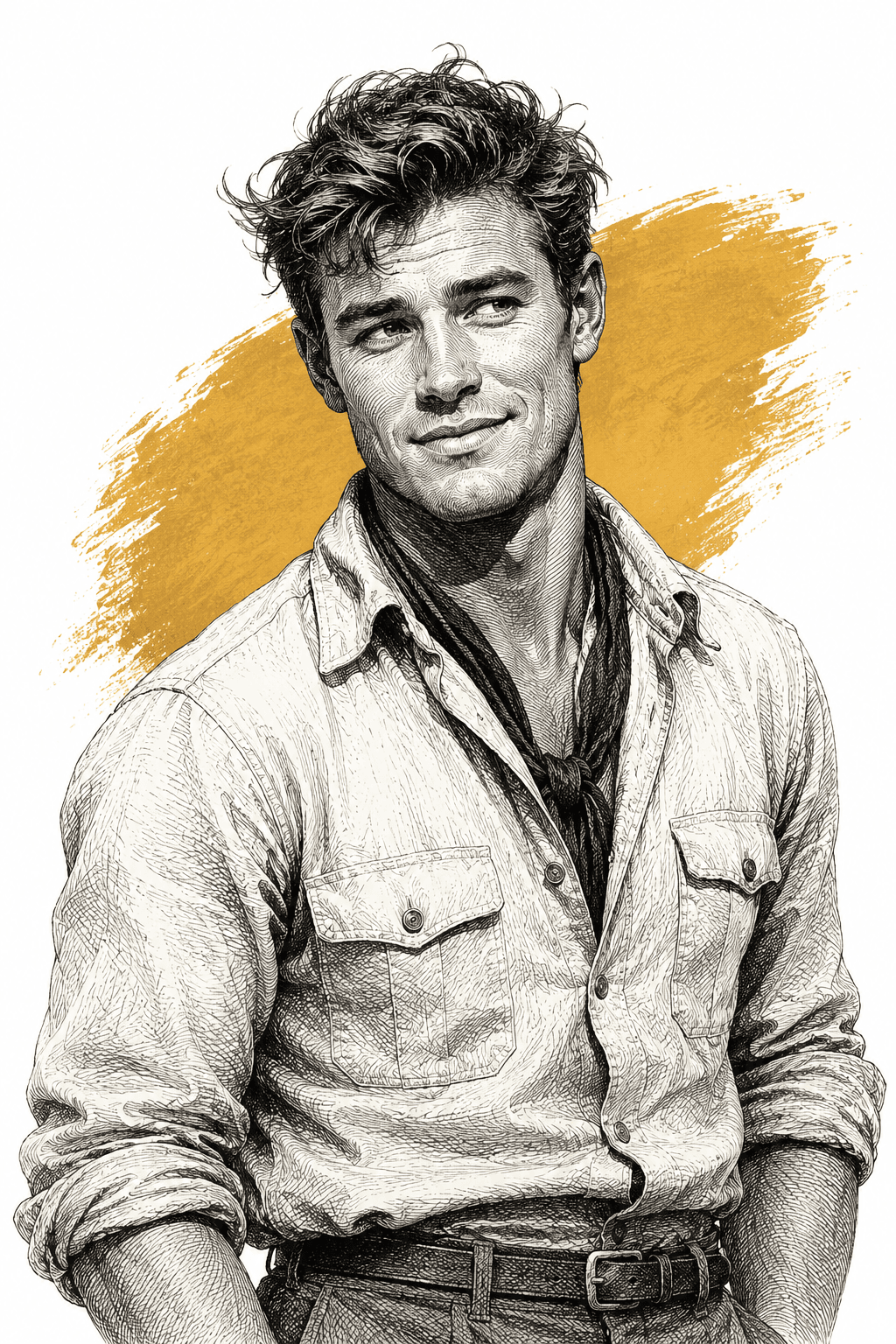
Bill
Nick's friend, and his drinking company through an autumn storm. He appears at the end of one story and takes up most of the next.
To keep Nick unattached and available for the next fishing trip. He tells him that if things had gone on the way they were, the two of them would not be sitting there now, and adds a moment later: "Probably we wouldn't even be going fishing tomorrow."
The book

At a glance
- "The End of Something" (last page) and "The Three Day Blow"; a friend named Bill is also mentioned once in a memory in "Big Two-Hearted River"
- Billy Tabeshaw, one of the men who comes to saw logs in "The Doctor and the Doctor's Wife"
- A painter, out shooting in the swamp, who lets him drink what is already open
- Wemedge
- A cottage above an orchard, in the same Michigan lake country as the other Nick stories
Who they are in the book
Spoiler-freeBill is a friend of Nick Adams's, roughly his own age, whose father owns a cottage on a hill above an orchard in the Michigan lake country. He appears in two consecutive stories and nowhere else. At the end of "The End of Something" he walks out of the woods to the fire Nick has been sitting by, and it becomes clear that he knew the break-up was coming. "The Three Day Blow" is then almost entirely the two of them drinking indoors while a gale strips the trees outside.
He is worth reading closely because he is the story's engine. Nick spends the afternoon miserable and mostly silent; Bill supplies opinions, and it is his running commentary on marriage, Marjorie, Marjorie's mother, and the escape Nick has had that finally makes Nick feel better — by suggesting the break might not be permanent after all. He is not to be confused with Billy Tabeshaw, a man in a different story entirely.
How Bill Is Portrayed
- How he arrivesNick is lying face down on a blanket by a dying fire after Marjorie has rowed away. Bill comes through the woods into the clearing, does not touch him, and asks, "Did she go all right?" Told there was no scene, he picks a sandwich out of the lunch basket and goes to look at the fishing rods.
- The cottageThe next story is his house: a fire in the fireplace, whisky on the shelf above it, a pitcher of spring water from the kitchen pail, a loft under the roof where he and Nick and his father sometimes sleep. He fetches Nick a pair of heavy wool socks and warns him he will dent the fire screen with his feet.
- His fatherBill's father is a painter, out with a gun for most of the story, and permissive about the drink on one condition. "He says opening bottles is what makes drunkards," Bill explains — so they work through what is already open. Nick is impressed; he had always assumed it was solitary drinking that did it.
- What he readsHe has The Ordeal of Richard Feverel face down on the table, and the two of them run through The Forest Lovers, Hugh Walpole's Fortitude and The Dark Forest, and Chesterton's The Flying Inn, which Bill can quote. He holds that Chesterton is the better man and Walpole the better writer, and toasts them both.
- His theory of marriage"Once a man's married he's absolutely bitched," he tells Nick. He can spot the married ones on sight: "They get this sort of fat married look." His advice is to fall for somebody else next time and not let them ruin you, and his clinching argument is that marrying Marjorie would have meant marrying her mother too.
- The subject he closesWhen Nick says he oughtn't to talk about it, Bill takes the blame and shuts it down: "I talked about it and now I'm through. We won't ever speak about it again." Then he adds that Nick shouldn't think about it in case he gets back into it again — the remark that lifts Nick's mood for the rest of the afternoon.
- Baseball, brieflyThe two of them spend a page on the Cardinals dropping a double-header to the Giants, John McGraw buying up the league, and Heinie Zim's fielding. Several drinks later Bill revises the whole conversation: it was a mistake, and baseball is a game for louts.
The two stories are designed to be read against each other, and Bill is the reason. "The End of Something" shows the break-up without a word of explanation; his arrival at the fire is the first hint that it was planned. Whether Bill has helped his friend or talked him out of the only thing he wanted is the question the pair of stories leaves open.
If you like In Our Time


If you like Ernest Hemingway
Explore authors with a similar voice, perspective, and influence.

Louis-Ferdinand Céline
The other great stylist the Great War produced — where Hemingway cut the language down, Céline set it on fire. The same wound, opposite treatments.
View author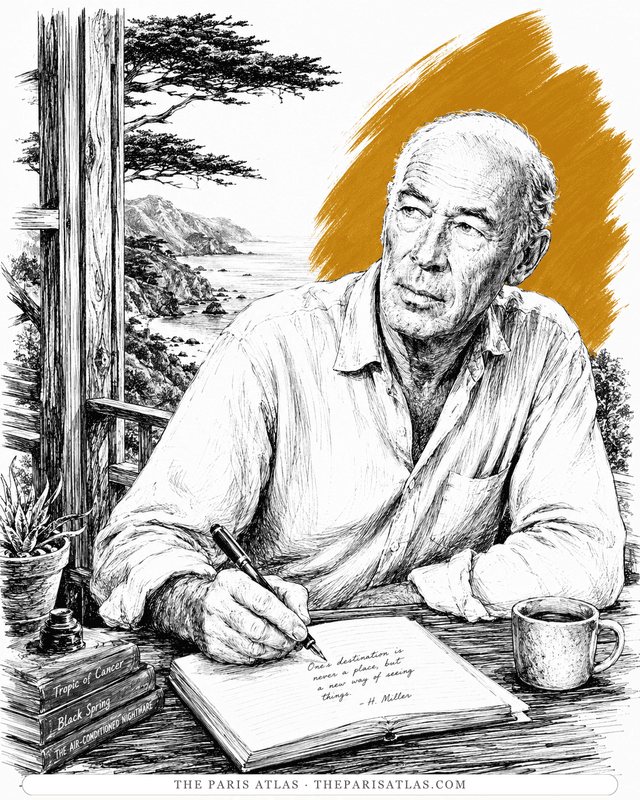
Henry Miller
Paris on no money a decade later, with the restraint removed. Miller called Hemingway's Paris a tourist's Paris; readers get to referee.
View author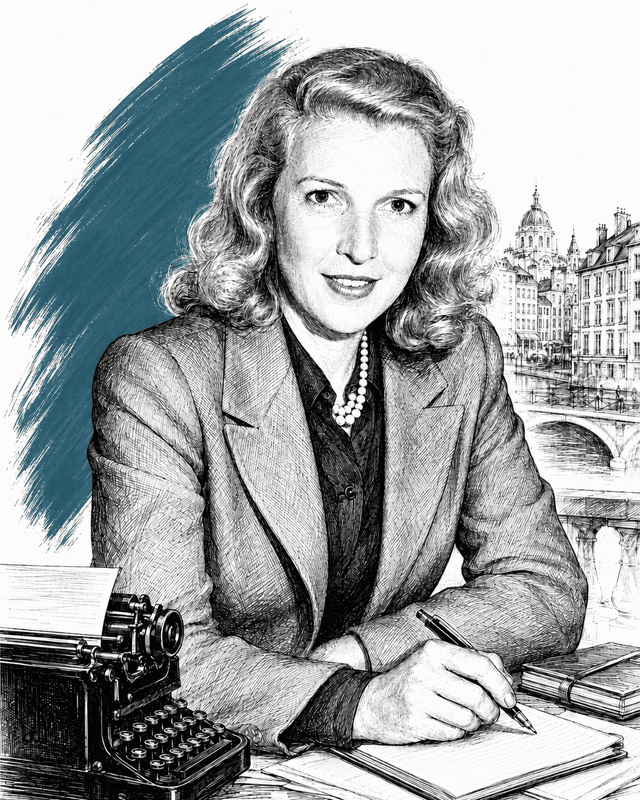
Martha Gellhorn
War correspondent who covered the Spanish Civil War, D-Day, and conflicts across five more decades; Hemingway's third wife, 1940–1945.
View author