
Harold Krebs
A United States Marine home in Oklahoma two years after the war ended, unable to make himself want anything. "Soldier's Home" is one week of his life.
To live without consequences. The story states it three times over, in three sentences: "He did not want any consequences. He did not want any consequences ever again. He wanted to live along without consequences."
The book

At a glance
- "Soldier's Home" only
- Krebs almost throughout; Harold by his mother, Hare by his younger sister Helen
- Enlisted in the Marines in 1917; Belleau Wood, Soissons, the Champagne, St. Mihiel, the Argonne; home summer 1919
- A mother who prays for him, a non-committal father in real estate, and two young sisters to whom he is still a hero
- A small Oklahoma town where nothing has changed except that the young girls have grown up
- Clarinet, practised in the evenings
Who they are in the book
Spoiler-freeHarold Krebs is a fictional American ex-Marine, home in a small Oklahoma town after the First World War. He went to war from a Methodist college in Kansas, enlisted in 1917, fought at Belleau Wood, Soissons, the Champagne, St. Mihiel and in the Argonne, and did not get back to the United States until his division returned from the Rhine in the summer of 1919.
By then his town had finished welcoming soldiers. The drafted men had been met elaborately, there had been a great deal of hysteria, and the reaction had set in; people found it faintly ridiculous that he should be arriving years after it was over. "Soldier's Home" is the short story that follows, and almost nothing happens in it. He reads, plays pool, and looks at girls from the porch, and has one conversation with his mother that he cannot get out of.
How Harold Krebs Is Portrayed
- The two photographsThe story opens with pictures instead of a description. One shows him among his fraternity brothers, all of them wearing exactly the same height and style of collar. The other shows him on the Rhine with another corporal and two German girls; the men look too big for their uniforms, the girls are not beautiful, and the Rhine does not show.
- Why he stopped talking about itAt first he did not want to talk about the war. Later he needed to and found that nobody would listen, because the town had heard too many atrocity stories to be moved by real ones. To be listened to at all he had to lie, and after twice doing it, everything he had actually done lost its value to him. The story's verdict is one sentence: "In this way he lost everything."
- The shape of his daySleeping late, walking downtown to the library for a book, lunch at home, reading on the front porch until he is bored, then the cool dark of the pool room for the hottest hours. "He loved to play pool." In the evening he practises the clarinet, walks downtown, reads and goes to bed.
- The girls on the other side of the streetHe likes watching them from the porch: the bobbed hair, the round Dutch collars above the sweaters, the silk stockings and flat shoes, the way they walk. He would like one of them. He will not do the talking, the courting, or the intrigue required to get one, and the story is very clear that this is a decision rather than a shyness.
- The reading he does enjoyHe sits on the porch with a history of the war, reading about the engagements he was in. It is the most interesting reading he has ever done, and he wishes there were more maps. He looks forward to the really good histories when they come out with good detail maps. He had been a good soldier, and he notes that this makes a difference.
- The scene with his motherOver breakfast she tells him his father will let him take the car out, that God has work for everyone, and that Charley Simmons, who is just his age, has a good job and is getting married. She asks whether he loves her. "No," Krebs said. Then he tells her he doesn't love anybody. She starts crying, he takes it back at once, and she makes him kneel by the dining-room table and be prayed for.
The story ends with him deciding to go to Kansas City and get a job so that she will feel all right about it, skipping the interview his father has arranged, and walking over to the schoolyard to watch his sister play indoor baseball.
The lie he tells his mother is the same kind of lie he told at the pool room, and it costs him the same thing. Hemingway lets the last paragraph carry it without a word of commentary: he had tried so to keep his life from being complicated, and none of it had touched him.
If you like In Our Time


If you like Ernest Hemingway
Explore authors with a similar voice, perspective, and influence.
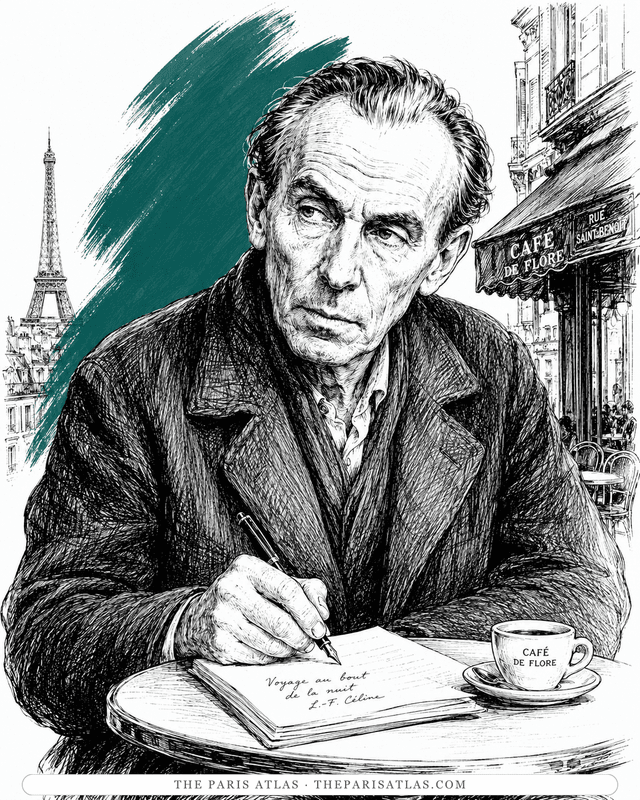
Louis-Ferdinand Céline
The other great stylist the Great War produced — where Hemingway cut the language down, Céline set it on fire. The same wound, opposite treatments.
View author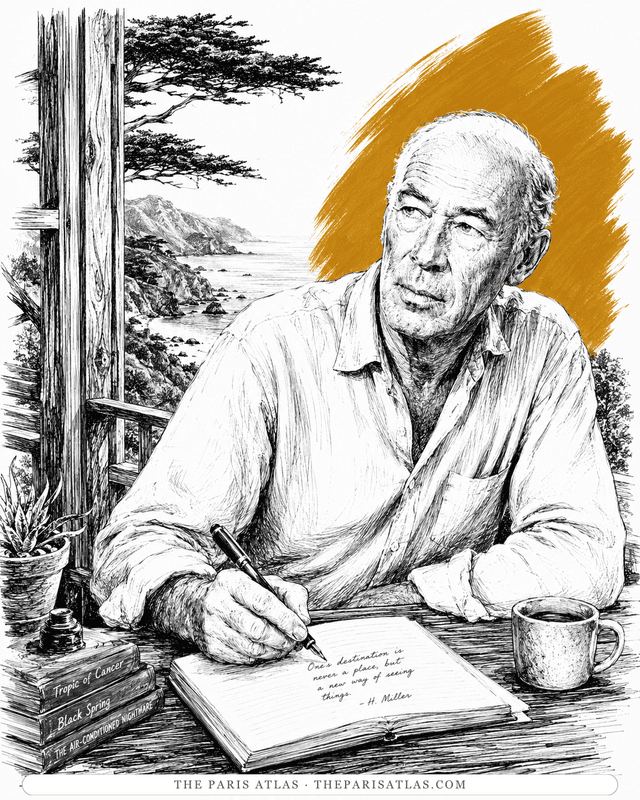
Henry Miller
Paris on no money a decade later, with the restraint removed. Miller called Hemingway's Paris a tourist's Paris; readers get to referee.
View author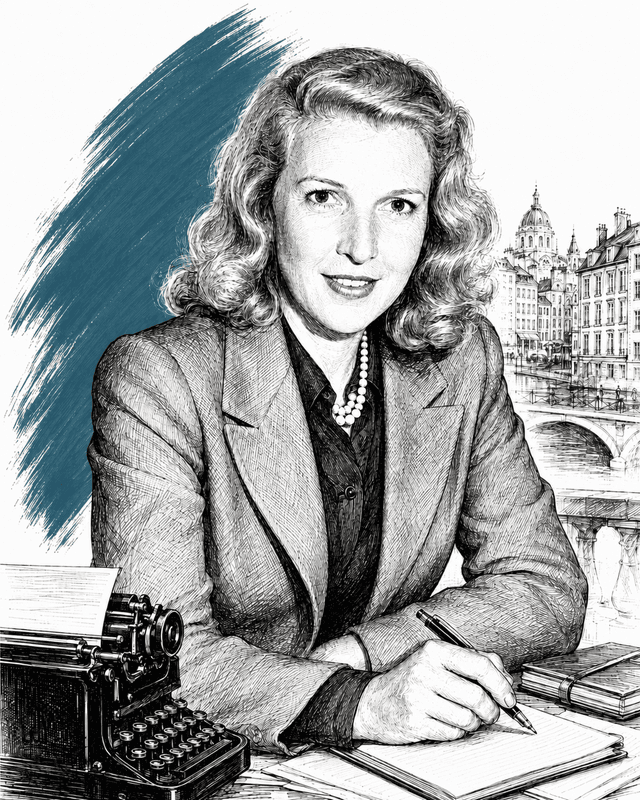
Martha Gellhorn
War correspondent who covered the Spanish Civil War, D-Day, and conflicts across five more decades; Hemingway's third wife, 1940–1945.
View author