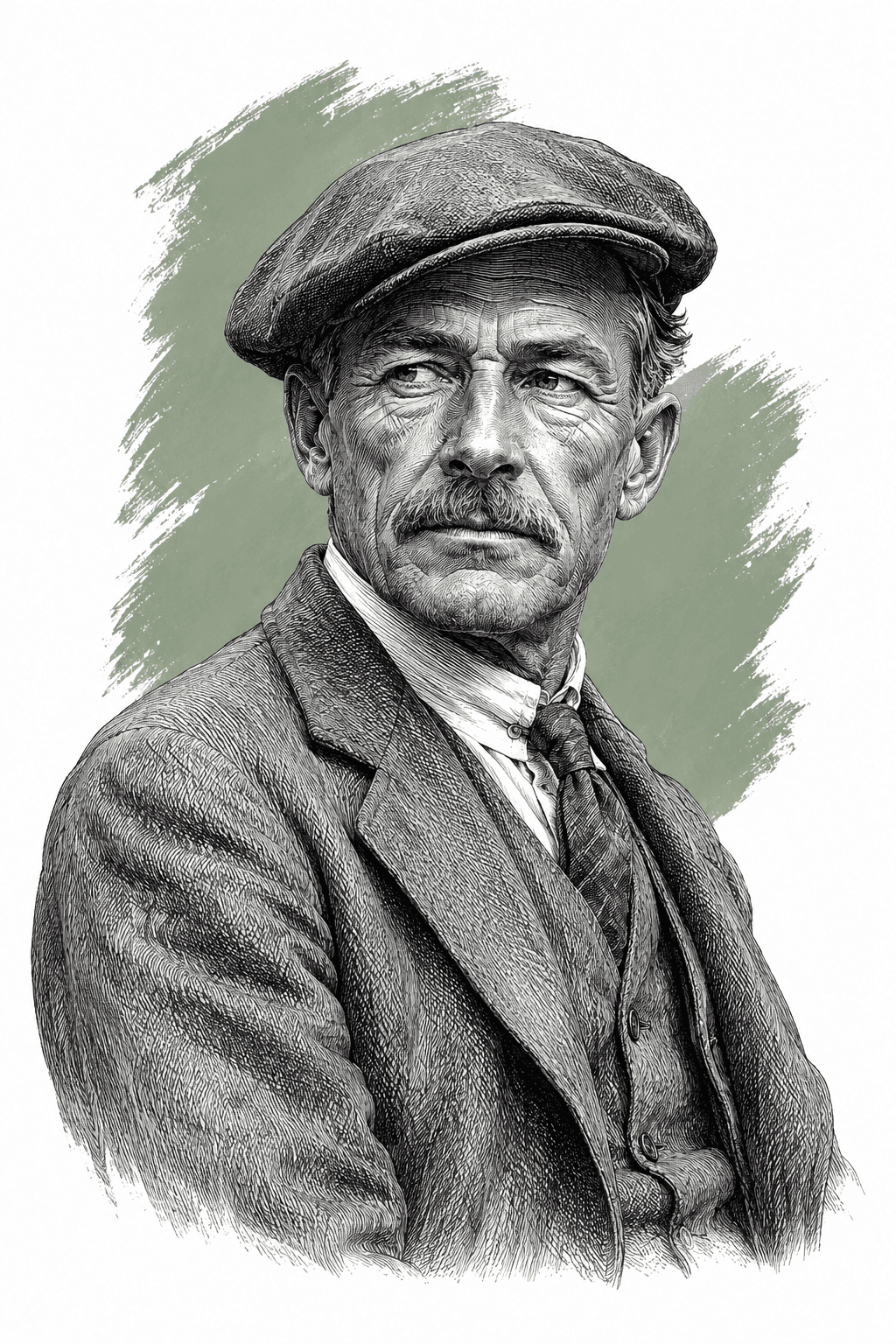
Joe's old man
An American steeplechase jockey riding out the end of his career in Milan and Paris, worshipped by his son and disliked by the men at the track.
To ride, and to get himself and the boy a stake. "Joe, when we've got a decent stake, you're going back there to the States and go to school," he says — and later, when the money comes, he spends it on buying a horse of his own so he can ride again.
The book

At a glance
- "My Old Man" only
- "My old man" and "Dad" by his son; Butler, once, by a stranger at the gate
- Steeplechase jockey — San Siro and Mirafiore in Italy, then Amiens, Enghien, Tremblay, St. Cloud and Auteuil in France
- Kentucky, where he went coon hunting as a boy
- Gilford — Irish bred, bay, bought out of a selling race for 30,000 francs
- Black jacket with a white cross, and a black cap
Who they are in the book
Spoiler-freeThe jockey at the centre of "My Old Man" is never given a first name — his son calls him my old man throughout, and the only other name the story attaches to him is Butler, spoken by a stranger at a racecourse gate. He is American, from Kentucky, a widower, and by the time the story starts he is old for the trade and fighting his weight every day of the week.
Everything about him reaches the reader through his son, who adores him, so the picture arrives with the least flattering parts left out and visible anyway. He is warm, funny and generous with the boy; he is also mixed up in something at the Milan tracks that ends with him being run out of the country, and he bets on inside information without apology.
How Joe's old man Is Portrayed
- Making the weightCut out for a fat guy, in his son's estimate, and never allowed to become one. Rubber shirt, two jerseys, a sweat shirt, running in the hot sun and skipping rope in the road. Most jockeys can ride off what they need; he is dried out and cannot, so he runs. "Sure is hell keeping it down, Joe," he says.
- The grin"When my old man grinned, nobody could help but grin too." It is the one thing the boy says about him twice, and it does a lot of the work the story never states outright.
- What he thinks of the Italian racingEasy courses, dull horses. It is the pace that makes riding jumps dangerous, he tells the boy, not the jumps, and here there is neither. Of the field at San Siro: "None of these things are horses, Joe. They'd kill that bunch of skates for their hides and hoofs up at Paris."
- The thing he does not explainTwo men corner him at a café table in Milan, talk at him for a long time, and get no answer at all. He sends his son out for a newspaper. One of them calls him a son of a bitch and leaves. His face is white, he looks sick, and all he says is, "You got to take a lot of things in this world, Joe." Three days later they auction off what won't fit in a trunk and a suitcase and take the train to Paris.
- The Kzar betOn a tip from Kzar's own jockey he backs Kircubbin at 8 to 1 with five thousand francs to win and a thousand to place, and collects at 67.50 for 10. His son is thrilled until the old man says what he thinks of the ride: "George Gardner's a swell jockey, all right," he said. "It sure took a great jock to keep that Kzar horse from winning."
- Paris, and the drinkingWith money in hand he comes into town more often, sits outside the Café de la Paix on the Opera side with the boy, tips well, kids the men selling rubber eggs and smutty postcards, and talks about riding in Egypt and at St. Moritz before the boy's mother died. He is drinking more than his son has ever seen and putting weight on, and losing money at the track every day.
- Buying his own horseAfter a selling steeplechase at Auteuil he buys in the winner for 30,000 francs, has his permit and colours within a week, and moves into stable space with a trainer called Charles Drake. The horse is Gilford, Irish bred, a good solid jumper. He starts running and sweating again, trains and rides the horse himself, and finishes third first time out.
If you like In Our Time


If you like Ernest Hemingway
Explore authors with a similar voice, perspective, and influence.
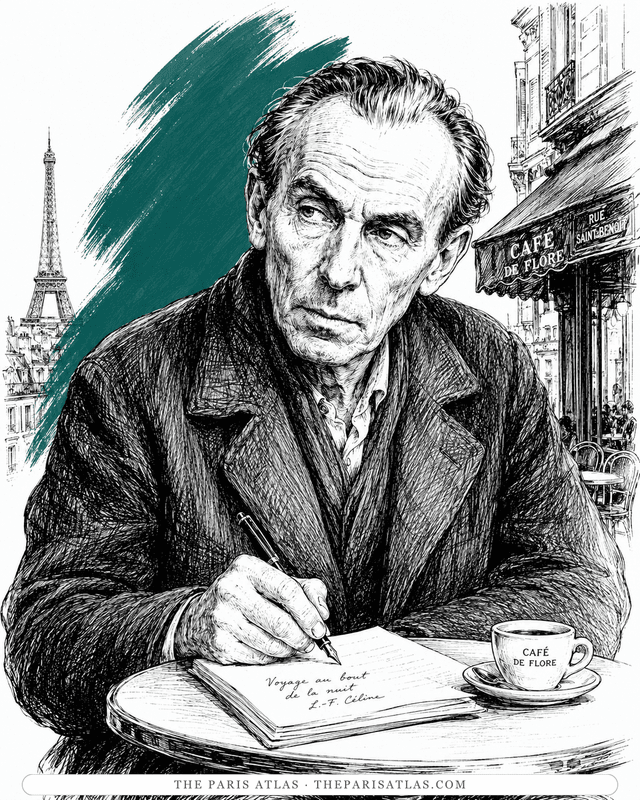
Louis-Ferdinand Céline
The other great stylist the Great War produced — where Hemingway cut the language down, Céline set it on fire. The same wound, opposite treatments.
View author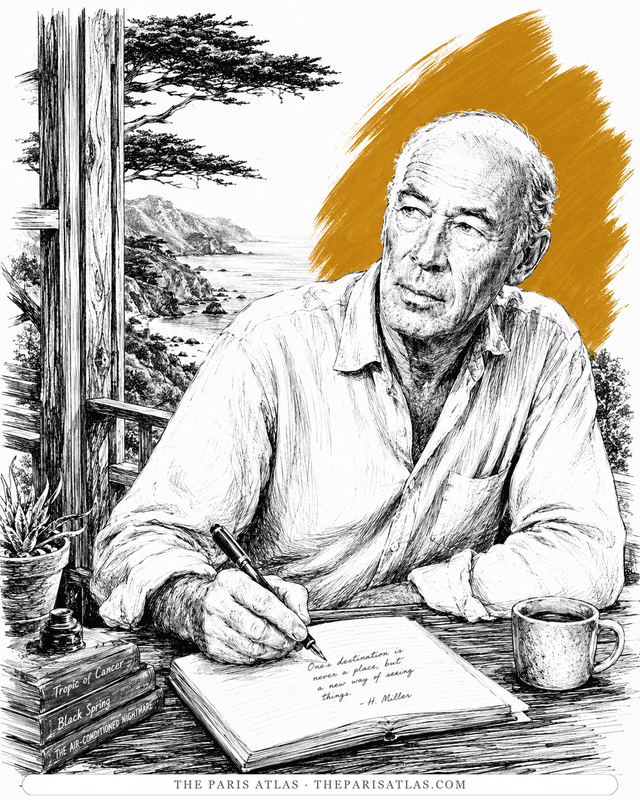
Henry Miller
Paris on no money a decade later, with the restraint removed. Miller called Hemingway's Paris a tourist's Paris; readers get to referee.
View author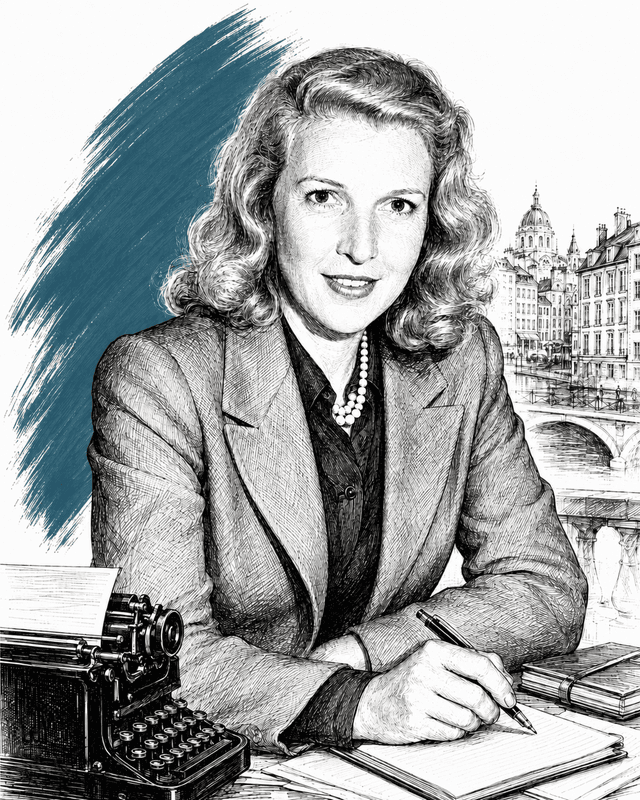
Martha Gellhorn
War correspondent who covered the Spanish Civil War, D-Day, and conflicts across five more decades; Hemingway's third wife, 1940–1945.
View author