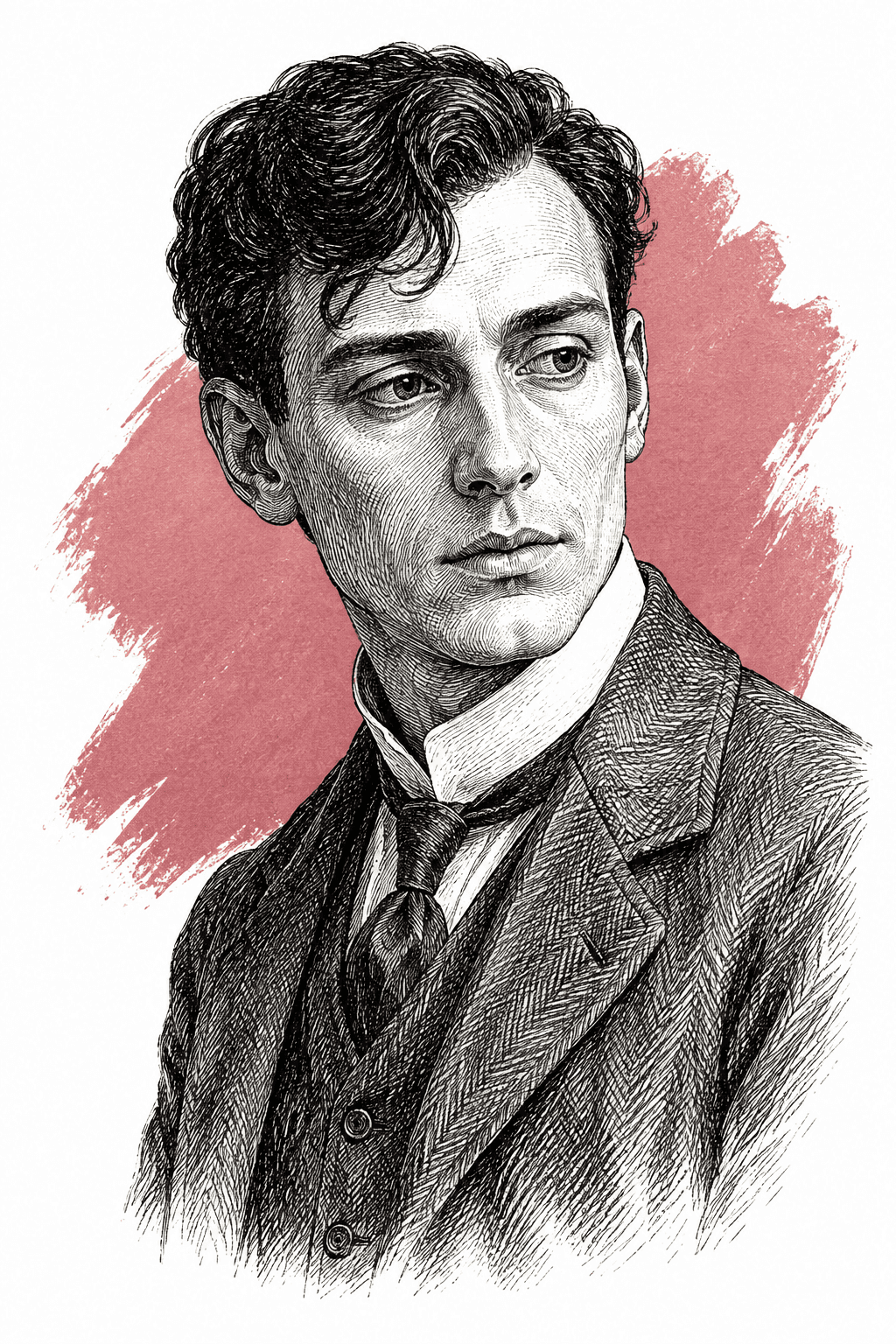
George
The friend Nick Adams skis with in Switzerland, and the person he tells about his wife's pregnancy. This is the George of "Cross Country Snow" — not Nick's Uncle George in "Indian Camp," and not the husband in "Cat in the Rain."
To keep this going and to be told it will keep going. "Maybe we'll never go skiing again, Nick," he says at the end, and then wishes aloud that the two of them could make a promise about it.
The book

At a glance
- "Cross Country Snow" only
- Uncle George in "Indian Camp," the husband in "Cat in the Rain," or the jockey George Gardner in "My Old Man" — four unrelated men of the same name
- George; he calls Nick "Mike" and Nick calls him "Gidge"
- A Swiss mountain above Montreux, reached by funicular, and an inn with a porcelain stove at the bottom of the run
- The ten-forty from Montreux, that night, because he has to get educated
- Nick's wife Helen, the baby coming late next summer, and whether they are going back to the States
Who they are in the book
Spoiler-freeGeorge is an American student on a skiing holiday in the Swiss mountains with Nick Adams, and he appears in one story, "Cross Country Snow." He has to be sorted out from the other men of the same name in this book: he is not Uncle George, who rows across the lake in "Indian Camp," he is not the husband reading on the bed in "Cat in the Rain," and he is not George Gardner the jockey in "My Old Man." Hemingway never remarks on the repetition.
The story is about ten pages and half of it is the two of them running a mountain and the other half is a bottle of wine at an inn at the bottom. George is the one who asks the questions, and the exchange he starts about Nick's wife and the baby coming is the most direct conversation anybody has in the collection.
How George Is Portrayed
- The way he skisHe comes down in telemark position, kneeling, one leg forward and bent and the other trailing, his sticks hanging like some insect's thin legs and kicking up puffs of snow, and finishes in a beautiful right curve inside a wild cloud of it. He tells Nick he was afraid to Christy because the snow was too deep.
- What the two of them call each otherHe calls Nick Mike, throughout, including the first thing he says in the story: "You took a beauty, Mike," he called to Nick. Nick calls him Gidge. Neither nickname is either man's name, and the story never explains where either came from.
- He scouts ahead and then watchesHaving gone down first, he tells Nick what is waiting: keep to the left, it is a good fast drop with a turn at the bottom because of a fence. Nick suggests they take it together and he refuses — he would rather send him first, because he likes watching him take the bumps.
- At the innNick orders a bottle of Sion and George defers to him on it: "You know more about wine than I do. I like any of it." He wonders whether the waitress has any cake, notices that she is not very cordial, and asks Nick how he knows she isn't married. Later he leans back with his eyes shut and says wine always makes him feel this way, and when Nick asks whether that is bad: "No. I feel good, but funny."
- He has to catch a trainAsked when he has to go back to school, he answers, "Tonight," George answered. "I've got to get the ten-forty from Montreux." What he would rather do is bum around with Nick indefinitely — skis and rucksacks, repair kit, spare sweaters and pyjamas, trains to wherever the running is good, pubs at night, across the Oberland and up the Valais and through the Engadine, and not give a damn about school or anything.
- The questions about the babyHe is the one who raises it, out of a silence, coming down off the wall to the table. Is Helen going to have a baby, when, is Nick glad, will they go back to the States, does Nick want to, does Helen. He gets: yes, late next summer, yes now, probably, no, and no. His verdict is that it's hell, isn't it, and Nick says no, not exactly, and cannot say why not.
- The promise he doesn't getThe two of them talk themselves round to agreeing they have got to go skiing again, because it isn't worth while if you can't. Then he says he wishes they could make a promise about it. Nick stands up, buckles his wind jacket, picks up the ski poles and sticks one into the floor: "There isn't any good in promising," he said. They go out and start up the road for the run home.
The story is the only place in the book where Nick's marriage is discussed at all, and it is George who makes it happen. Hemingway gives him the questions and gives Nick the answers, which keeps the whole subject at one remove — the reader learns about Nick's life from a friend interrogating him over a bottle of wine, not from Nick volunteering any of it.
If you like In Our Time


If you like Ernest Hemingway
Explore authors with a similar voice, perspective, and influence.

Louis-Ferdinand Céline
The other great stylist the Great War produced — where Hemingway cut the language down, Céline set it on fire. The same wound, opposite treatments.
View author
Henry Miller
Paris on no money a decade later, with the restraint removed. Miller called Hemingway's Paris a tourist's Paris; readers get to referee.
View author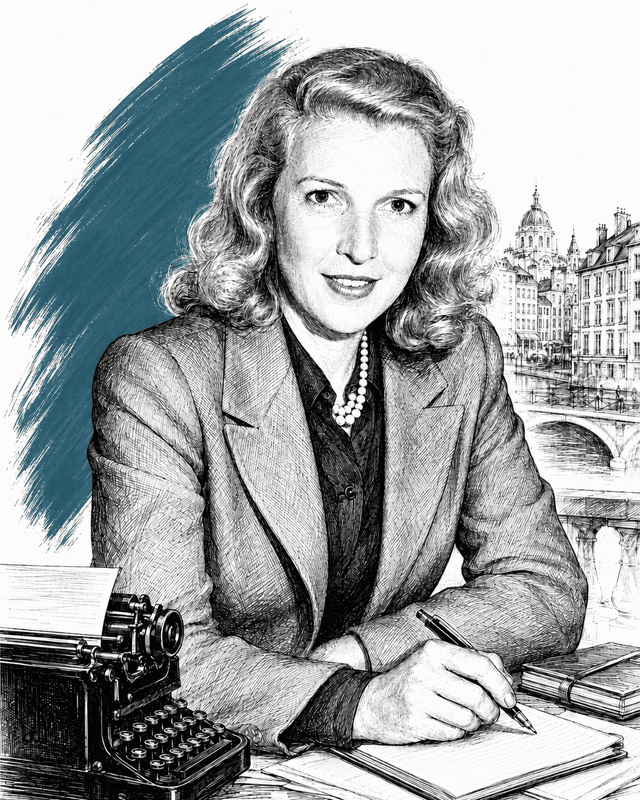
Martha Gellhorn
War correspondent who covered the Spanish Civil War, D-Day, and conflicts across five more decades; Hemingway's third wife, 1940–1945.
View author