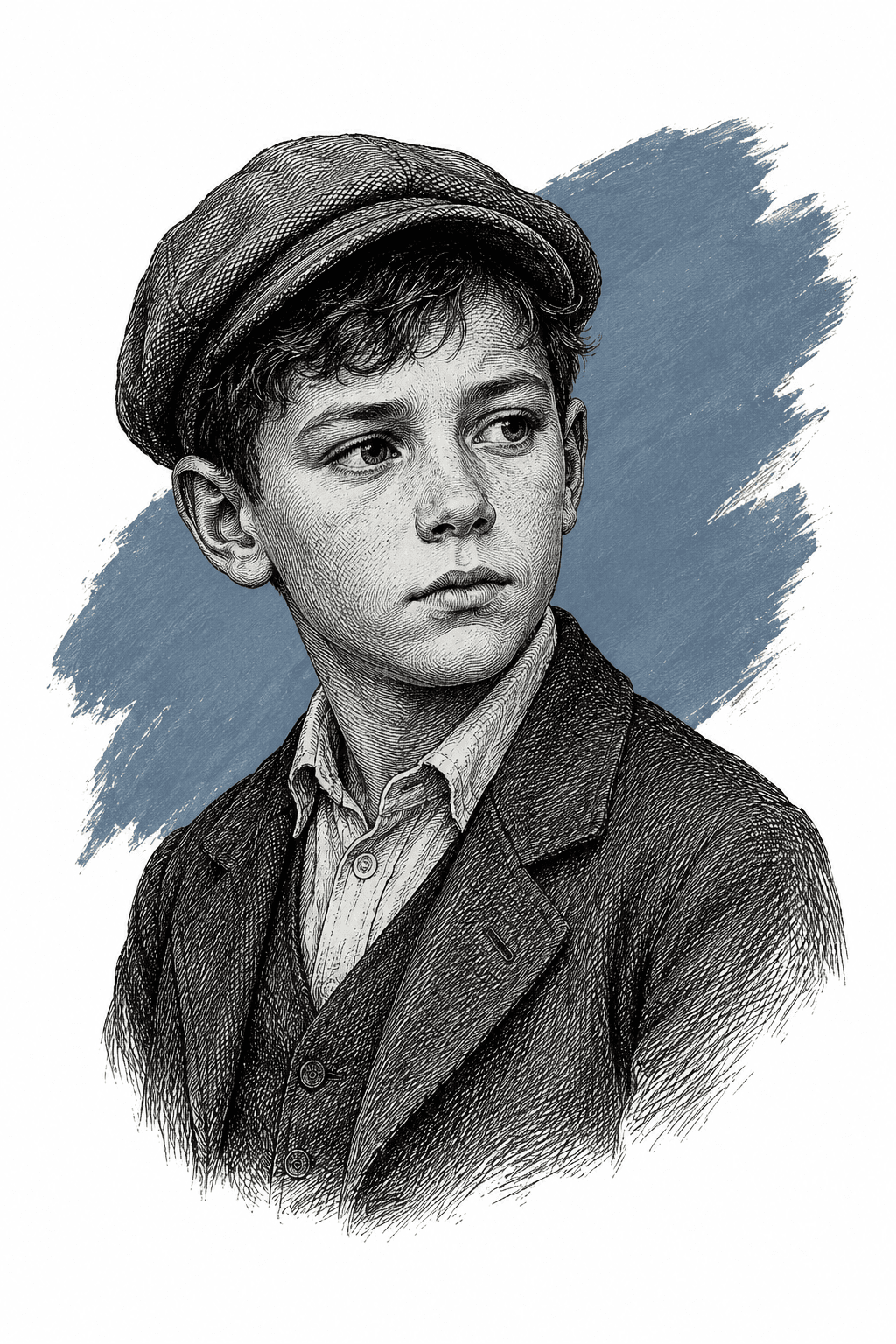
Joe
The boy narrator of "My Old Man" — an American kid living around European racecourses with his father, a jockey he worships.
To be around horses with his father, permanently. Asked to consider going back to America for school, he answers with a question of his own: what has he got to go back there to go to school for when everything's on the bum there?
The book

At a glance
- "My Old Man" only — the collection's longest story
- Joe by his father and by everybody; two men at the racecourse gate give his surname as Butler
- Milan and Turin, then Maisons-Lafitte outside Paris, at a boarding house run by Mrs. Meyers
- Mentioned once and only in passing, having died before the St. Moritz years
- Everything about weight, riding, betting and courses; almost nothing about why the adults behave as they do
Who they are in the book
Spoiler-freeJoe is a boy of perhaps twelve or thirteen, the narrator of "My Old Man," the longest story in the collection and the only one told in the first person by a child. He lives with his father, an American steeplechase jockey, first at the Milan and Turin racecourses and then outside Paris at Maisons-Lafitte, and the story is his account of the last year or so of that life.
He is a completely reliable reporter of things he does not understand. He describes his father's weight-making, the arguments, the odd looks and the sudden departures exactly as he saw them, and the reader assembles the picture he cannot. Hemingway keeps his voice deliberately plain and repetitive: swell, sure, gee, my old man.
How Joe Is Portrayed
- The morning runsHe runs with his father in the hot forenoon so his father can sweat weight off — the man in a rubber shirt over two jerseys and a sweat shirt over that, jogging behind the boy on the roads out from San Siro, then skipping rope in the white dust until the sweat comes off his face like water. Italian carters stop their steers to watch.
- How much he likes the racingHe is nuts about the horses: the way they go up the track to the post, dancy and tight-looking, the fat starter with his big whip, the barrier snapping up, the bell, the field stringing out. "There wasn't ever anything like it for me."
- The scene in the GalleriaHe is sent out to buy a copy of the Sportsman while two men lean over his father at a café table in Milan. He comes back and stands a little way off. His father acts as if the men are not there and asks whether he wants an ice. One of them, a man called Holbrook, looks down and says slow and careful, "You son of a bitch," and walks out. Three days later they leave Italy for good.
- Maisons-LafitteThe best place he has ever lived: a lake, a forest to go bumming in all day with the other kids, a boarding house run by a Mrs. Meyers, a slingshot his father made him, and a magpie as the best thing they ever got with it. He learned to talk French quick, and reports that it is an easy language.
- The day Kzar lostAt St. Cloud he sees a great yellow horse called Kzar led round the paddock and feels hollow inside, he is so beautiful. Kzar is the favourite. In the weighing room a jockey tells his father, very low, that Kzar won't win and the winner will be Kircubbin at 8 to 1. His father bets five thousand on it. Kzar finishes second by a neck.
- The girl at the next tableSitting outside the Café de la Paix he sees an American woman and her daughter eating ices, smiles at the girl, gets a smile back, and never sees either of them again. He had worked out how he would speak to her: "Pardon me, but perhaps I can give you a winner at Enghien today?" He decides, on reflection, that she might have taken him for a tout.
If you like In Our Time


If you like Ernest Hemingway
Explore authors with a similar voice, perspective, and influence.

Louis-Ferdinand Céline
The other great stylist the Great War produced — where Hemingway cut the language down, Céline set it on fire. The same wound, opposite treatments.
View author
Henry Miller
Paris on no money a decade later, with the restraint removed. Miller called Hemingway's Paris a tourist's Paris; readers get to referee.
View author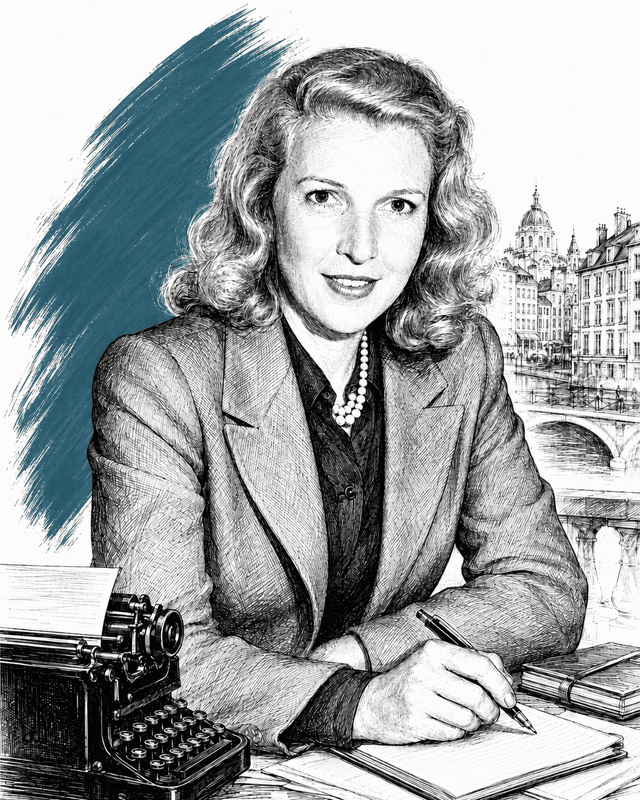
Martha Gellhorn
War correspondent who covered the Spanish Civil War, D-Day, and conflicts across five more decades; Hemingway's third wife, 1940–1945.
View author