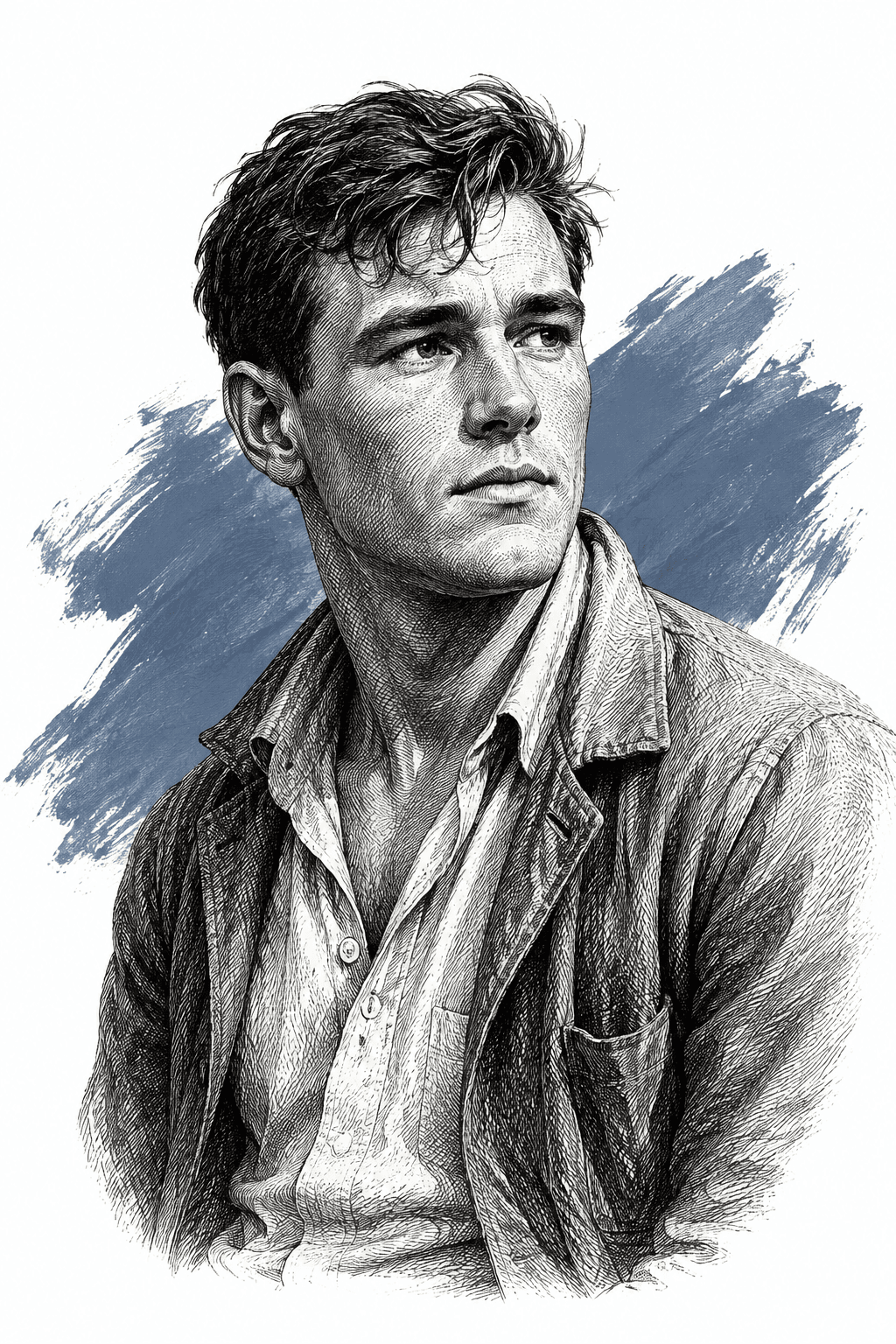
Nick Adams
The young man Ernest Hemingway invented to carry his own life. He appears in eight of the fifteen stories, first as a boy in the Michigan woods and last as a man fishing alone.
To be left alone with work he can do with his hands. Walking into the pine country in the last story, he is glad to be rid of everything else: "He felt he had left everything behind, the need for thinking, the need to write, other needs." When his mind starts up again over the campfire, he notes that he is tired enough to shut it off.
The book

At a glance
- Recurring character — eight of the fifteen stories, plus a soldier named Nick in one of the interchapters
- Northern Michigan; his father is a country doctor and the family keeps a cottage by the lake
- Nick Adams; Wemedge to Bill, Mike to his skiing friend George, Mister Adams to Bugs
- A small boy in "Indian Camp," old enough to ride freight trains in "The Battler," married in "Cross Country Snow"
- Never mentioned inside the stories; only the interchapter about a soldier named Nick puts him in it
- Alone on a Michigan river with two trout in a sack, in "Big Two-Hearted River"
- Ernest Hemingway — the author, at one remove · 1899–1961 · Oak Park, Illinois
Who they are in the book
Spoiler-freeNick Adams is a fictional character, the son of a country doctor in northern Michigan, and the nearest thing this collection has to a lead. Ernest Hemingway gave him his own boyhood summers, his own war, and much of his own temperament, then wrote him across eight of the book's fifteen stories. The eight do not add up to a plot. They are separate stories about the same person at different ages, arranged so that a reader watches him grow up in the gaps between them.
The stories almost never tell you what Nick is thinking. They tell you what he does: he holds a basin while his father operates, he ends a romance and cannot explain why, he gets thrown off a moving freight train, he skis, he pitches a tent, he fishes. Between the stories Hemingway set one-paragraph sketches of war and violence, and in one of them a soldier named Nick is shot in the spine against a church wall in Italy. None of the stories that follow mentions the war. Readers have argued for a century about how much of the last one that silence explains.
How Nick Adams Is Portrayed
- The boy at the Indian campIn the opening story his father, a doctor, rows him across a lake at night to a Native American logging camp where a woman has been two days in labour. Nick holds the basin, looks away from the operation, and is standing in the kitchen doorway when his father discovers that the woman's husband has cut his own throat in the bunk above her. Nick asks him, "Why did he kill himself, Daddy?" The answer he gets is that the man couldn't stand things.
- The questions he asksRowing home from that night he works steadily through whether many men kill themselves, whether women do, and whether dying is hard. His father answers each one shortly and none of them well. The story ends with Nick in the stern of the boat feeling quite sure that he would never die.
- Ending it with MarjorieIn "The End of Something" he spends an evening trolling for trout with the girl he has been going with and will not say what is wrong until she makes him. He tells her it isn't fun any more, she takes the boat and rows away alone, and his friend Bill walks into the clearing a minute later — which quietly reveals that the two of them had discussed it beforehand.
- The long drunk afterwards"The Three Day Blow" is Nick and Bill working through Irish whisky and then Scotch by a fire while an autumn gale blows outside, talking about baseball, novels, and their fathers. Nick is pleased with himself for staying practical while drunk. Then the liquor dies out of him and he understands that he has lost her; then Bill remarks that he could always start it up again, and he feels fine.
- The names people call himBill calls him Wemedge. On a Swiss ski slope his friend George calls him Mike. Bugs, the man cooking over a fire in "The Battler," calls him Mister Adams every single time he speaks to him. Hemingway never explains any of the three.
- Riding the freights"The Battler" opens with Nick picking himself up beside a railway track, his knee barked and his eye swelling, after a brakeman lured him within reach and knocked him off a moving freight car. He is travelling alone and hungry somewhere near Mancelona, Michigan. "You got to be tough," he tells the punch-damaged ex-prizefighter at the fire, and then refuses to fight him.
- Hit in the spineOne of the one-paragraph sketches between the stories puts a soldier named Nick against a church wall in an Italian town, both legs stuck out awkwardly, machine-gun fire in the street, waiting for stretcher bearers. He tells a wounded man lying beside him, "You and me we've made a separate peace." Hemingway gives him no surname there, and no story in the book confirms that this is the same Nick.
- Fishing the burned countryThe book closes with him getting off a train at Seney, Michigan, a town burned to its foundations, and hiking into the pines to camp. He cooks beans and spaghetti out of cans, catches grasshoppers in the dew for bait, loses an enormous trout that breaks his leader, keeps two, and stops. Downstream the river runs into a cedar swamp, and he decides he does not want to fish it today.
The sequence stops without concluding. In "Cross Country Snow" Nick is married to a woman named Helen, . Two stories later he is alone in Michigan again, and the last decision in the book is a refusal:
The war is the thing that final story never names. Nick is fishing a country that has burned, the grasshoppers have all turned black from living in it, and he works through each small task, the tent, the coffee, the leader knot, with a deliberateness the story never accounts for. The only interior note it allows is that his mind is starting to work and that he knows he can shut it off because he is tired enough.
Nick is Hemingway with the facts moved around. Hemingway spent boyhood summers at his family's cottage on Walloon Lake in northern Michigan, where his father, the Oak Park doctor Clarence Hemingway, took him along on calls. He was eighteen when an Austrian trench mortar hit him at Fossalta di Piave on 8 July 1918, and Fossalta is named in the interchapter about a soldier praying to be got out of a bombardment. He wrote "Big Two-Hearted River" in Paris in 1924, at twenty-five.
If you like In Our Time


If you like Ernest Hemingway
Explore authors with a similar voice, perspective, and influence.

Louis-Ferdinand Céline
The other great stylist the Great War produced — where Hemingway cut the language down, Céline set it on fire. The same wound, opposite treatments.
View author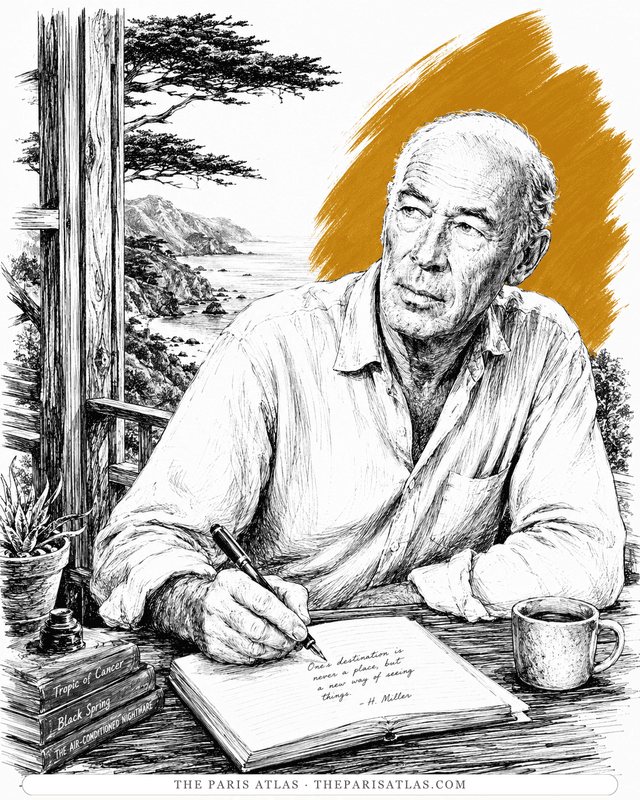
Henry Miller
Paris on no money a decade later, with the restraint removed. Miller called Hemingway's Paris a tourist's Paris; readers get to referee.
View author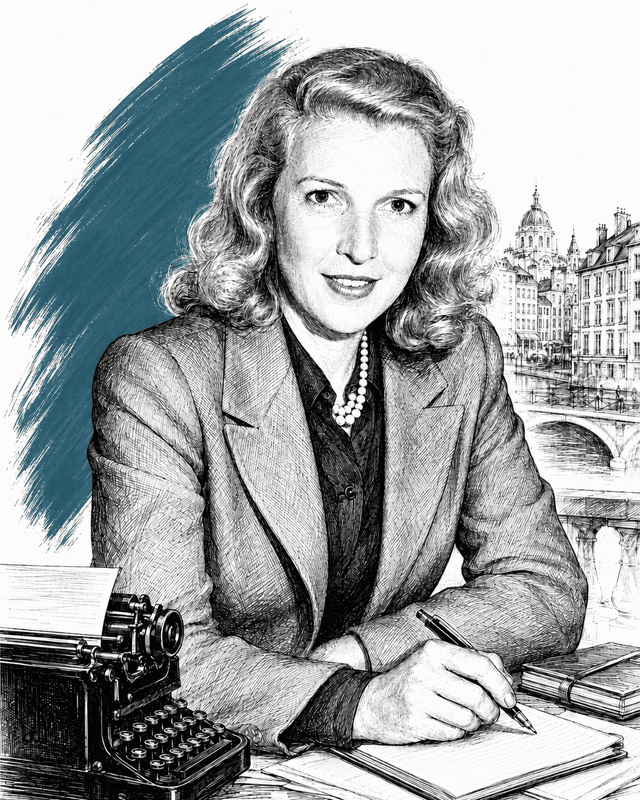
Martha Gellhorn
War correspondent who covered the Spanish Civil War, D-Day, and conflicts across five more decades; Hemingway's third wife, 1940–1945.
View author