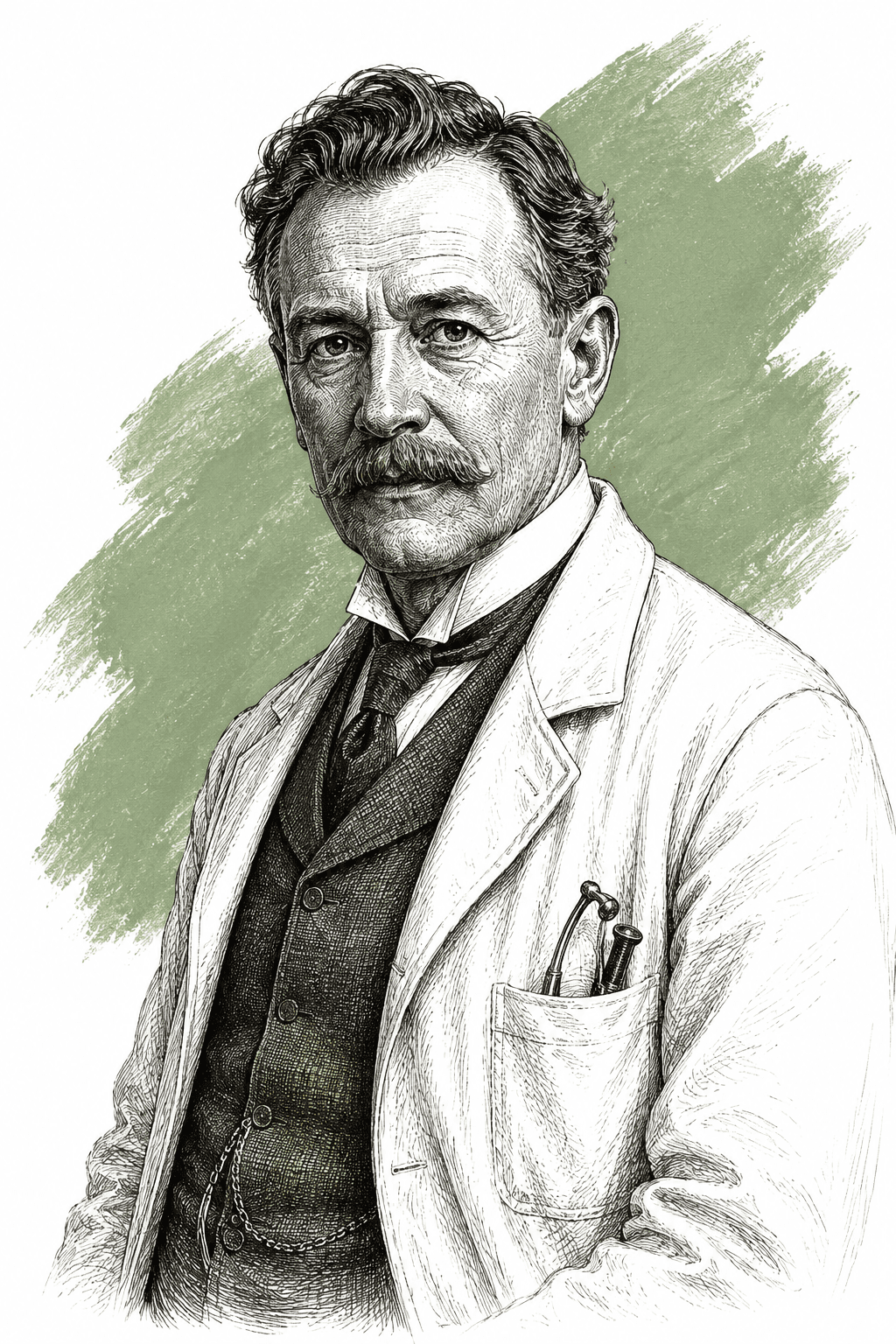
Nick's father
A country doctor in northern Michigan, and the second most-present person in the book. He appears in two Nick Adams stories, and comes off badly in both.
To be a good doctor and to be seen as one. Having delivered a baby by Caesarean with a jack-knife, he tells his brother-in-law, "That's one for the medical journal, George," and the story notes that he was feeling exalted and talkative, as football players are in the dressing room after a game.
The book

At a glance
- "Indian Camp" and "The Doctor and the Doctor's Wife"; mentioned in "The Three Day Blow"
- "The doctor," "Nick's father," "Daddy"; his wife calls him Henry, and Dick Boulton calls him Doc to annoy him
- Country doctor; makes calls by rowboat across the lake
- A lake cottage with a back gate onto the woods, a porch, and a wife who keeps to a darkened room
- Nick reports that he claims never to have taken a drink in his life
Who they are in the book
Spoiler-freeNick Adams's father is a doctor practising in the Michigan lake country. The book calls him "the doctor" and "Nick's father" almost throughout; his wife calls him Henry once, and he is never given a surname. He carries two of the fifteen stories, "Indian Camp" and "The Doctor and the Doctor's Wife," and is mentioned in a third, where Nick reports as a matter of scientific interest that his old man claims never to have taken a drink in his life.
Hemingway builds him out of one contrast, repeated twice. In the first story he is superb at his work and thoughtless about everything around it. In the second he is humiliated by a man he has hired, walks away rather than fight, and takes it out on nobody, which is its own kind of defeat. The two stories together are the first serious portrait of a father in Hemingway's fiction, and it is not a flattering one.
How Nick's father Is Portrayed
- How he explains things to a childTaking Nick into the shanty where a woman is screaming in labour, he explains what is happening in flat clinical terms and then says of the screaming: "No. I haven't any anesthetic," his father said. "But her screams are not important. I don't hear them because they are not important."
- The operationHe boils his instruments in a kettle after unwrapping them from a handkerchief, scrubs his hands with a cake of soap brought from camp, operates with a jack-knife while three men hold the woman down, and sews the incision with nine-foot tapered gut fishing leaders. It works. Both mother and baby live.
- The collapse afterwardsHis good mood lasts until he pulls back the blanket from the woman's husband in the bunk above her and finds that the man has cut his throat with a razor. He tells his brother-in-law to take Nick out of the shanty, too late, and by the walk back to the boat all the exhilaration has gone: he tells Nick he is terribly sorry he brought him along.
- The row over the logsIn the second story he hires men from the Native American camp to saw up beech logs that have drifted onto his beach. One of them, Dick Boulton, reads the scaler's mark, points out that the timber belongs to a lumber company, and needles him about stealing it. The doctor, red-faced, tells him to take his tools and get out, and threatens to knock his eye teeth down his throat if he calls him Doc once more. Boulton says he won't, and he doesn't. The doctor walks up the hill to the cottage instead, and they all watch him go.
- The shotgun and the unopened journalsBack in the cottage he notices a stack of medical journals still in their wrappers by the bureau and it irritates him. He then sits on his bed cleaning a shotgun, pumping the heavy yellow shells out onto the bedspread and back in again. The story says he was very fond of it. He puts it behind the dresser and goes for a walk.
- The marriageHis wife lies in a darkened room with the blinds drawn and answers his account of the row with scripture. He gives her an explanation she declines to believe, lets the screen door slam, hears her catch her breath, and apologises through the window. Sent to fetch Nick to her, he tells the boy she wants him and then goes off to look for black squirrels with him instead.
Neither story resolves anything about him. "Indian Camp" ends with Nick rather than with his father, and "The Doctor and the Doctor's Wife" ends with He is a man the book keeps catching at a bad moment and never sums up.
If you like In Our Time


If you like Ernest Hemingway
Explore authors with a similar voice, perspective, and influence.

Louis-Ferdinand Céline
The other great stylist the Great War produced — where Hemingway cut the language down, Céline set it on fire. The same wound, opposite treatments.
View author
Henry Miller
Paris on no money a decade later, with the restraint removed. Miller called Hemingway's Paris a tourist's Paris; readers get to referee.
View author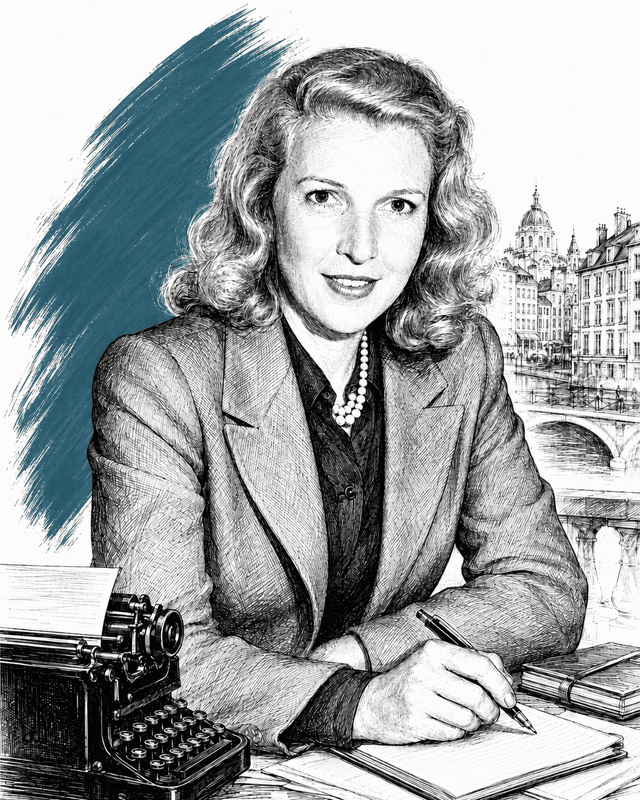
Martha Gellhorn
War correspondent who covered the Spanish Civil War, D-Day, and conflicts across five more decades; Hemingway's third wife, 1940–1945.
View author