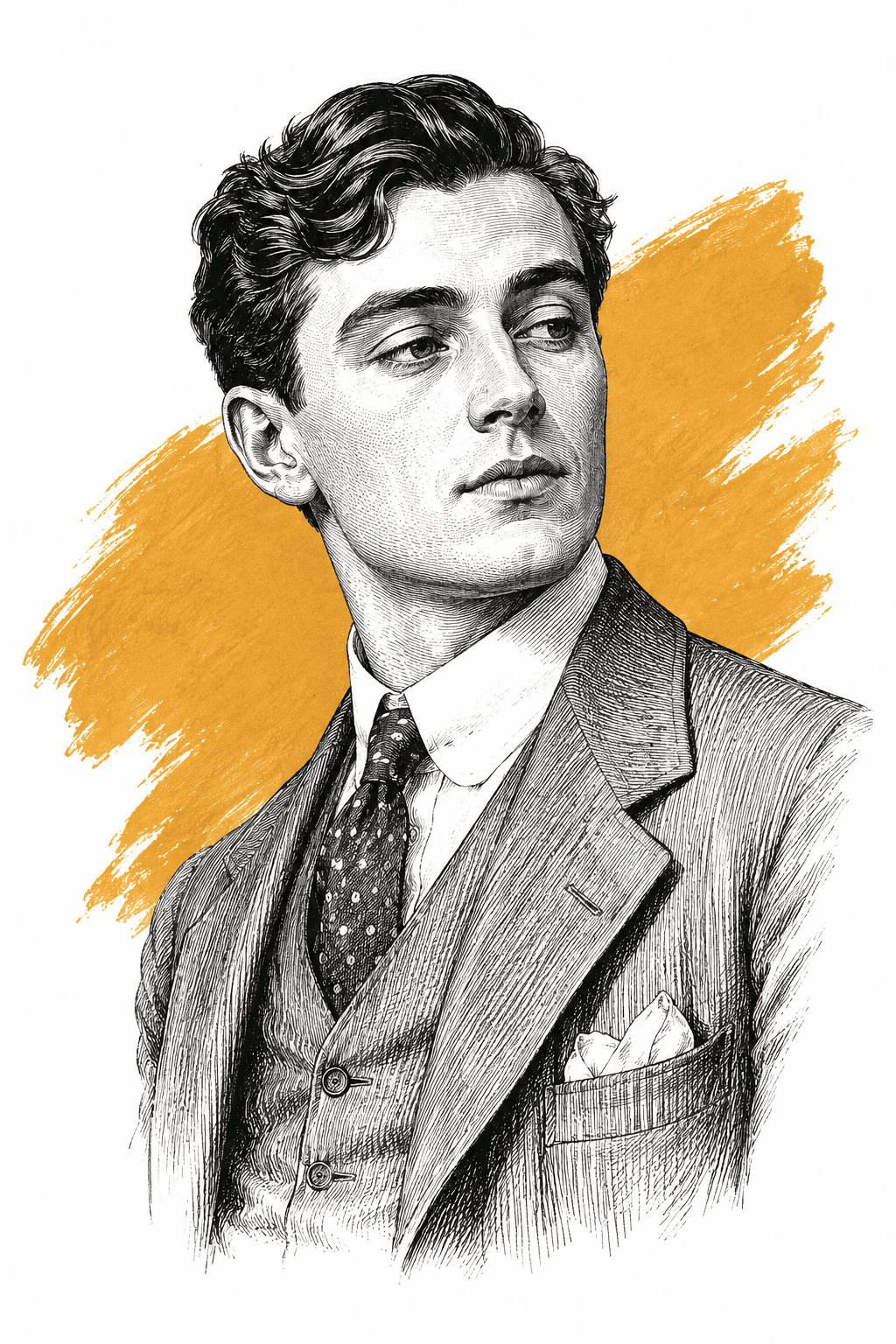
Hubert Elliot
A twenty-five-year-old American poet with a private income who marries the woman who ran a Boston tea shop, and takes her to France.
A baby, and to have kept himself clean until the point of getting one. He had never gone to bed with a woman before marrying, wanting to bring his wife the same purity of mind and body he expected of her; the story says he called it to himself living straight.
The book

At a glance
- "Mr. and Mrs. Elliot" only
- Twenty-five; a private income of nearly ten thousand dollars a year
- Postgraduate law at Harvard, until he leaves for Europe
- Hubert by his wife, Hubie by his friends, Elliot by the narration
- Boston, Cherbourg, Paris, Dijon, Paris again, then a rented château in Touraine
Who they are in the book
Spoiler-freeHubert Elliot is the husband in "Mr. and Mrs. Elliot," a short satirical story about an American couple abroad in the early 1920s. He is twenty-five, doing postgraduate work in law at Harvard when he marries, and a poet with an income of nearly ten thousand dollars a year. He writes very long poems very rapidly.
Hemingway wrote him as a comic figure and is merciless about it. The joke is that Elliot has organised his whole life around a chastity nobody asked him for, and the story reports the results in the same flat voice it uses for everything else.
How Hubert Elliot Is Portrayed
- The line that put girls offHe had been in love with various girls before, and always told them sooner or later that he had led a clean life. "Nearly all the girls lost interest in him." He was genuinely shocked at girls marrying men who must have dragged themselves through the gutter, and once tried to warn one off a man he had almost proof was a rotter at college, with unpleasant results.
- The kissingHe explains to his wife that he learned his way of kissing from hearing a fellow tell a story once. He is delighted with the experiment, and the two of them develop it as far as possible. Afterwards she likes him to tell her again that he kept himself really straight for her.
- The wedding nightThey spend it in a Boston hotel and are both disappointed. She goes to sleep; he cannot, and walks up and down the corridor in the new Jaeger bathrobe he bought for the wedding trip, looking at the pairs of shoes, small and big, outside the doors. It sets his heart pounding, and he hurries back to a room where she is already asleep.
- The typingIn Dijon he writes a great number of very long poems and she types them. He is very severe about mistakes and makes her redo an entire page for one. She cries a good deal.
- The bookBy the time they take a château in Touraine he has nearly enough poems for a volume, which he is going to bring out in Boston — having already sent his cheque to a publisher and made a contract. His friends in Paris admire his poetry and call him Hubie.
- How he ends upAlone in his own room at the château, drinking white wine, writing a great deal of poetry through the night and looking very exhausted in the morning, while his wife and her friend take the big medieval bed. At dinner in the garden under a plane tree, the story says, they were all quite happy.
If you like In Our Time


If you like Ernest Hemingway
Explore authors with a similar voice, perspective, and influence.

Louis-Ferdinand Céline
The other great stylist the Great War produced — where Hemingway cut the language down, Céline set it on fire. The same wound, opposite treatments.
View author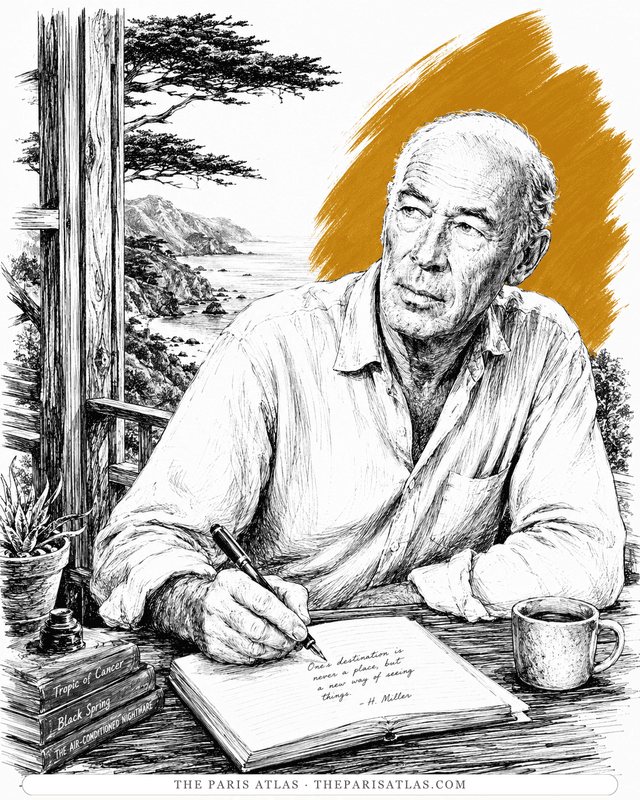
Henry Miller
Paris on no money a decade later, with the restraint removed. Miller called Hemingway's Paris a tourist's Paris; readers get to referee.
View author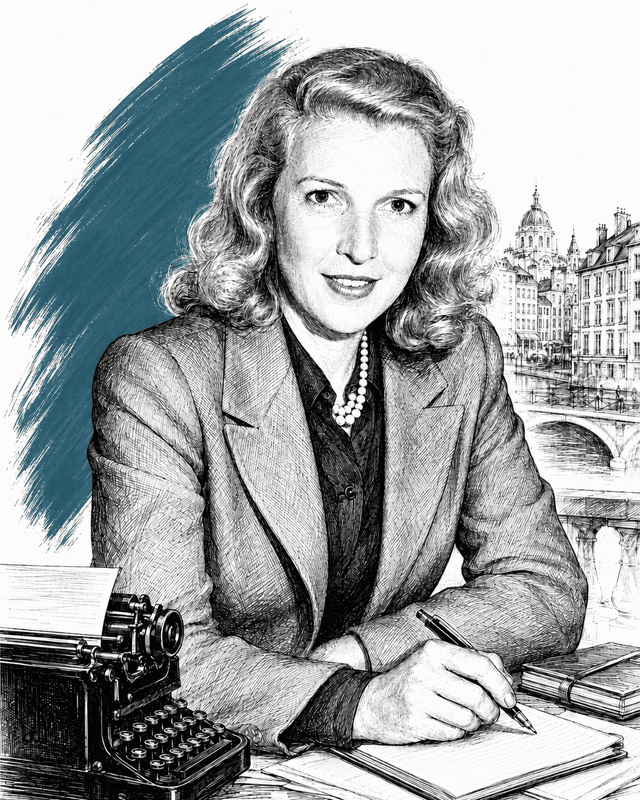
Martha Gellhorn
War correspondent who covered the Spanish Civil War, D-Day, and conflicts across five more decades; Hemingway's third wife, 1940–1945.
View author