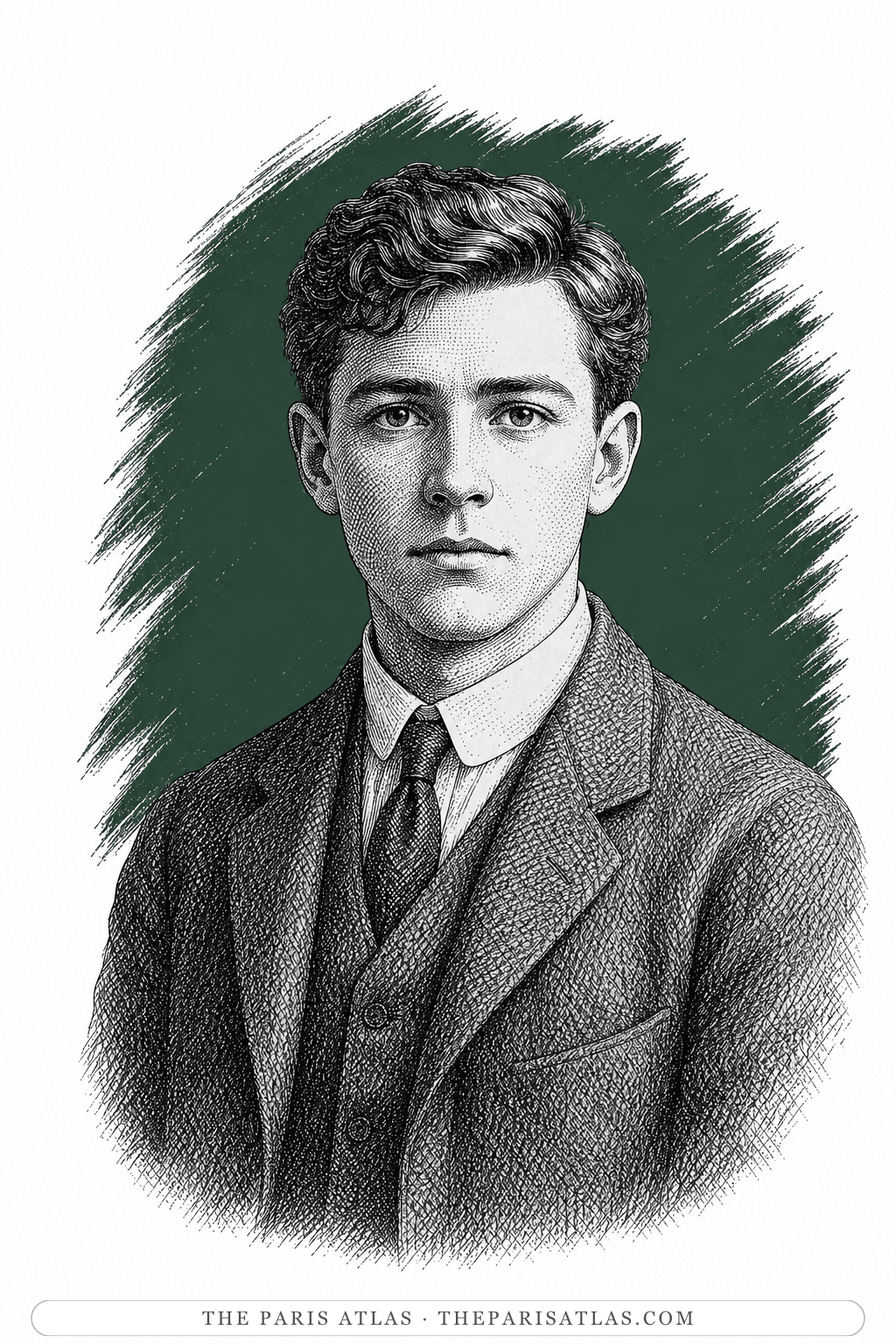
Davin
A country student at Stephen's university, an Irish-speaking hurler from Limerick who calls him Stevie and asks him, seriously, whether he is Irish at all. The friend Stephen likes most and argues with hardest.
Ireland, before anything else. He states it to Stephen and does not dress it up: "—Too deep for me, Stevie, he said. But a man's country comes first. Ireland first, Stevie. You can be a poet or a mystic after."
The book

At a glance
- A country student at Stephen's university, from the Munster countryside
- Stevie — the only person in the novel who uses it
- One of the tame geese, a joke about the Wild Geese who left to fight in foreign armies
- Irish nationalist first and foremost; signed the peace petition; talks of joining the French Foreign Legion
- His rooms in Grantham Street, the handball alley, one night walk, and a cigar shop in the closing diary
- George Clancy · County Limerick
Who they are in the book
Spoiler-freeDavin is a fellow student of Stephen Dedalus at the Dublin university in the last chapter of A Portrait of the Artist as a Young Man, the 1916 novel by the Irish writer James Joyce. He is from the Munster countryside, learned Irish from his nurse, plays hurling — the fast Irish stick-and-ball game — and belongs to the generation of young men then trying to revive the Irish language, Irish sport and Irish independence at once.
He is the only friend in the book Stephen treats with any tenderness. Davin calls him Stevie, which nobody else does, and Stephen calls him a tame goose, a joke about the Wild Geese, the Irish soldiers who left to fight in continental armies; Davin talks about joining the French Foreign Legion. Stephen visits his rooms, notices his well-made boots lined up along the wall, and reads him other men's poems.
The friendship also produces the book's central political argument. Davin has signed the petition, joined the league, and taken the position that a man's country comes before everything; Stephen will not sign, will not learn Irish, and will not have the nationalist case put to him without answering it brutally. Neither convinces the other and neither stops liking the other, which is the most generous thing the last chapter does.
How Davin Is Portrayed
- How he speaksIn old country turns of phrase that Stephen finds beautiful and cannot use himself — a quaintness of old English speech, the narration calls it, next to the flat Dublin drawl of his other friend Cranly. He puts a heavy stress on the wrong syllable of matriculation, addresses the Jesuits as father, and takes teasing about all of it without complaint: "—Go on, Stevie, I have a hard head, you tell me. Call me what you will."
- The woman in the cottageHe tells Stephen one story, at night, walking, and says he has never told it to anyone. Walking home ten miles in the dark after a hurling match he knocked at a lit cottage for a glass of water. A half-dressed young woman brought him milk, kept him talking at the door with her shoulders bare, said her husband was away and she was alone in the house, and took his hand to draw him inside. He thanked her and walked on, and looked back at the bend of the road, and she was still standing at the door.
- What he cannot forgive Stephen forStephen has told him, one night in Harcourt Street, about his own visits to the brothel quarter. Davin says he could not eat his dinner afterwards and lay awake, and asks why he was told. He does not call Stephen a monster; he says only that he wishes he had not been told, which is worse.
- The netsPressed to be one of us, Stephen gives him the sentence the book is best known for after its last line: "When the soul of a man is born in this country there are nets flung at it to hold it back from flight." He names the nets as nationality, language and religion and says he will try to fly by them. Davin's reply is that it is too deep for him.
- The old sowThe same conversation produces the harshest thing anyone says about Ireland in the novel. Davin has just told him that the men who died for their ideals will be vindicated one day. Stephen answers with cold violence: "Ireland is the old sow that eats her farrow." Davin gets up off his box and walks away shaking his head, and is arguing cheerfully with somebody else two minutes later.
- The questionHalfway through the argument he asks it straight out — Stephen talks against English literature and against Irish informers in the same breath, and has that name and those ideas: "Are you Irish at all?" It is not a taunt. Davin genuinely wants to know, and the book never answers him.
The model was George Clancy, a friend of Joyce's at University College Dublin from Limerick, a hurler and an Irish-language enthusiast who tried to get Joyce to the league classes exactly as Davin does. Clancy went into politics, became mayor of Limerick, and was shot dead at his home in 1921 during the War of Independence. Joyce, in Trieste and then Paris, outlived him by twenty years.
If you like A Portrait of the Artist as a Young Man


If you like James Joyce
Explore authors with a similar voice, perspective, and influence.
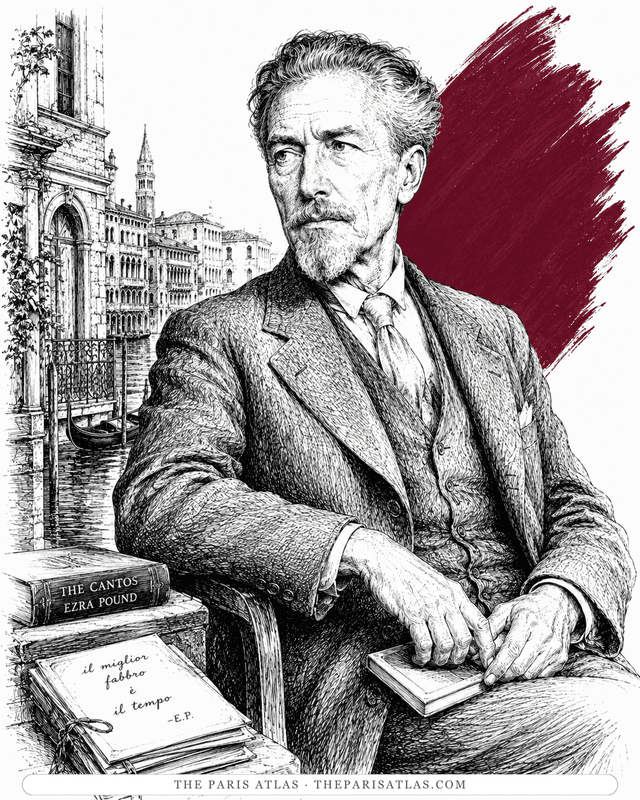
Ezra Pound
The impresario who dragged Joyce's early books into print, brought him to Paris, and championed Ulysses until the world caught up.
View author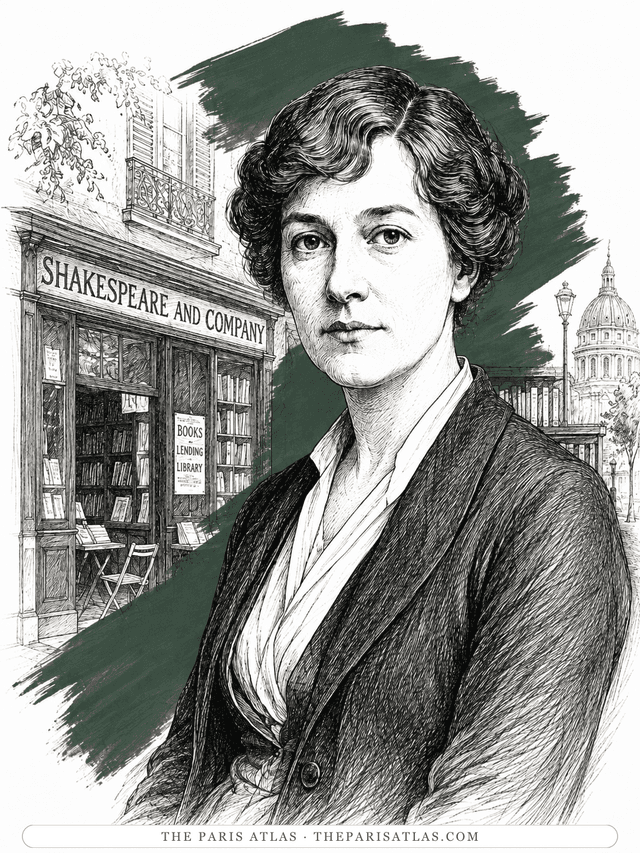
Sylvia Beach
His publisher of last resort and first devotion — the bookseller who printed Ulysses when no one else would.
View author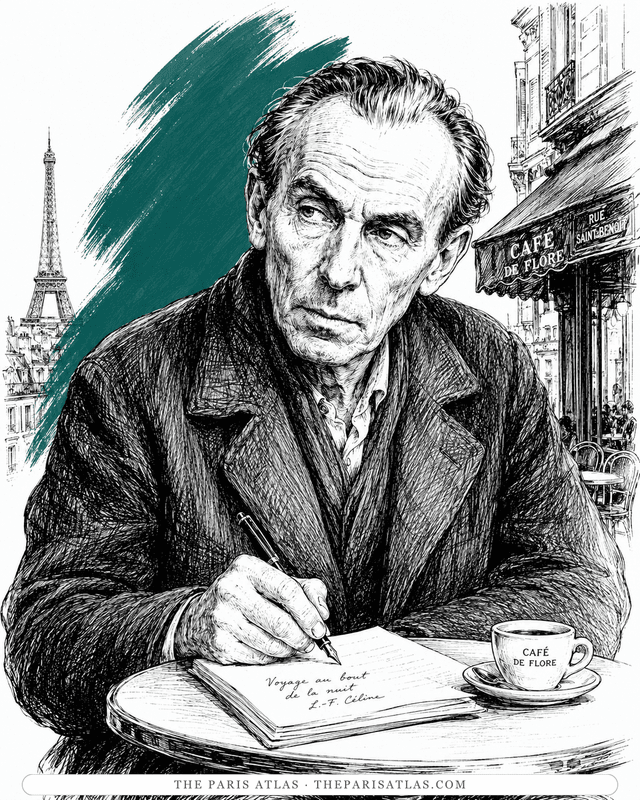
Louis-Ferdinand Céline
The doctor of the Paris slums who wrote the century's blackest, funniest novel — and changed the sound of French prose.
View author