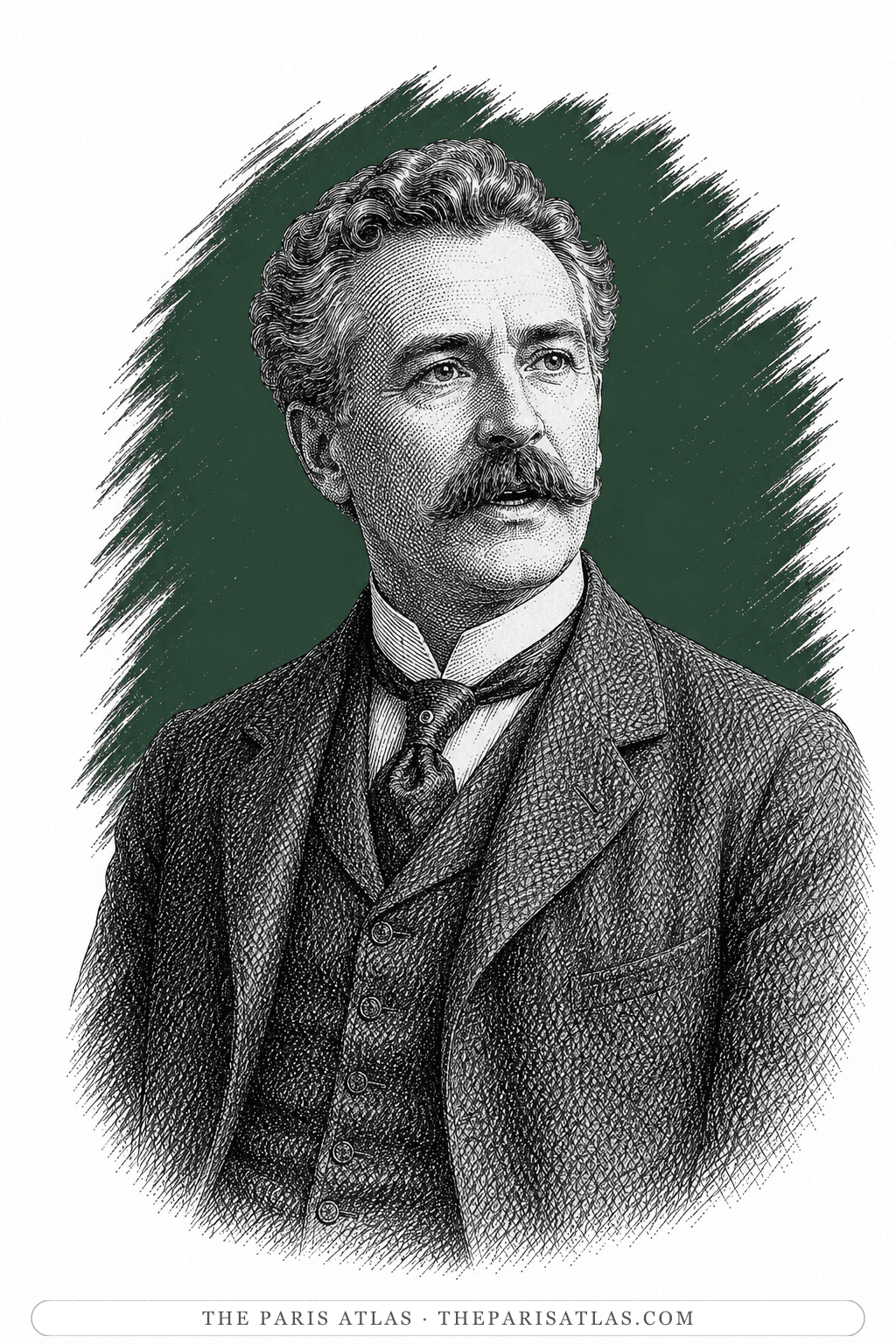
Mr Casey
A family friend and the guest at the Dedaluses' Christmas dinner — an old political campaigner with three fingers he cannot straighten, who ends the meal shouting that Ireland has had too much God.
The priests out of politics, and Parnell's name cleared. He states the bargain plainly across the turkey: "—Let them leave politics alone, said Mr Casey, or the people may leave their church alone."
The book

At a glance
- John Casey — a friend of Stephen's father, and the guest at the Christmas dinner
- A Parnellite campaigner who has been in prison for it, and who blames the Catholic clergy for Parnell's fall
- A dark fierce face with dark eyes that are never fierce, and a slow voice good to listen to
- Cramped and unstraightenable — got, he says, making a birthday present for Queen Victoria
- The Christmas dinner in chapter one, and nowhere else in the novel
Who they are in the book
Spoiler-freeJohn Casey is a friend of the family of Stephen Dedalus, the boy A Portrait of the Artist as a Young Man follows, and the guest at the Christmas dinner in the first chapter of that 1916 novel by the Irish writer James Joyce. He is the only person at the table who is not a relative, and the argument he starts is the first political education the boy gets.
The subject is Charles Stewart Parnell. Parnell led the Irish parliamentary party at Westminster and came closer than anyone to winning Ireland self-government by constitutional means; in 1890 he was named in the divorce case of Katharine O'Shea, with whom he had been living for years, and the scandal split his party. The Catholic bishops and priests came out against him, his own followers deposed him, and he died the following year, in 1891, worn out at forty-five. Mr Casey campaigned for him and has never forgiven the church for what it did to him. Stephen's governess, an intensely devout widow called Dante, is on the church's side and is sitting across the table.
The novel gives him to the reader as a small boy sees him: a dark fierce face that is never actually fierce, a slow voice good to listen to, and a trick with his throat that once convinced Stephen he had a purse of silver hidden in it. He is affectionate, funny, and by the end of the meal completely out of control.
How Mr Casey Is Portrayed
- The purse of silver, and the fingersHe makes a silvery noise in his throat, and small Stephen believed for years that he kept a purse of silver in it. Trying once to prise open his hand to look for it, the boy found the fingers would not straighten: "And when he had tried to open Mr Casey's hand to see if the purse of silver was hidden there he had seen that the fingers could not be straightened out: and Mr Casey had told him that he had got those three cramped fingers making a birthday present for Queen Victoria." That is a joke about prison labour. The book leaves the child to work it out and does not help him.
- What the child already knows about himNot much, and enough. He remembers Mr Casey making speeches to crowds from a wagonette, and that this was what he had been in prison for. He remembers a night when a police sergeant came to the house and stood in the hall talking quietly to his father, chewing at the chinstrap of his cap — and how Mr Casey did not go back to Dublin by train that night, but left by car, with something said about the Cabinteely road.
- The story about the spitAsked for a story to lighten the table, he tells the worst one he has. Leaving a political meeting at Arklow shortly before Parnell died, he was followed through the booing crowd by a drunk old woman screaming the whole scandal at him in four words at a time, including the name of Parnell's mistress. He had a plug of tobacco in his mouth and could not have answered if he had wanted to. When she called her a name he will not repeat at a Christmas table, he bent down: "—Phth! says I to her like that, right into her eye." He acts out her reply with his hand clapped over his own eye — "—O Jesus, Mary and Joseph! says she. I'm blinded! I'm blinded and drownded!" — and collapses in coughing and laughter. Stephen laughs too, and then thinks it over: "It was not nice about the spit in the woman's eye."
- That he is not a lapsed CatholicThis matters to him more than the argument does. Called a renegade catholic across the table, he stops the story to answer it with quiet indignation: "—And I may tell you, ma'am, that I, if you mean me, am no renegade catholic. I am a catholic as my father was and his father before him and his father before him again when we gave up our lives rather than sell our faith." His quarrel is with the bishops, not with the religion, and he wants that on the record.
- The case he makesHe puts it as a list of dates, thumping the table and counting off one finger after another: the bishop who presented an address of loyalty to the British viceroy at the time of the Act of Union, the ones who he says sold the country's aspirations in 1829 for Catholic emancipation, the ones who denounced the Fenians from the pulpit and in the confession box, and the ones who dishonoured a dead rebel's remains. "Didn't the bishops of Ireland betray us in the time of the union when Bishop Lanigan presented an address of loyalty to the Marquess Cornwallis?" Stephen feels the heat come off his face and into his own.
- Where it ends upTwo men have to pull him back into his chair. He is on his feet leaning across the table, scraping the air in front of his eyes as if tearing away a cobweb, and what he shouts is not about bishops at all: "—No God for Ireland! he cried. We have had too much God in Ireland. Away with God!" The devout widow calls him a blasphemer and a devil and leaves the room, slamming the door hard enough to end the meal.
- The last thing he doesHe frees his arms from the men holding him, puts his head in his hands, and cries. "—Poor Parnell! he cried loudly. My dead king!" That is the moment the chapter has been building toward, and it is not the shouting: Stephen looks up with a terrified face and sees that his own father's eyes are full of tears too.
If you like A Portrait of the Artist as a Young Man


If you like James Joyce
Explore authors with a similar voice, perspective, and influence.
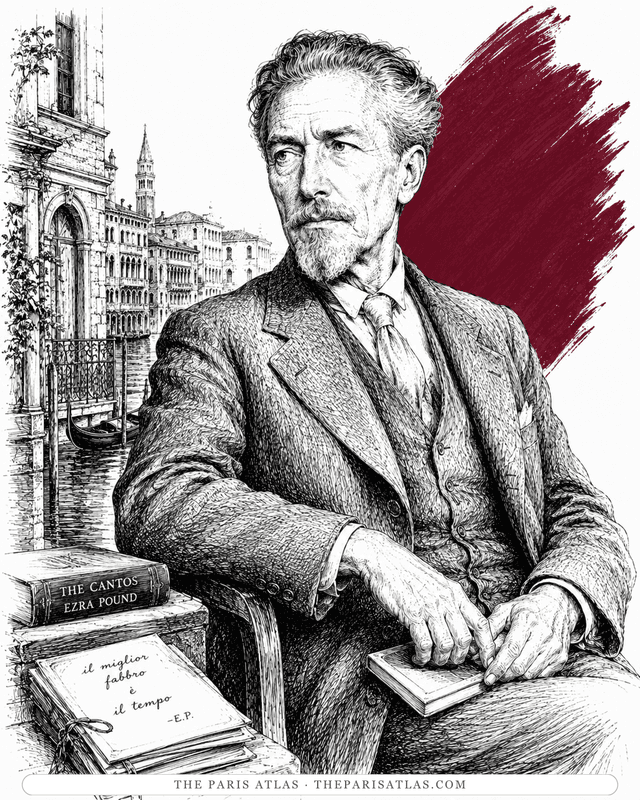
Ezra Pound
The impresario who dragged Joyce's early books into print, brought him to Paris, and championed Ulysses until the world caught up.
View author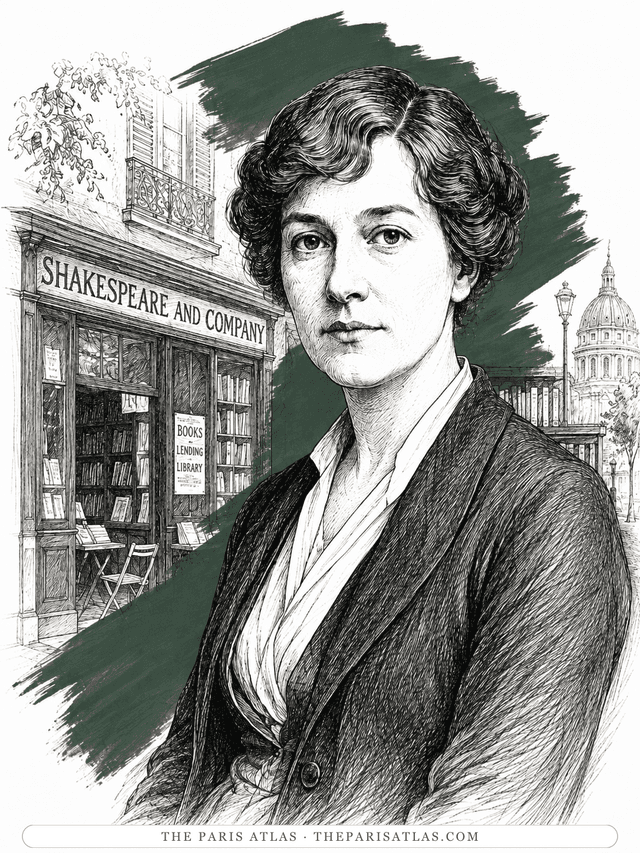
Sylvia Beach
His publisher of last resort and first devotion — the bookseller who printed Ulysses when no one else would.
View author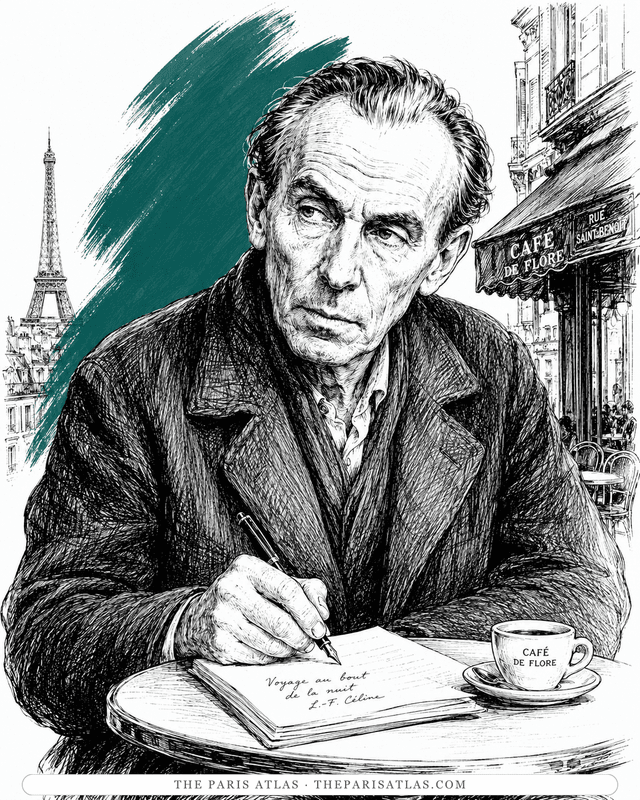
Louis-Ferdinand Céline
The doctor of the Paris slums who wrote the century's blackest, funniest novel — and changed the sound of French prose.
View author