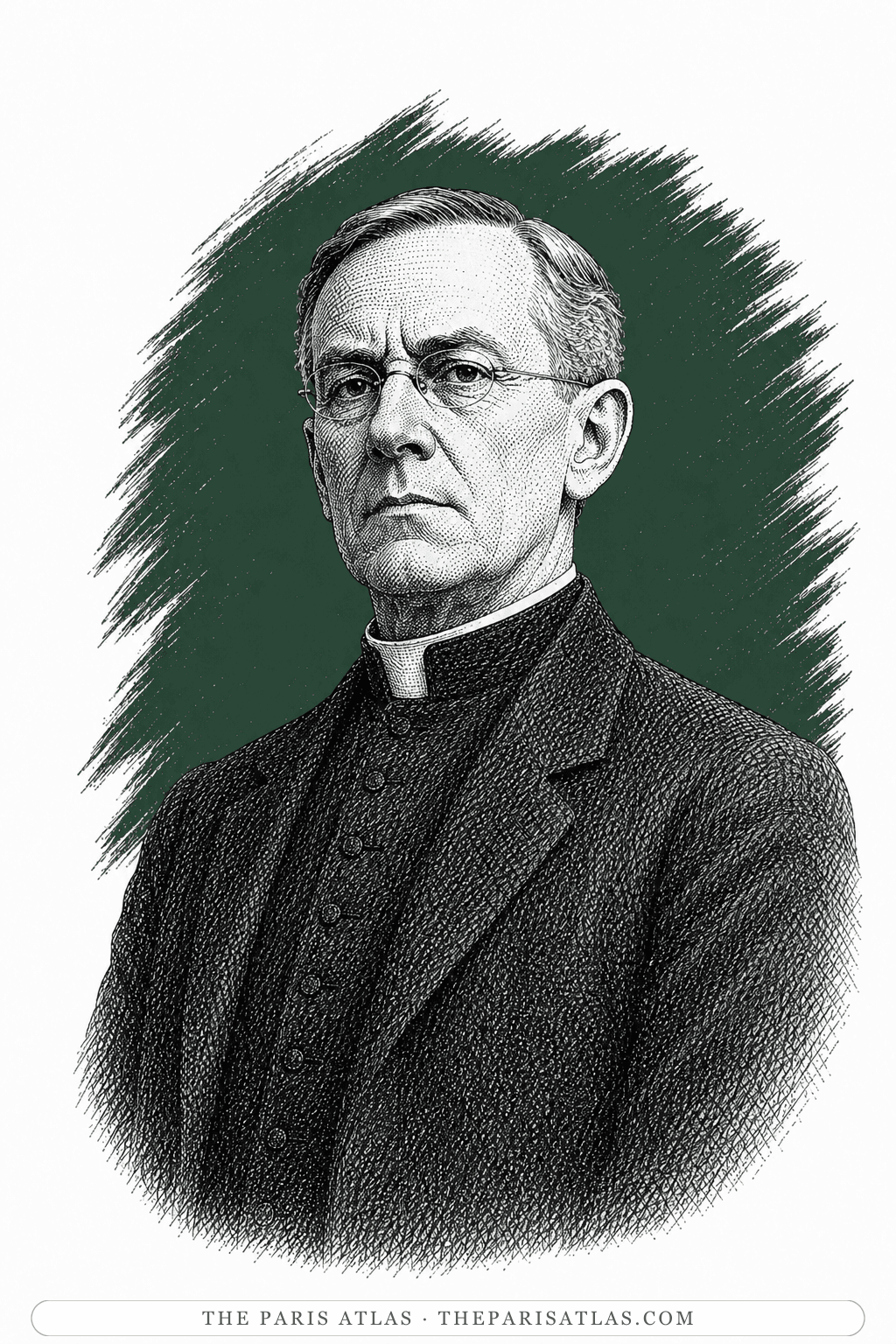
Father Dolan
The prefect of studies at Stephen's boarding school, who walks into a classroom with a leather bat and beats the hands of a boy whose glasses are broken. The boys call him Baldyhead.
To find a lazy boy in every room he enters. He asks for them by name as he comes through the door: "—Any boys want flogging here, Father Arnall? cried the prefect of studies. Any lazy idle loafers that want flogging in this class?"
The book

At a glance
- Prefect of studies at Clongowes Wood College — the priest in charge of discipline
- Baldyhead; they give him three groans in the playground afterwards, and three cheers for the rector
- A stiffened leather strap; whalebone and leather with lead inside, according to the boys
- One classroom scene in chapter one, and one anecdote at the dinner table in chapter two
Who they are in the book
Spoiler-freeFather Dolan is the prefect of studies — the priest in charge of discipline — at Clongowes Wood College, the Jesuit boarding school Stephen Dedalus is sent to at six in A Portrait of the Artist as a Young Man, the 1916 novel by the Irish writer James Joyce.
He appears in one scene and shapes the whole first chapter. Stephen's glasses have been broken by accident on the cinder path; he has written home for a new pair, and his Latin master has excused him from work until they come. Father Dolan comes into the classroom looking for idlers, decides that the broken glasses are an old schoolboy trick, and beats Stephen's hands with a pandybat — a stiffened leather strap with, the boys say, lead inside it. Six blows on each hand, and then kneel down.
What follows is the first thing Stephen does in his life that anyone would call brave. Urged on by the other boys, and remembering that great men in his history book had done the same, he walks up the dark corridor past the portraits of the Jesuit saints to the rector's room to complain — and is heard, and believed, and told the priest will be spoken to. He comes back down to the playground and is carried on the other boys' shoulders.
How Father Dolan Is Portrayed
- The entranceThe door opens and closes quietly, a whisper runs round the class, and then there is a loud crack of the pandybat on the last desk. He does not begin with a question about work; he begins by asking who wants flogging. Stephen's heart, the narration says, leapt up in fear.
- What he does to FlemingHe finds a boy already kneeling on the floor for a bad Latin exercise, decides on sight that he is a born idler: "I can see it in the corner of his eye." Then he hauls him up, gives him six on each hand and sends him back down onto his knees. Stephen knows the boy's hands are hard because he rubs rosin into them, and hopes that means it hurt less.
- What he calls Stephen"—Out here, Dedalus. Lazy little schemer. I see schemer in your face. Where did you break your glasses?" Told the cinder path, he says he knows that trick. Stephen, half blind without his glasses, gets a single clear look at the face doing it: a whitegrey, not young face, a bald whitegrey head with fluff at the sides, steel-rimmed spectacles and no-coloured eyes behind them.
- The touch before the blowThis is what the book keeps returning to. Before he strikes, he takes hold of Stephen's shaking fingers to straighten the palm — firm, soft fingers — and for a moment Stephen thinks he means to shake hands. Afterwards, kneeling with his beaten hands pressed to his sides, he works out why the priest did it: to hit the hand better and louder.
- The promise on the way out"—Get at your work, all of you, cried the prefect of studies from the door. Father Dolan will be in every day to see if any boy, any lazy idle little loafer wants flogging. Every day. Every day." Then the door closes, and the Latin master goes quietly round the desks helping the class with their mistakes in a gentle voice.
- What happened to the complaintNothing, in the end. Months later Stephen's father comes home with the story as he heard it from the head of the order at a street corner: the priest and the rector had laughed about it at dinner, called Stephen a manly little chap, and joked that Father Dolan had better mind himself in future. Stephen, who spent an afternoon terrified in a dark corridor over it, listens to his father act out both voices and says nothing at all.
If you like A Portrait of the Artist as a Young Man


If you like James Joyce
Explore authors with a similar voice, perspective, and influence.
Ezra Pound
The impresario who dragged Joyce's early books into print, brought him to Paris, and championed Ulysses until the world caught up.
View author
Sylvia Beach
His publisher of last resort and first devotion — the bookseller who printed Ulysses when no one else would.
View author
Louis-Ferdinand Céline
The doctor of the Paris slums who wrote the century's blackest, funniest novel — and changed the sound of French prose.
View author