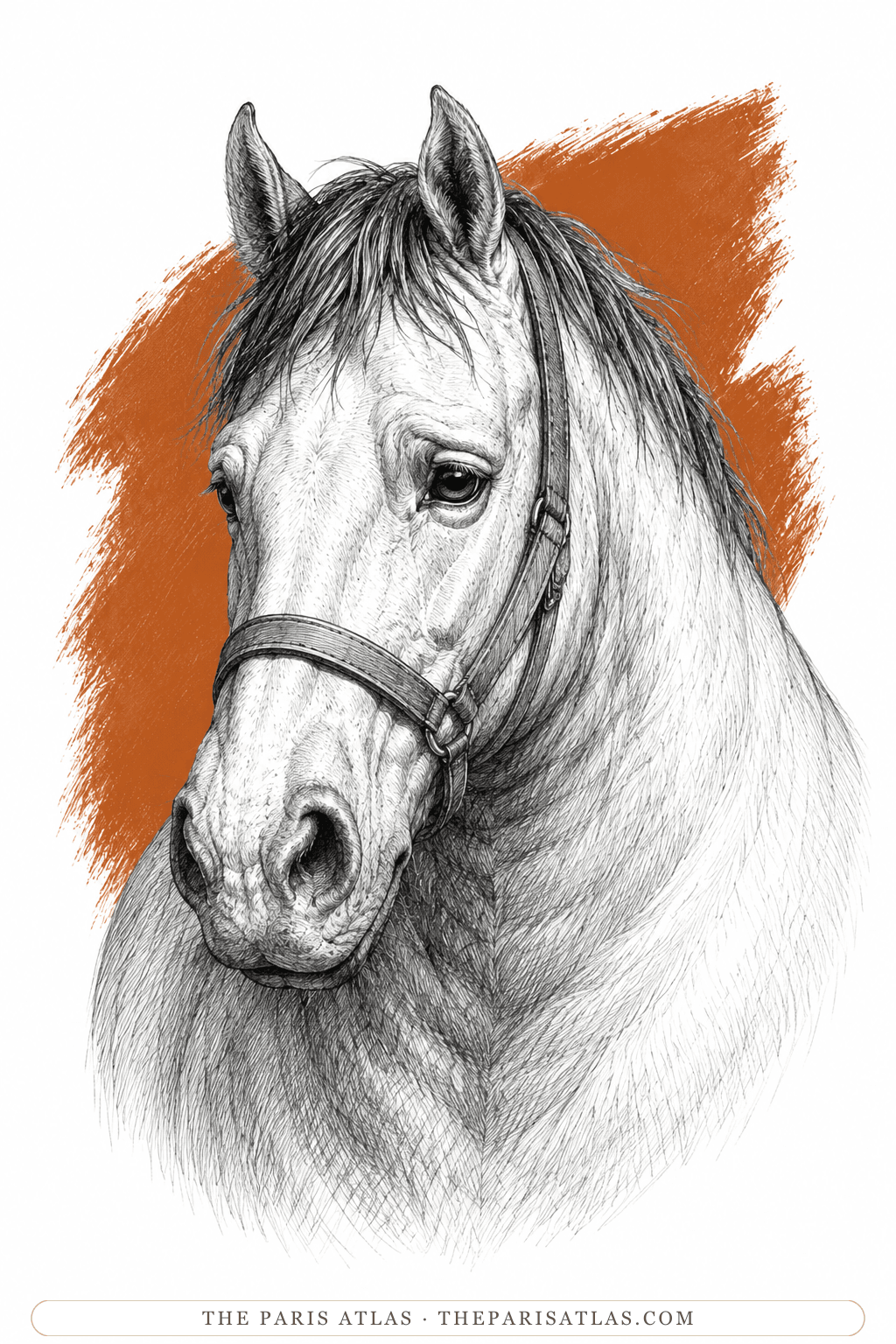
Clover
The stout motherly mare who never quite got her figure back after her fourth foal. She is the farm's memory: the animal who keeps going to the barn wall to check the commandments against what she thinks she remembers agreeing to.
The thing Old Major described, and which she can picture better than she can say: animals free of hunger and the whip, all equal, each working according to his capacity, the strong protecting the weak — the way she put her foreleg round the lost ducklings on the night of the speech.
The book

At a glance
- A cart-horse mare, and the animal who keeps checking the rules
- Four foals, all sold at a year old before the Rebellion
- The whole alphabet; she cannot assemble words from it
- Boxer, and after him Benjamin
- Old, stiff in the joints, two years past the retiring age
- Chapter I to the last page
Who they are in the book
Spoiler-freeClover is a cart-horse, a stout motherly mare approaching middle life who has never quite got her figure back after her fourth foal. She comes into Old Major's meeting beside Boxer, both of them setting down their hoofs with great care in case a small animal is hidden in the straw, and when a brood of ducklings that has lost its mother files in cheeping, she makes a wall round them with her great foreleg and they fall asleep inside it. George Orwell returns to that image later, and it is the closest thing the book gives to a statement of what the Rebellion was supposed to produce.
She learns the whole alphabet but cannot put the letters together into words, which makes her dependent on other animals for the one thing she most wants to check. She fetches Muriel the goat to read her the commandment about beds, and later asks Benjamin to read her the one about killing. Both times what is on the wall turns out to contain words she had not remembered, and both times she accepts that the wall must be right and her memory wrong.
After the executions the animals go up to the knoll and lie down together, and the book stays with Clover while she works out what she thinks. If she could have spoken her thoughts, Orwell writes, she would have said that this was not what they had aimed at; that what she had pictured was a society of animals free of hunger and the whip, all equal, each working according to his capacity, the strong protecting the weak, as she had protected the ducklings on the night of the speech. He is equally exact about where she lands. There is no thought of rebellion or disobedience in her mind. She knows they are better off than they were under the farmer, that keeping the human beings out matters more than anything, and that she will stay faithful, work hard and obey. Then, for want of the words, she begins to sing.
How Clover Is Portrayed
- How she is drawnA stout motherly mare approaching middle life, who had never quite got her figure back after her fourth foal. Old Major names her in his speech: all four of her foals were sold at a year old, and she will never see one of them again.
- What Orwell leaves outShe is on the page from the first chapter to the last, and the book never gives her a colour, a marking or a breed. Build is the whole of her description.
- The ducklingsAt the meeting in the barn a brood of ducklings that had lost their mother filed in cheeping feebly, wandering about to find somewhere they would not be trodden on. She made a sort of wall round them with her great foreleg, and they nestled down inside it and fell asleep.
- ReadingShe learnt the whole alphabet and could not put words together. Every time she suspects a rule has been broken she has to find another animal to read the wall for her, which is how the changes get discovered at all.
- MollieShe is the one who takes Mollie aside about the man seen stroking her nose across the Foxwood hedge, and who asks her for her word of honour and watches her fail to give it. Afterwards she goes to Mollie's stall on her own and turns over the straw with her hoof.
- Looking after BoxerShe warned him not to overstrain himself and told him a horse's lungs do not last for ever. He would not listen. When his hoof split she made poultices of herbs by chewing them, and in the evenings she lay in his stall and talked to him.
- On the knollAfter the killings, with the whole farm laid out below her in the evening light, her eyes filled with tears at the thought that this was not what they had worked for. She lacked the words for it. What she did instead was start singing "Beasts of England", and the others took it up and sang it three times, slowly and mournfully, in a way they never had before.
- What she decidesThat even as things were they were far better off than under the farmer, that preventing his return came before everything, and that she would remain faithful, work hard and accept the leadership. There was no thought of rebellion or disobedience in her mind.
- Old ageBy the last chapter she is an old stout mare, stiff in the joints and with a tendency to rheumy eyes, two years past the retiring age that no animal has ever actually reached. The three other horses on the farm — fine upstanding beasts and willing workers, and, Orwell adds, very stupid — have an almost filial respect for her.
If you like Animal Farm


If you like George Orwell
Explore authors with a similar voice, perspective, and influence.

Henry Miller
The Brooklyn dropout who arrived in Paris broke at thirty-eight and wrote the exuberant, banned books that ended American censorship.
View author
Louis-Ferdinand Céline
The doctor of the Paris slums who wrote the century's blackest, funniest novel — and changed the sound of French prose.
View author
Simone de Beauvoir
French writer and philosopher whose novels, memoirs, and social analysis examined freedom, gender, responsibility, aging, and the material conditions that shape a life.
View author