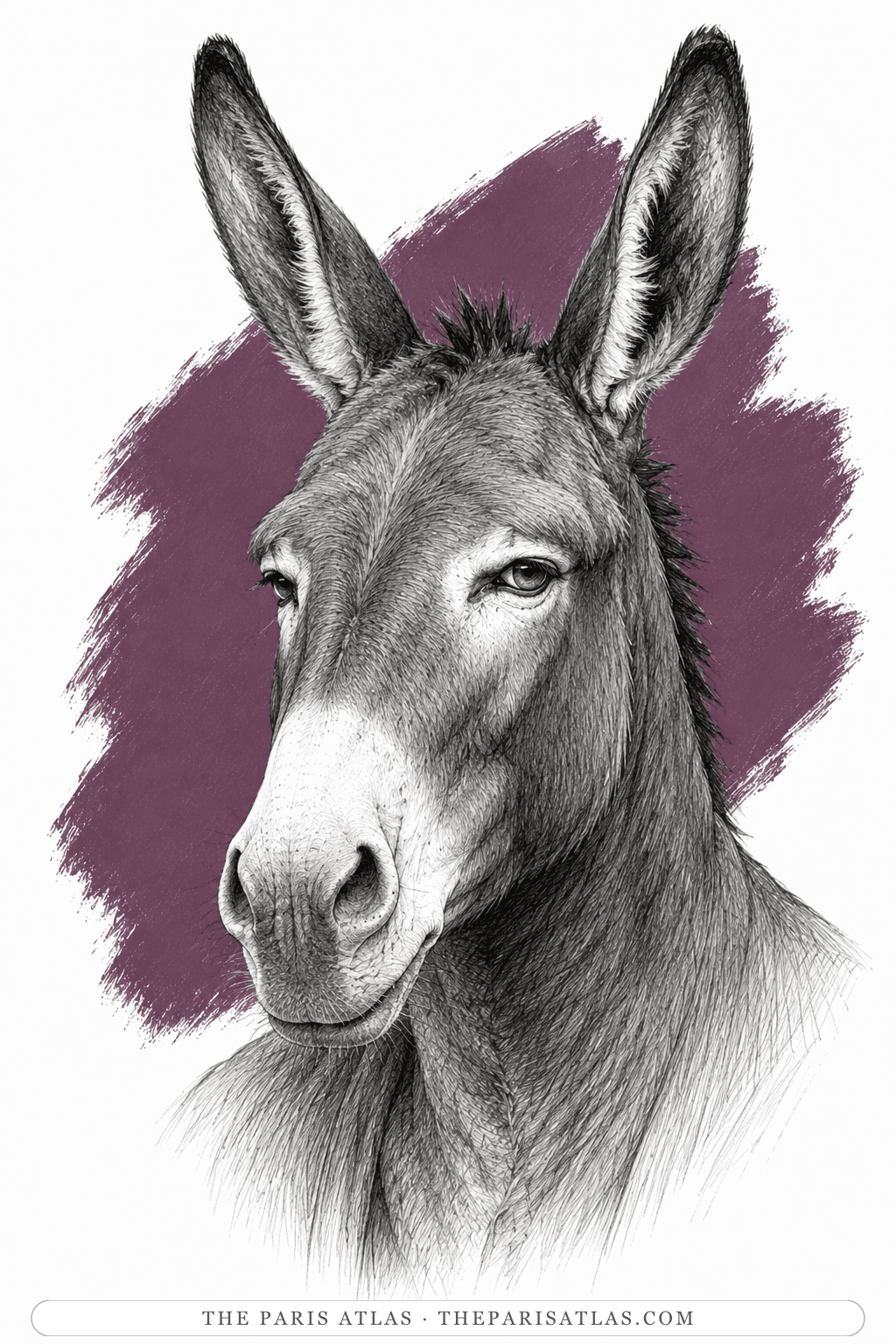
Benjamin
The donkey: the oldest animal on the farm and the worst tempered. He can read as well as any pig and almost never does, refuses to give an opinion about the Rebellion, and is quietly devoted to Boxer.
Nothing that he will name. He asks for no improvement, believes in no plan, and expresses no opinion about the Rebellion at all — which the other animals find cryptic and which he offers as the only honest position available.
The book

At a glance
- A donkey, and the oldest animal on the farm
- The worst on the farm, by Orwell's description
- As well as any pig; he almost never uses it
- Boxer, without ever admitting it
- No opinion, expressed at length
- Chapter I to the last page
Who they are in the book
Spoiler-freeBenjamin is the oldest animal on the farm and the worst tempered. He seldom talks, and when he does it is usually to make some cynical remark: he would say that God had given him a tail to keep the flies off, but that he would sooner have had no tail and no flies. Alone among the animals he never laughs, and if asked why he says he sees nothing to laugh at. George Orwell adds one line that changes the shape of him — without openly admitting it, he was devoted to Boxer, and the two of them spent their Sundays grazing side by side in the paddock beyond the orchard, never speaking.
He can read as well as any pig and never exercises the faculty. So far as he knows, he says, there is nothing worth reading. He is the only animal who takes no side over the windmill, refusing to believe either that food will become more plentiful or that the windmill will save work; life would go on as it always had, that is, badly. Asked whether he is not happier now that the farmer is gone, he gives the same answer he gives to everything: donkeys live a long time, and none of you has ever seen a dead donkey.
What makes him more than a stock cynic is that he is usually right and almost never says so in time. He watches two men drilling a hole at the base of the windmill and identifies blasting powder while everyone else is being told the walls are too thick. He nods knowingly at a broken ladder and an overturned pot of white paint and will not explain. He refuses to read the Sixth Commandment for Clover when she asks him to, saying he refuses to meddle in such matters, and she has to fetch the goat instead. By the last chapter he is a little greyer about the muzzle and otherwise unchanged, and his considered account of the world is that hunger, hardship and disappointment are the unalterable law of life.
How Benjamin Is Portrayed
- How he is introducedThe oldest animal on the farm and the worst tempered. He seldom talked, and when he did it was usually to say something like: God had given him a tail to keep the flies off, but he would sooner have had no tail and no flies.
- His muzzleThe one piece of Benjamin's body the book describes. He nods the long muzzle with a knowing air at the things he will not explain, and by the last chapter it has gone a little greyer.
- He never laughsAlone among the animals on the farm. Asked why, he says he sees nothing to laugh at.
- The answer he givesAsked whether he is not happier now the farmer has gone: "Donkeys live a long time. None of you has ever seen a dead donkey." The others have to be content with it. He repeats it, in one form or another, whenever anyone asks him about the windmill.
- ReadingHe can read as well as any pig and never does. Nothing is worth reading, he says. When Clover asks him to read her the Sixth Commandment after the executions, he says he refuses to meddle in such matters and she has to fetch Muriel.
- Neither factionThe only animal who did not take a side over the windmill. He refused to believe either that food would become more plentiful or that the mill would save labour. Windmill or no windmill, he said, life would go on as it had always gone on, that is, badly.
- The blasting powderWhile the leadership is telling the farm that the walls are far too thick to be knocked down in a week, Benjamin watches the two men with the hammer and the crowbar drilling near the base and says, almost with amusement, that they are about to pack blasting powder into the hole. He is right within minutes.
- The workHe did his work in the same slow obstinate way after the Rebellion as before it, never shirking and never volunteering. In the quarry he and Muriel yoked themselves into an old governess-cart and hauled their share of the stone, and at the Battle of the Cowshed he turned round and lashed at the men with his small hoofs.
- With BoxerSundays in the paddock, side by side and silent. When Boxer went down between the shafts, Benjamin lay beside him and kept the flies off him with his long tail, and did the same in the stall for two days afterwards without saying anything.
- His account of lifeHe professed to remember every detail of his long life and to know that things never had been, nor ever could be, much better or much worse — hunger, hardship and disappointment being, so he said, the unalterable law of life.
Benjamin quotes
Donkeys live a long time. None of you has ever seen a dead donkey.
If you like Animal Farm


If you like George Orwell
Explore authors with a similar voice, perspective, and influence.

Henry Miller
The Brooklyn dropout who arrived in Paris broke at thirty-eight and wrote the exuberant, banned books that ended American censorship.
View author
Louis-Ferdinand Céline
The doctor of the Paris slums who wrote the century's blackest, funniest novel — and changed the sound of French prose.
View author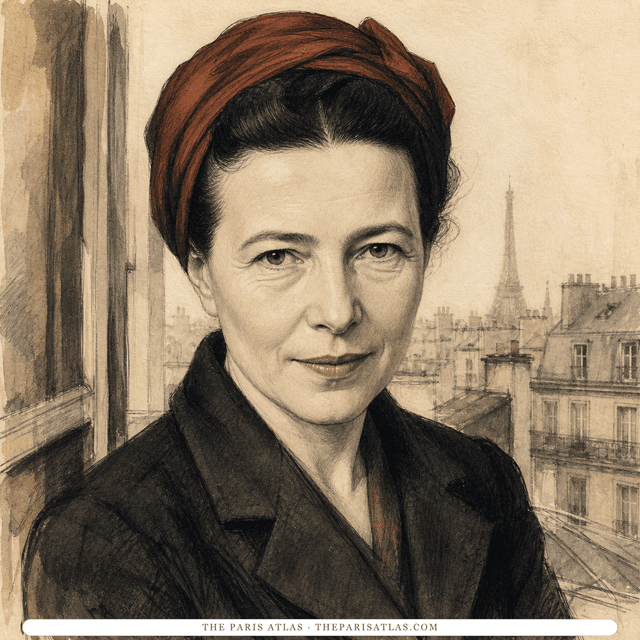
Simone de Beauvoir
French writer and philosopher whose novels, memoirs, and social analysis examined freedom, gender, responsibility, aging, and the material conditions that shape a life.
View author