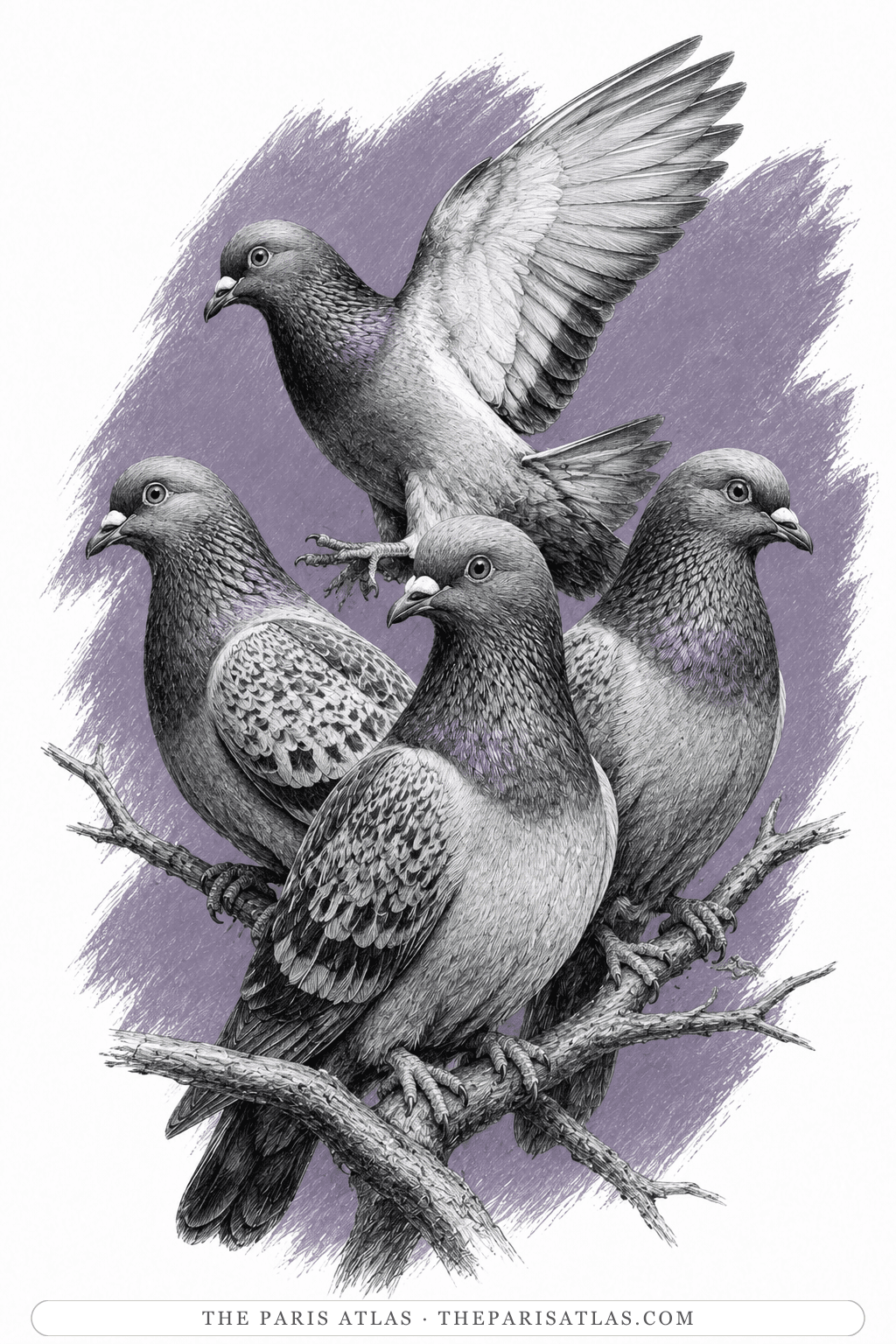
The black cockerel
Napoleon's trumpeter. He marches in front of the Leader and lets out a loud cock-a-doodle-doo before Napoleon speaks, and he heads the procession at the Spontaneous Demonstrations, ahead of the dogs and the sheep.
The book

At a glance
- A black cockerel kept by Napoleon, the pig who rules Animal Farm
- None given
- Walking in front of Napoleon and crowing before he speaks
- Black, and nothing else
- Chapters VIII, IX and X
Who they are in the book
Spoiler-freeAnimal Farm is a short novel by George Orwell, published in 1945, in which the animals of an English farm drive out the farmer and take the place over. A pig named Napoleon ends up running it. A cockerel is a male chicken, the bird that crows at dawn, and this one crows to order: his job is to walk in front of Napoleon and announce him.
He arrives in Chapter VIII, at the point where Napoleon has stopped showing himself. Orders now come through Squealer, the pig who does Napoleon's explaining for him, or through one of the other pigs, and Napoleon is not seen in public as often as once a fortnight. When he does appear he is attended by his dogs and by a black cockerel who marches in front of him and acts as a kind of trumpeter, letting out a loud cock-a-doodle-doo before Napoleon speaks. The same passage reports that Napoleon has taken separate rooms in the farmhouse, that he eats alone with two dogs waiting on him, and that he eats off the Crown Derby dinner service from the glass cupboard in the drawing-room.
After that the bird turns up wherever there is ceremony. He is at Napoleon's side when Napoleon comes down to inspect the finished windmill and announces that it will be called Napoleon Mill. He leads the weekly parade the pigs call a Spontaneous Demonstration. And when Orwell lists the things that kept the animals from dwelling on how little they were eating, the crowing is on the list, between the thunder of the gun and the fluttering of the flag.
The book gives him no name, no age and no description beyond his colour. He is Napoleon's black cockerel, identified by who owns him. He is not the only cockerel on the farm either. In the first year after the rebellion, Boxer the cart-horse arranged with one of them to call him half an hour before everyone else so that he could put in extra work before the day began, and later moved it to three-quarters of an hour. Orwell never says whether that is the same bird.
How The black cockerel Is Portrayed
- What he looks likeBlack. That is the whole description. He has no name and no age, and the book identifies him by his owner rather than by anything of his own: Napoleon's black cockerel.
- The jobMarching in front of Napoleon and acting as a kind of trumpeter, letting out a loud cock-a-doodle-doo before Napoleon speaks. He appears at exactly the point in the book where Napoleon stops appearing in public more than once a fortnight.
- Who he walks withThe dogs. Napoleon's escort is the dogs and this bird, and it is the same in every scene the cockerel is in: the dogs at Napoleon's side, the cockerel out in front.
- At the windmillNapoleon, attended by his dogs and his cockerel, comes down to inspect the completed windmill, personally congratulates the animals on their achievement and announces that the mill will be named Napoleon Mill.
- At the head of the paradeOnce a week the animals leave their work and march round the farm in military formation for something called a Spontaneous Demonstration. The order is pigs, then horses, then cows, then sheep, then poultry, with the dogs flanking the column and the black cockerel ahead of all of them.
- What the crowing was forOrwell puts it in a list of the things that made the celebrations work: the songs, the processions, Squealer's lists of production figures, the thunder of the gun, the crowing of the cockerel and the fluttering of the flag. With all that going on, he writes, the animals were able to forget that their bellies were empty, at least part of the time.
If you like Animal Farm


If you like George Orwell
Explore authors with a similar voice, perspective, and influence.
Henry Miller
The Brooklyn dropout who arrived in Paris broke at thirty-eight and wrote the exuberant, banned books that ended American censorship.
View author
Louis-Ferdinand Céline
The doctor of the Paris slums who wrote the century's blackest, funniest novel — and changed the sound of French prose.
View author
Simone de Beauvoir
French writer and philosopher whose novels, memoirs, and social analysis examined freedom, gender, responsibility, aging, and the material conditions that shape a life.
View author