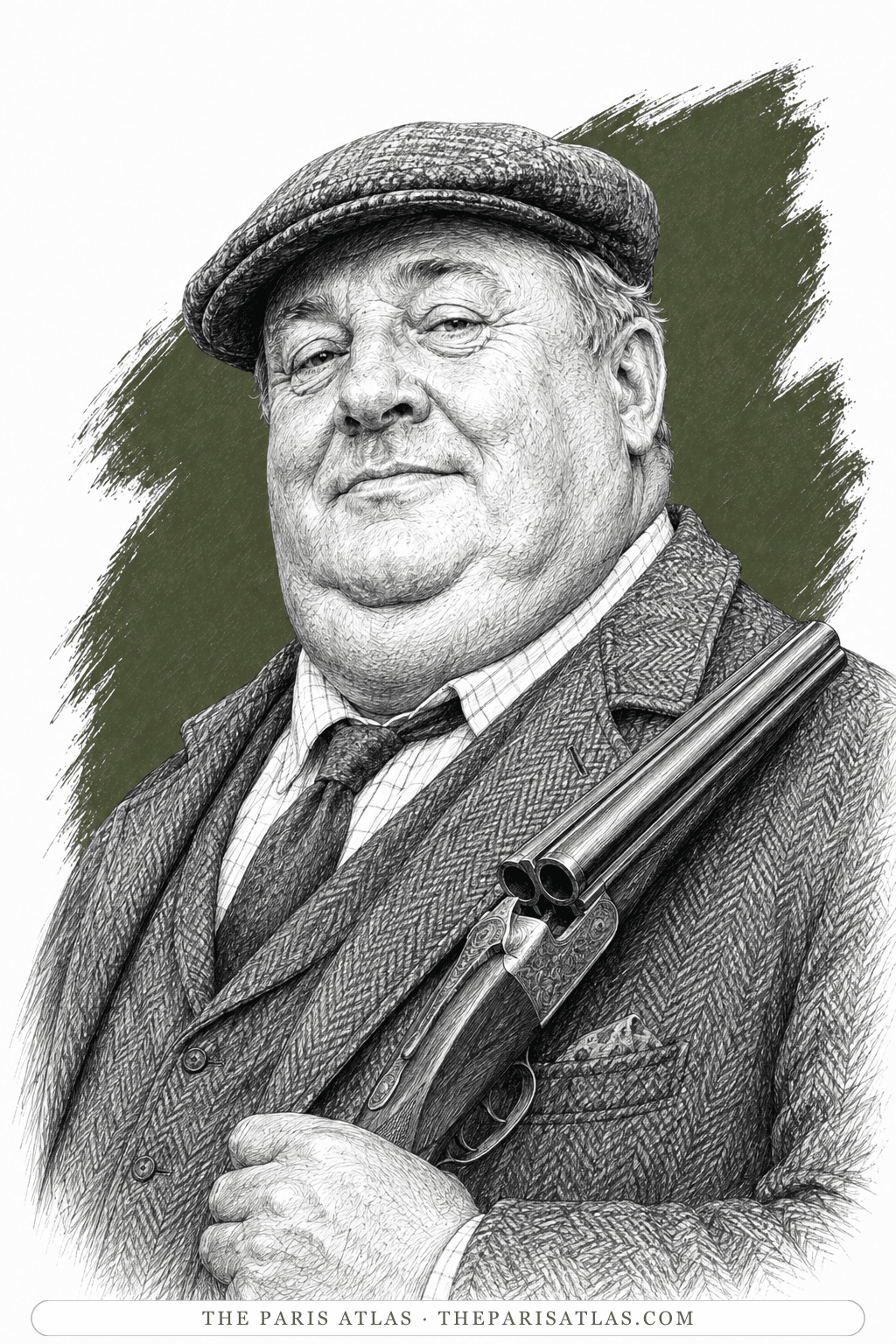
Mr Pilkington
The owner of Foxwood, the large neglected farm on one side of Animal Farm: an easy-going gentleman farmer who spends most of his time fishing or hunting according to the season. He and Mr Frederick dislike each other too much to act together.
A quiet life on a badly kept farm, and no trouble from the neighbours. He does not want Animal Farm to succeed and does not want to spend anything on stopping it.
The book

At a glance
- A neighbouring farmer, owner of Foxwood
- Large, neglected, overgrown; worn-out pasture
- Fishing or hunting, according to the season
- Permanently bad, which is what saves Animal Farm early on
- Chapters IV, VI, VIII and X
Who they are in the book
Spoiler-freeFoxwood is a large, neglected, old-fashioned farm, much overgrown by woodland, with its pastures worn out and its hedges in a disgraceful condition. Its owner, Mr Pilkington, is an easy-going gentleman farmer who spends most of his time fishing or hunting according to the season. George Orwell notes that it was lucky for Animal Farm that the two farms adjoining it belonged to men on permanently bad terms: they disliked each other so much that it was difficult for them to come to any agreement even in defence of their own interests.
Both of them are thoroughly frightened by what has happened next door, and both work at making sure their own animals hear as little about it as possible. They begin by predicting that the whole thing will be over in a fortnight and putting it about that the animals are fighting among themselves and starving to death. When the animals fail to starve, the story changes to cannibalism, torture with red-hot horseshoes and females held in common.
Pilkington's dealings with the farm run through a solicitor and are conducted almost entirely as a rivalry with Frederick over a pile of seasoned timber. He is played against his neighbour, loses the sale, and offers Animal Farm nothing when Frederick's men occupy its pasture: the pigeons sent to ask for help come back with a scrap of paper on which is pencilled "Serves you right." Later he sells the farm two fields, and by the end relations are good enough for a dinner.
How Mr Pilkington Is Portrayed
- FoxwoodLarge, neglected, old-fashioned and much overgrown by woodland, with worn-out pastures and hedges in a disgraceful condition. Its owner fishes or hunts according to the season.
- The nameHe and Frederick refused for a long time to call the place Animal Farm and insisted on the Manor Farm. They dropped it only when they could no longer pretend the farm was failing, and had developed, against their will, a certain respect for the efficiency of it.
- The storiesFirst that the whole thing would be over in a fortnight, then that the animals were perpetually fighting and starving, then that they practised cannibalism, tortured one another with red-hot horseshoes and had their females in common. This, said Frederick and Pilkington, is what comes of rebelling against the laws of Nature.
- The timberHe was the buyer Napoleon appeared to favour for most of a summer, and relations became almost friendly. It was a manoeuvre. The timber went to Frederick, insulting messages were sent to Foxwood, and the pigeons were told to change their slogan from "Death to Frederick" to "Death to Pilkington".
- Serves you rightWith Frederick's fifteen armed men in occupation of the big pasture and the windmill, the animals sent four pigeons to Foxwood with a conciliatory message. One came back carrying a scrap of paper with three words pencilled on it.
- His chinsThe only piece of Mr Pilkington's body the book describes. They turn purple when he chokes with laughter. Late in the book the pigs are given the same feature, some with five chins, some with four, some with three, and the two descriptions are written to match.
If you like Animal Farm


If you like George Orwell
Explore authors with a similar voice, perspective, and influence.
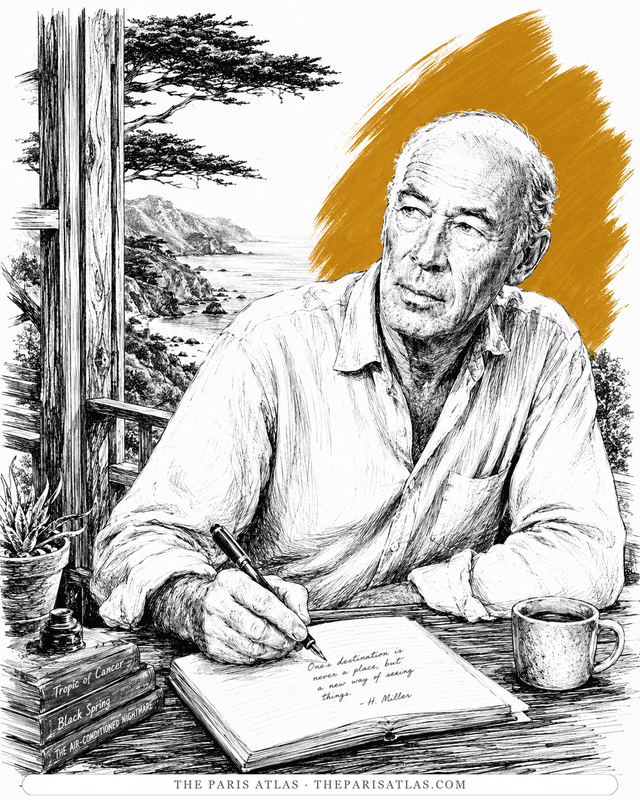
Henry Miller
The Brooklyn dropout who arrived in Paris broke at thirty-eight and wrote the exuberant, banned books that ended American censorship.
View author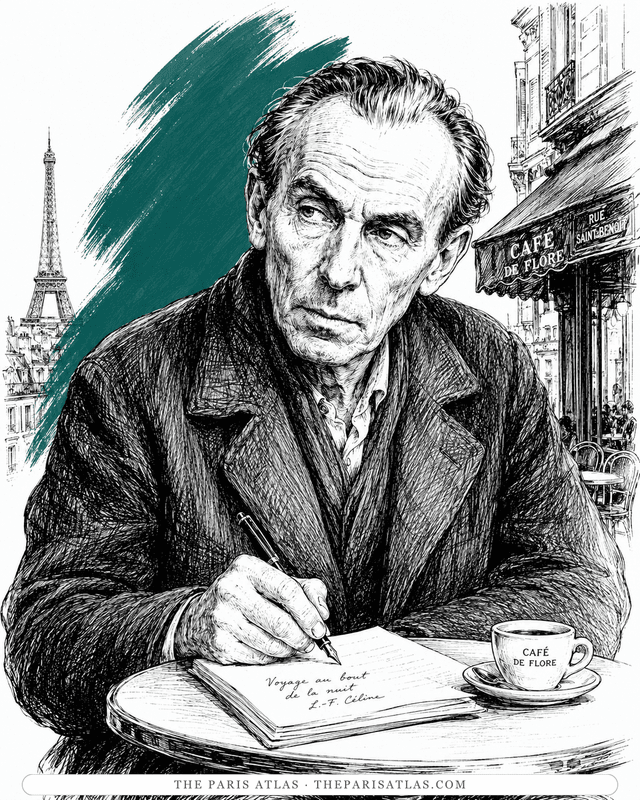
Louis-Ferdinand Céline
The doctor of the Paris slums who wrote the century's blackest, funniest novel — and changed the sound of French prose.
View author
Simone de Beauvoir
French writer and philosopher whose novels, memoirs, and social analysis examined freedom, gender, responsibility, aging, and the material conditions that shape a life.
View author