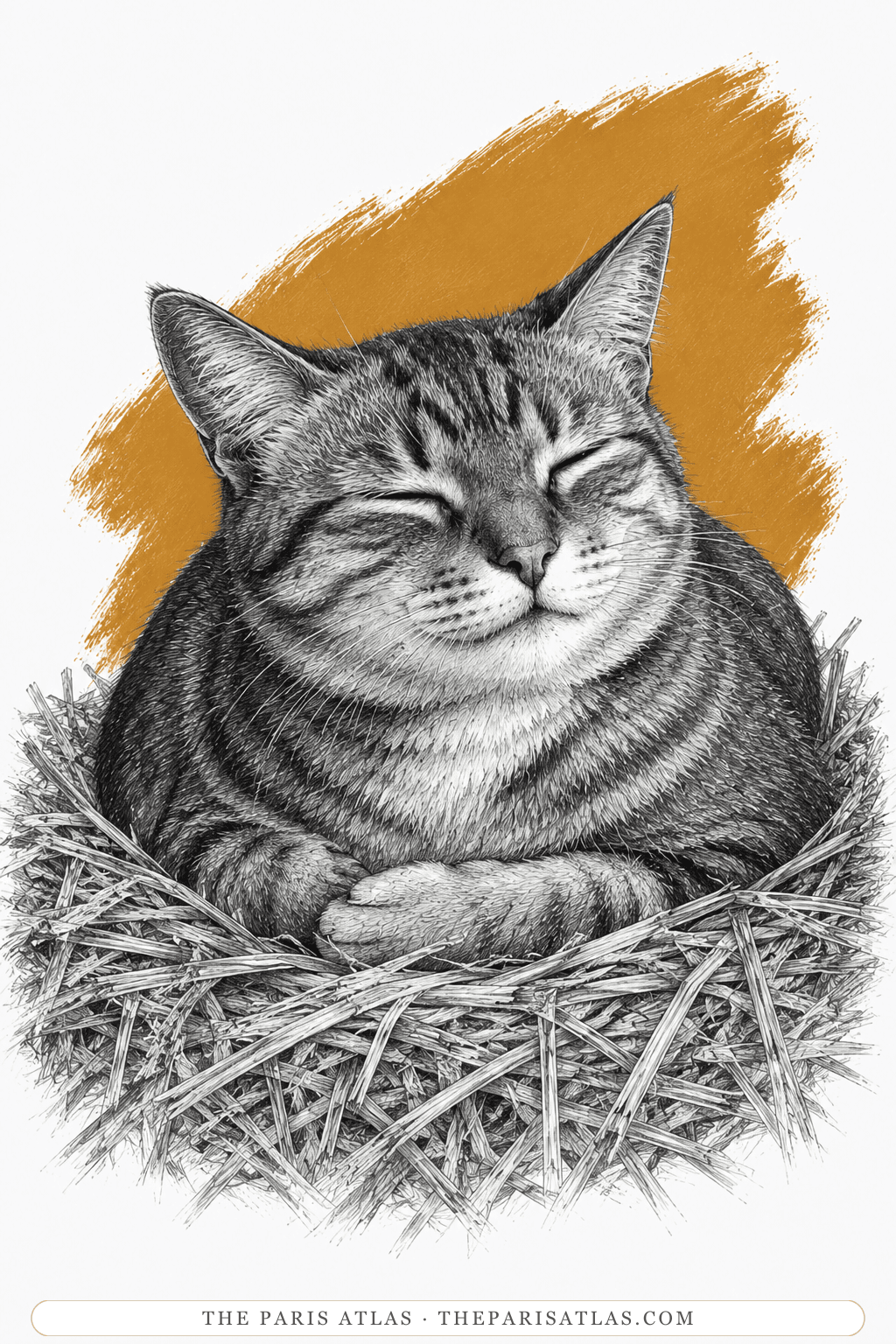
The cat
She comes in last to Old Major's speech, looks round for the warmest place, and purrs through the whole of it without listening to a word. She votes on both sides of the question of whether rats are comrades, cannot be found when there is work to be done, and disappears just before the animals are called into the yard for the executions.
To be warm, and not to be found. She takes the warmest place in the barn as a matter of habit, and she is missing whenever there is work to be done.
The book

At a glance
- The farm cat, never named
- None. No colour, breed or size is given; that she is female is the only fixed detail
- The Wild Comrades' Re-education Committee, whose object was to tame the rats and rabbits
- Off a roof onto a cowman's shoulders
- Chapter VII, missing from the assembly before the executions
- Chapters I, III, IV and VII
Who they are in the book
Spoiler-freeThe cat has no name, and apart from being female she has no description. George Orwell gives her no colour, no breed and no size anywhere in the ten chapters. What he gives her instead is a set of habits, and the first of them arrives in her first sentence. On the night Old Major, the farm's prize boar, calls the animals into the big barn to tell them that man is the only creature who consumes without producing, she comes in last of all, looks round as usual for the warmest place, squeezes herself in between the two cart-horses, and purrs contentedly through the whole speech without listening to a word of it.
Before the meeting breaks up Old Major puts a question to it. Four large rats had crept out of their holes to listen to him and had saved their lives only by a swift dash back when the dogs caught sight of them, and he asks the animals to settle whether rats are comrades. The vote carries by an overwhelming majority. There are four against: the three dogs, and the cat, who was afterwards discovered to have voted on both sides.
Her habits survive the Rebellion unchanged. Running through who works and who does not in the first summer, Orwell writes that nobody shirked, or almost nobody, and gives two exceptions. Mollie the white mare leaves work early on the ground that there is a stone in her hoof. And the behaviour of the cat was somewhat peculiar: when there was work to be done she could never be found, and she would vanish for hours on end and then reappear at meal-times, or in the evening after work was over, as though nothing had happened. Why nobody ever held it against her is given in the same breath. She always made such excellent excuses, and purred so affectionately, that it was impossible not to believe in her good intentions.
Twice she does something the pattern does not predict. She joins the committee Snowball forms to tame the rats and rabbits, and is very active in it for some days; she is seen one day sitting on a roof, talking to sparrows who are just out of her reach, telling them that all animals are now comrades and that any sparrow who chose could come and perch on her paw. The sparrows kept their distance. Then, when Mr Jones comes back with his men to retake the farm, she fights. Orwell writes that there was not an animal on the farm that did not take vengeance on them after his own fashion, and that even the cat leapt off a roof onto a cowman's shoulders and sank her claws in his neck.
The last thing the book does with her is leave her out. After the executions in Chapter VII the animals creep away to the little knoll where the half-finished windmill stands and lie down together as though huddling for warmth. Orwell lists them: Clover, Muriel, Benjamin, the cows, the sheep, and a whole flock of geese and hens. Everyone, he writes, except the cat, who had suddenly disappeared just before Napoleon ordered the animals to assemble.
How The cat Is Portrayed
- How she comes into the barnLast of all the animals, looking round as usual for the warmest place, and settling between Boxer and Clover, the two cart-horses. She purred contentedly through the whole of Old Major's speech without listening to a word of what he was saying.
- The vote on the ratsOld Major asks the meeting whether rats are comrades and it carries by an overwhelming majority. There are only four dissentients: the three dogs, and the cat, who was afterwards discovered to have voted on both sides.
- When there is workShe can never be found. She vanishes for hours on end and reappears at meal-times, or in the evening once work is over, as though nothing had happened. The book adds that she always made such excellent excuses, and purred so affectionately, that it was impossible not to believe in her good intentions.
- What she tells the sparrowsShe joins the Wild Comrades' Re-education Committee, set up to tame the rats and rabbits, and is very active in it for some days. She is seen one day sitting on a roof, talking to sparrows who are just out of her reach, and telling them that all animals are now comrades and that any sparrow who chose could come and perch on her paw. The sparrows kept their distance. What she intended by the offer is not something the book says.
- The Battle of the CowshedWhen Mr Jones and his men come back to retake the farm, every animal takes vengeance after his own fashion. Hers is to leap off a roof onto a cowman's shoulders and sink her claws in his neck, at which he yells horribly.
- The empty placeAfter the executions the animals go up to the knoll by the half-finished windmill and lie down together for warmth. The book names everyone lying there, and the cat is the exception to the list: she had suddenly disappeared just before Napoleon ordered the animals to assemble.
If you like Animal Farm


If you like George Orwell
Explore authors with a similar voice, perspective, and influence.

Henry Miller
The Brooklyn dropout who arrived in Paris broke at thirty-eight and wrote the exuberant, banned books that ended American censorship.
View author
Louis-Ferdinand Céline
The doctor of the Paris slums who wrote the century's blackest, funniest novel — and changed the sound of French prose.
View author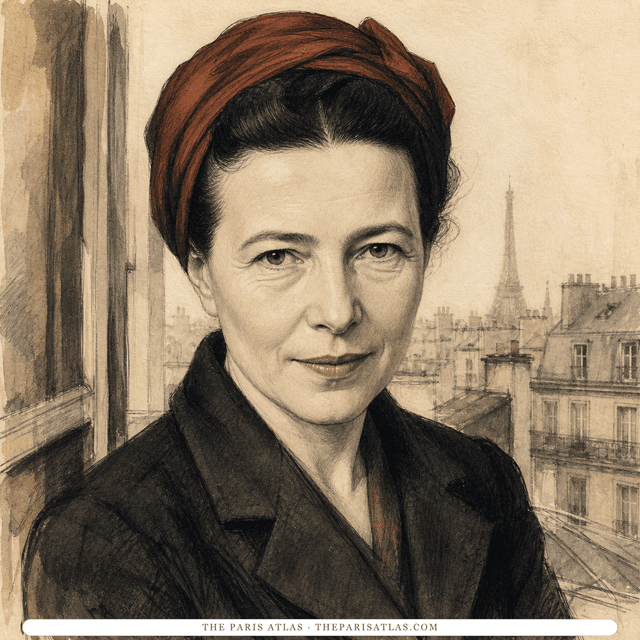
Simone de Beauvoir
French writer and philosopher whose novels, memoirs, and social analysis examined freedom, gender, responsibility, aging, and the material conditions that shape a life.
View author