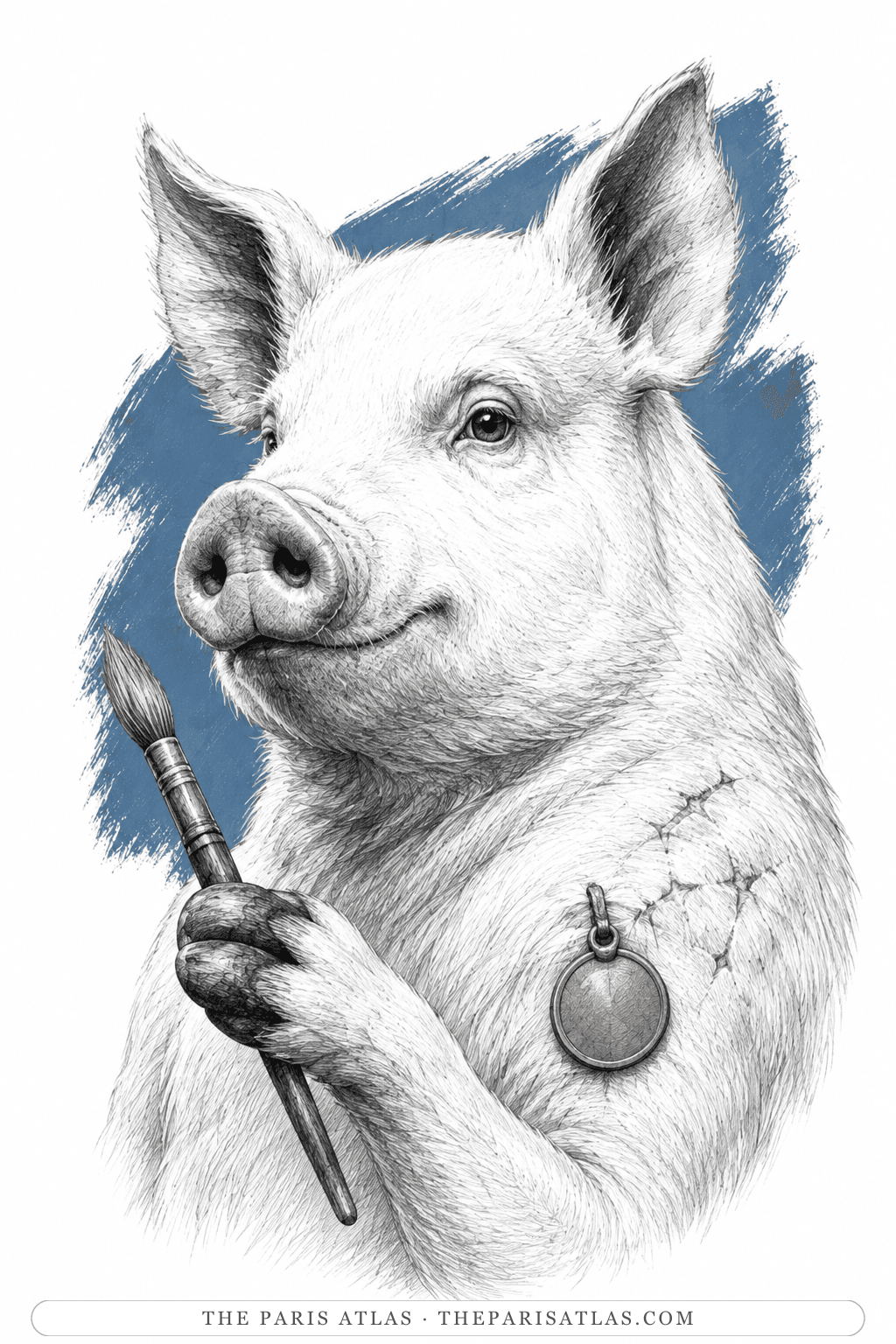
Snowball
The other young boar of the Rebellion: quicker in speech than Napoleon, more inventive, and the one who can write. He paints the Seven Commandments on the barn wall, organises committees for everybody, and designs a windmill that would give the farm electric light and a three-day week.
To make the farm work better than it did under a man, and to be listened to while he explains how. He wins the windmill argument on eloquence and loses it to something else.
The book

At a glance
- A boar, and the other leader of the Rebellion
- Vivacious, quick in speech, inventive; the best writer on the farm
- Fifteen stone
- The flag, the Seven Commandments, the committees, the literacy classes, the windmill plans
- Animal Hero, First Class, awarded after the Battle of the Cowshed
- Pellets from Mr Jones's gun scored bloody streaks along his back in that battle
- Chapters II to V in person; discussed constantly thereafter
Who they are in the book
Spoiler-freeSnowball is introduced as the more vivacious of the two young boars, quicker in speech and more inventive, but not considered to have the same depth of character as Napoleon. He is the one who does things. He is best at writing, so he paints out MANOR FARM on the five-barred gate and puts ANIMAL FARM in its place, and it is his brush that reduces Animalism to Seven Commandments in white letters three feet high, with one spelling mistake and one reversed S.
He is also the farm's enthusiast, and George Orwell is not entirely kind about it. Snowball forms an Egg Production Committee for the hens, a Clean Tails League for the cows, a Whiter Wool Movement for the sheep, and a Wild Comrades' Re-education Committee whose object is to tame the rats and rabbits. On the whole, the book says, these projects were a failure. The reading and writing classes he starts alongside them were a great success, and by autumn almost every animal on the farm was literate to some degree.
The windmill is his. He works it out in an old incubator shed with a smooth wooden floor, a piece of chalk gripped between the knuckles of his trotter and three of Mr Jones's household manuals held open by a stone, and the plans grow into a mass of cranks and cog-wheels covering half the floor. What he promises from it is a dynamo, electric light and heating in the stalls, machines to do the threshing and the milking, and a three-day week. How the dynamos and cables were to be procured, Orwell notes, Snowball did not say.
How Snowball Is Portrayed
- How he is introducedA more vivacious pig than Napoleon, quicker in speech and more inventive, but not considered to have the same depth of character. Both were being bred up for sale by Mr Jones.
- The gate and the wallHe was best at writing, so he took the brush between the two knuckles of his trotter, painted out MANOR FARM and painted ANIMAL FARM in its place, then went up a ladder to write the Seven Commandments on the tarred wall of the barn in letters readable at thirty yards. The spelling was correct throughout except that "friend" came out "freind" and one of the S's was the wrong way round.
- The ribbonsAt the bonfire of Mr Jones's harness he threw on the ribbons the horses' manes were decorated with on market days, saying that ribbons should be considered clothes, which are the mark of a human being, and that all animals should go naked.
- The committeesHe was indefatigable at organising: the Egg Production Committee, the Clean Tails League, the Wild Comrades' Re-education Committee, the Whiter Wool Movement, and reading and writing classes besides. The attempt to tame the wild creatures broke down almost at once, and when treated generously they simply took advantage of it.
- Four legs good, two legs badThe sheep, hens and ducks could not learn the commandments by heart, so he reduced them to one maxim and had it painted above them in bigger letters. When the birds objected that they had two legs, he explained that a wing is an organ of propulsion and not of manipulation and should therefore be counted as a leg. They did not understand the long words and accepted it.
- The flagHe found an old green tablecloth of Mrs Jones's in the harness-room and painted a hoof and a horn on it in white. Green, he said, for the green fields of England; the hoof and horn for the future Republic of the Animals.
- The Battle of the CowshedHe had studied an old book of Julius Caesar's campaigns from the farmhouse and ran the defence: pigeons overhead, geese at the men's calves, then a feigned retreat into the yard and an ambush from the cowshed. He charged Jones himself and took a charge of shot along his back. His comment on the stable-lad Boxer had knocked down: "War is war. The only good human being is a dead one."
- The windmillThe chalk drawings, the mass of cranks and cog-wheels covering half a floor, and a speech about what electricity would do — threshing machines, ploughs, reapers and binders, hot and cold water in every stall, and only three days' work a week. By the end of it there was no doubt which way the vote would go.
- His weightFifteen stone, which is the only measurement the book gives him, and the weight he flings against Mr Jones's legs at the Battle of the Cowshed. Orwell describes nothing else of his body. There is no colour, no height and no build.
What happens to him after that happens entirely in what other animals are told.
If you like Animal Farm


If you like George Orwell
Explore authors with a similar voice, perspective, and influence.

Henry Miller
The Brooklyn dropout who arrived in Paris broke at thirty-eight and wrote the exuberant, banned books that ended American censorship.
View author
Louis-Ferdinand Céline
The doctor of the Paris slums who wrote the century's blackest, funniest novel — and changed the sound of French prose.
View author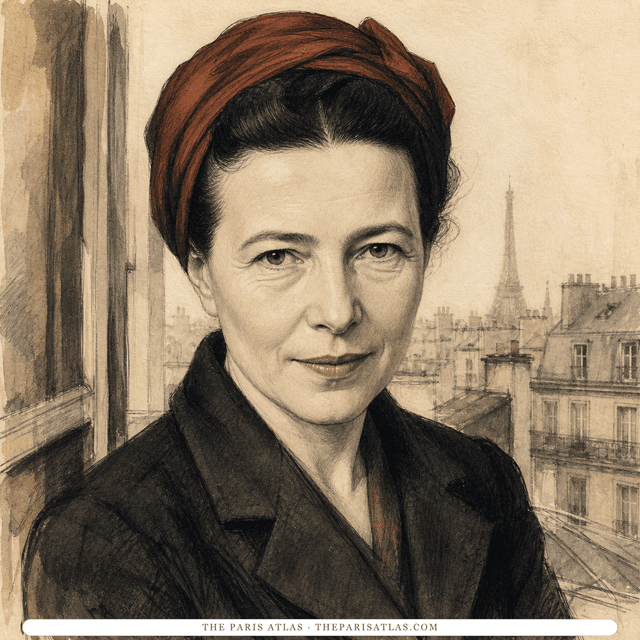
Simone de Beauvoir
French writer and philosopher whose novels, memoirs, and social analysis examined freedom, gender, responsibility, aging, and the material conditions that shape a life.
View author