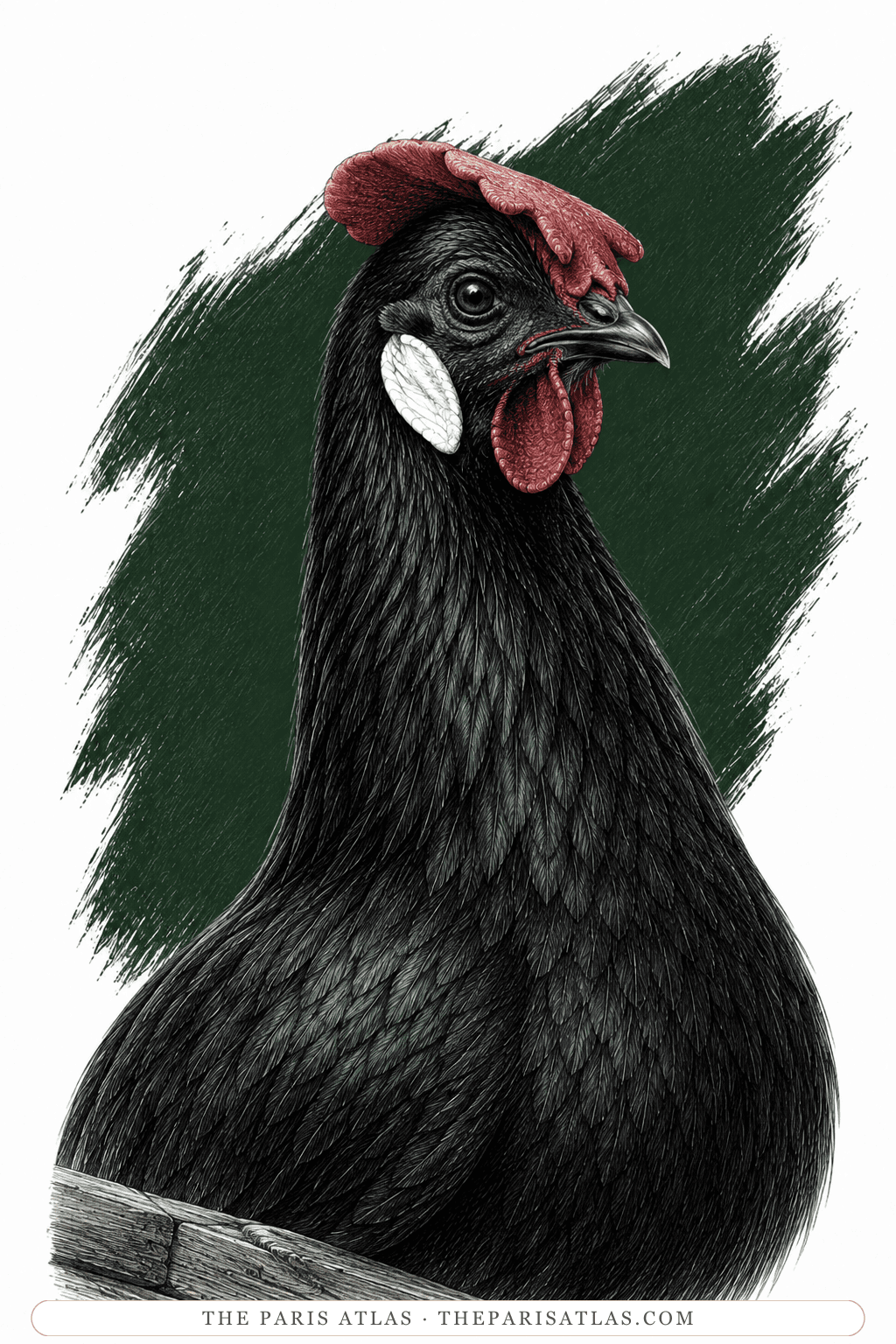
The hens
The only animals on Animal Farm who mount a rebellion of their own. Told to surrender four hundred eggs a week under a contract Napoleon has signed, and led by three young Black Minorca pullets, they fly up to the rafters and lay where the eggs will smash on the floor. One of them also asks the first awkward question in the book, about the milk.
To sit on their own eggs. It is the only demand any group on the farm presses to the point of resistance, and it is about the spring clutch rather than about politics.
The book

At a glance
- The laying flock on Animal Farm
- Black Minorca — the three pullets who led the strike, and the only bird breed named in the book
- Four hundred eggs a week under Napoleon's contract
- Nine hens dead in five days
- Chapters 2, 7 and 9
Who they are in the book
Spoiler-freeThe hens are in the scene where the slide begins. In the first days after the Rebellion, when the cows have been milked and the five buckets are standing in the yard, someone asks what everybody is looking at: what is going to happen to all that milk. Orwell does not say who — the line belongs to 'someone'. It is a hen who answers, remembering how it used to work: Jones would mix some of it into their mash. Napoleon tells them never to mind the milk. By evening it has gone, and the animals never learn where until much later.
The rebellion comes years afterwards. Squealer announces on a Sunday morning that the hens must give up their eggs, because Napoleon has accepted a contract, through Whymper, for four hundred a week, and the money will buy grain to see the farm through to summer. The hens had been warned this might be necessary and had not believed it. They were getting their clutches ready for the spring sitting, and they said that taking the eggs now was murder.
Three young Black Minorca pullets led the resistance, and the method was exact: fly up to the rafters and lay from there, so that the eggs smashed on the floor. Napoleon stopped their rations and made it punishable by death to give a hen so much as a grain of corn, with the dogs enforcing it. They held out five days and then went back to the nesting boxes. Nine had died. They were buried in the orchard and the cause was given out as coccidiosis, and the eggs went off every week in a grocer's van as arranged.
How The hens Is Portrayed
- What the hens say about the milkWhen the five buckets of milk are standing in the yard, an unnamed animal asks what is going to happen to all of it. A hen answers with what she remembers of the old arrangement: 'Jones used sometimes to mix some of it in our mash.' Napoleon tells them never to mind the milk, and it disappears the same day.
- The three pulletsYoung Black Minorcas, named by breed rather than by name, who led what the book calls the first thing resembling a rebellion since Jones was driven out.
- The methodFlying up to the rafters to lay, so the eggs fell and smashed on the floor. It is a strike that destroys the product rather than withholding it.
- What it costRations stopped, and death for any animal who gave a hen a grain of corn. Five days of holding out, then surrender. Nine hens died and the cause was given out as coccidiosis.
- The contractFour hundred eggs a week, agreed through Whymper before the hens were told. A grocer's van came up to the farm once a week to take them away, and Whymper heard nothing about the rest of it.
If you like Animal Farm


If you like George Orwell
Explore authors with a similar voice, perspective, and influence.

Henry Miller
The Brooklyn dropout who arrived in Paris broke at thirty-eight and wrote the exuberant, banned books that ended American censorship.
View author
Louis-Ferdinand Céline
The doctor of the Paris slums who wrote the century's blackest, funniest novel — and changed the sound of French prose.
View author
Simone de Beauvoir
French writer and philosopher whose novels, memoirs, and social analysis examined freedom, gender, responsibility, aging, and the material conditions that shape a life.
View author