Moses
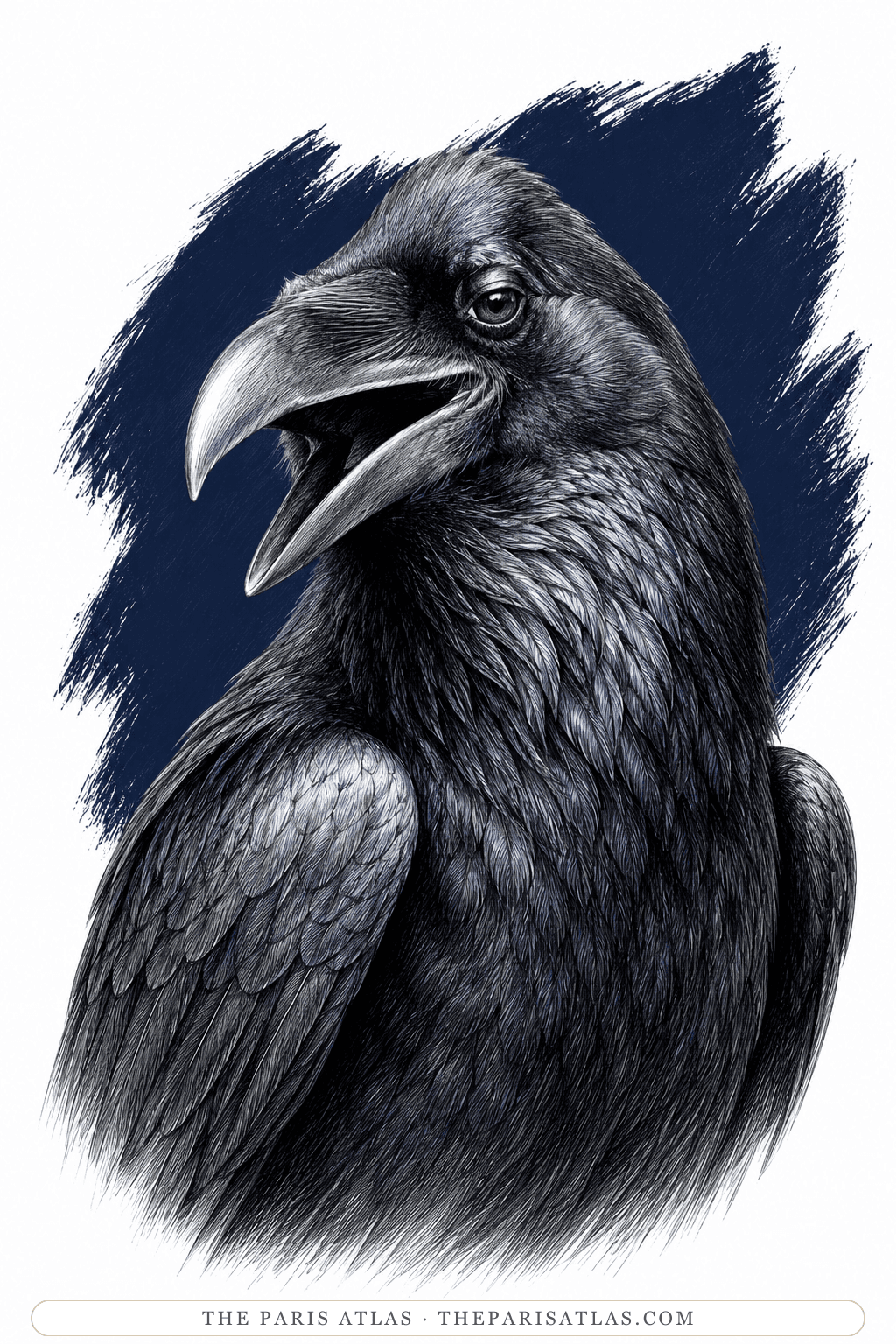
The tame raven, who tells the animals about Sugarcandy Mountain — a country a little way beyond the clouds where it is Sunday seven days a week and lump sugar grows on the hedges. He was Mr Jones's especial pet, does no work, and the pigs never quite get rid of him.
An audience, and to be fed without working. He got both under the farmer and gets both again afterwards.
The book

At a glance
- A tame raven, and the only preacher on the farm
- His especial pet; a spy and a tale-bearer
- Crusts soaked in beer before the Rebellion; a gill of beer a day after his return
- Chapters I, II and IX
Who they are in the book
Spoiler-freeMoses sleeps on a perch behind the back door of the farmhouse and is the only animal missing from Old Major's meeting. George Orwell describes him as Mr Jones's especial pet, a spy and a tale-bearer, and also a clever talker. The animals hate him because he tells tales and does no work.
What he talks about is Sugarcandy Mountain, a mysterious country to which all animals go when they die, situated somewhere up in the sky a little distance beyond the clouds. It is Sunday there seven days a week, clover is in season all the year round, and lump sugar and linseed cake grow on the hedges. The pigs have a harder struggle counteracting him than almost anything else in the early months, and though they argue very hard, some of the animals believe in it anyway.
He leaves with the humans, flapping after Mrs Jones and croaking as she slips out of the farm with a carpet bag, and comes back years later entirely unchanged. He still does no work and talks in the same strain, perching on a stump and holding forth by the hour to anyone who will listen, and he now claims to have seen the place himself on one of his higher flights. The pigs declare his stories lies, contemptuously and in public, and allow him to stay on the farm without working, with an allowance of a gill of beer a day.
How Moses Is Portrayed
- The wings and the beakBlack wings and a large beak, which is all the book gives of his body. He flaps the wings from the top of a stump while he holds forth, and points at the sky with the beak when he says where Sugarcandy Mountain is.
- Sugarcandy MountainSomewhere up in the sky, a little distance beyond the clouds. Sunday seven days a week, clover in season all the year round, and lump sugar and linseed cake growing on the hedges. All animals go there when they die.
- What he was under the farmerA spy and a tale-bearer, and Mr Jones's especial pet, fed on crusts of bread soaked in beer while his owner sat drinking in the kitchen. He slept on a perch behind the back door and missed the meeting in the barn entirely.
- Why he is difficultHe is a clever talker, and the pigs have an even harder struggle counteracting him than they have with apathy and loyalty to the old master. They argue very hard, and some of the animals believe in Sugarcandy Mountain regardless.
- The exitAs the Rebellion succeeds he springs off his perch and flaps after Mrs Jones, croaking loudly, as she leaves the farm by a side way with a few possessions in a carpet bag.
- The returnHe reappears in the middle of a summer after an absence of several years, quite unchanged, and claims to have visited the country himself on one of his higher flights and seen the everlasting fields of clover. Many of the animals believe him. Their lives now, they reason, are hungry and laborious, so is it not right and just that a better world should exist somewhere else?
- The arrangementThe pigs declare his stories lies and let him stay, not working, with a gill of beer a day. Orwell records the combination as a thing that was difficult to determine, and leaves it there.
If you like Animal Farm


If you like George Orwell
Explore authors with a similar voice, perspective, and influence.

Henry Miller
The Brooklyn dropout who arrived in Paris broke at thirty-eight and wrote the exuberant, banned books that ended American censorship.
View author
Louis-Ferdinand Céline
The doctor of the Paris slums who wrote the century's blackest, funniest novel — and changed the sound of French prose.
View author
Simone de Beauvoir
French writer and philosopher whose novels, memoirs, and social analysis examined freedom, gender, responsibility, aging, and the material conditions that shape a life.
View author