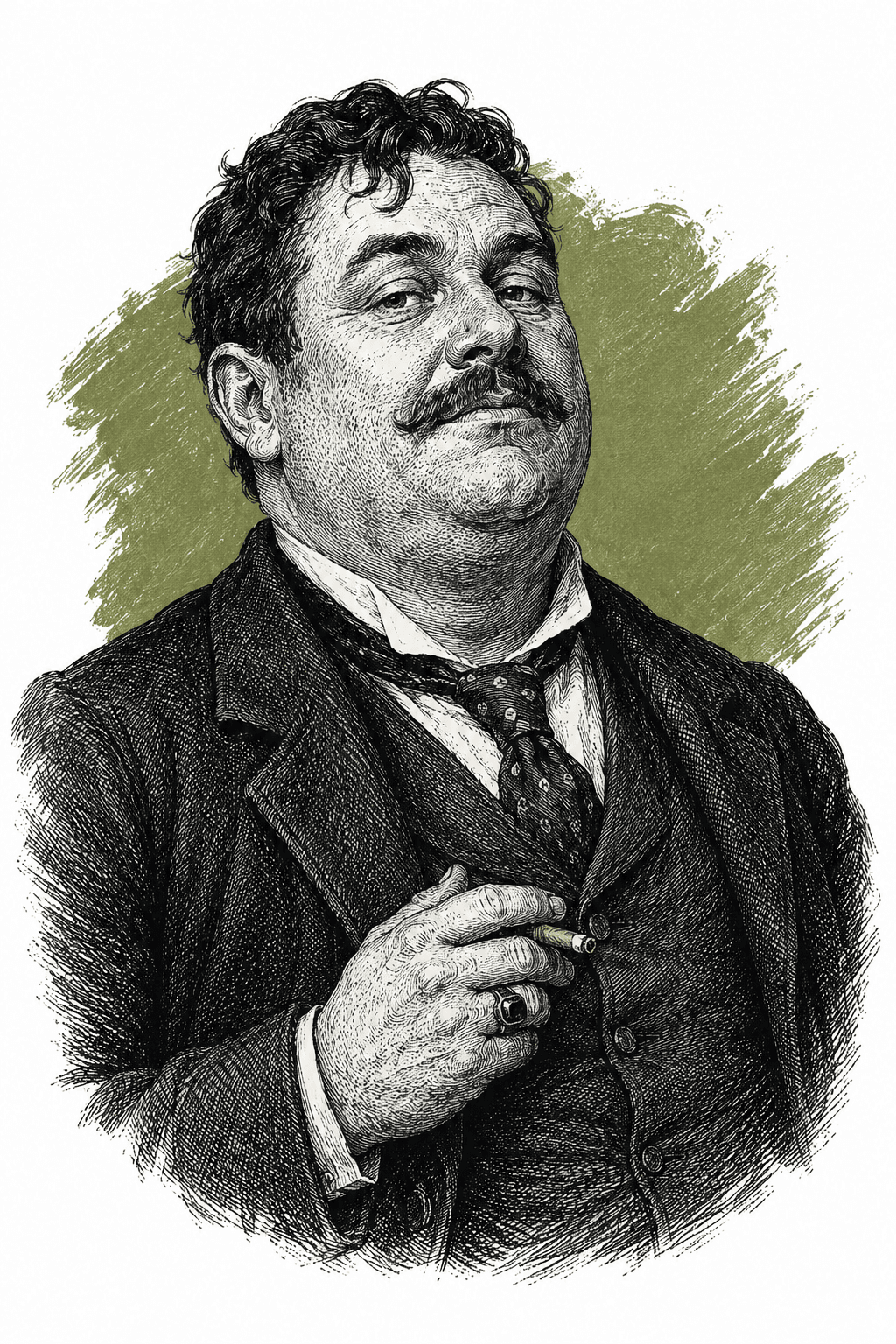
Farrington
The copying clerk in "Counterparts": a big man having a bad day at the office who spends the night making it somebody else's problem.
A drink, and to be admired for once. Of his mood on the way out of the office the story says: "The barometer of his emotional nature was set for a spell of riot."
The book

At a glance
- The subject of "Counterparts", the ninth story
- Copying clerk at the solicitors Crosbie & Alleyne, Dublin
- A wife named Ada and five children; the story names two sons, Charlie and Tom
- The office, O'Neill's, Davy Byrne's, the Scotch House, Mulligan's, and the kitchen at home
- Six shillings from pawning his watch; twopence left at the end of the night
- Being a strong man — which is what the evening takes off him
Who they are in the book
Spoiler-freeFarrington is the subject of "Counterparts", the ninth of the fifteen stories in Dubliners, the 1914 collection by the Irish writer James Joyce. He copies legal documents by hand in a Dublin solicitor's office and is behind on a contract his employer wants finished by evening. He is a very large man, he is thirsty from the first line of the story, and he slips out to a pub five times in the course of the working day.
The story follows him from the office into a night of drinking on money he does not have, and then home. It is the plainest and hardest thing in the book, and Joyce constructs it so that the same humiliation is handed down the chain: from the employer to Farrington, from Farrington to a stranger in a bar, and from Farrington to his young son.
How Farrington Is Portrayed
- How he looksTall and of great bulk, with a hanging face the colour of dark wine or dark meat, fair eyebrows and moustache, and slightly bulging eyes whose whites are dirty.
- The workHe has to copy a contract between Bodley and Kirwan by four o'clock and cannot make himself do it. He stares at the same unfinished phrase, notices that three words in it begin with the same letter, and eventually writes Bernard Bernard instead of Bernard Bodley and has to start a clean sheet.
- Slipping outHe puts a cap in his pocket, walks along the inside of the path so nobody sees him, and dives into the snug at O'Neill's for a glass of porter and a caraway seed to hide the smell. The chief clerk tells him, in front of clients, that five times in one day is a little bit much.
- The remark that costs himBawled at in front of the whole office by Mr Alleyne, and in front of a woman, he answers before he has thought: "I don't think, sir," he said, "that that's a fair question to put to me." The office is astounded, including him. He has to apologise abjectly the same evening.
- How he pays for the nightHe pawns his watch-chain at Terry Kelly's in Fleet Street, holds out for six shillings against the clerk's offer of five, and comes out rolling the coins between his fingers.
- Telling the storyHe rehearses his retort on the way to the pub and tells it all evening, and it gets a round out of every man who hears it. Another drinker acts out Mr Alleyne shaking his fist, and everyone roars.
- The arm-wrestleAn acrobat named Weathers, a much younger and slighter man, puts his hand down twice. Farrington accuses him of cheating, then turns on the barman for saying it was a knack. He goes home having spent everything, lost his reputation as a strong man and failed even to get drunk.
He gets home to a cold kitchen with the fire out and his wife at chapel. His small son Tom lights the lamp and offers to cook his dinner. Farrington takes the walking-stick from behind the door and beats him for letting the fire go out, and the boy falls on his knees and pleads: "Don't beat me, pa!" He offers to say a Hail Mary for his father if he stops. The story ends there, mid-plea, with no comment at all.
The title is a legal copyist's word for a duplicate, and it is also the shape of the story. Every scene repeats the one before it with a smaller person on the receiving end: Mr Alleyne humiliates Farrington, Farrington is beaten by a boy at arm-wrestling, and Farrington goes home and finds someone smaller still. It was one of the stories Joyce's printers objected to, partly for the word "bloody" and partly for naming real Dublin pubs.
If you like Dubliners


If you like James Joyce
Explore authors with a similar voice, perspective, and influence.
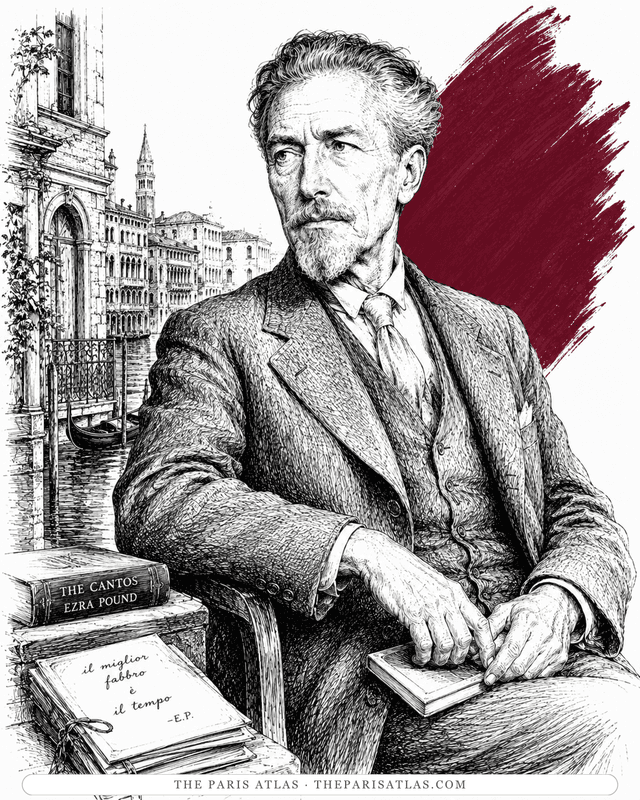
Ezra Pound
The impresario who dragged Joyce's early books into print, brought him to Paris, and championed Ulysses until the world caught up.
View author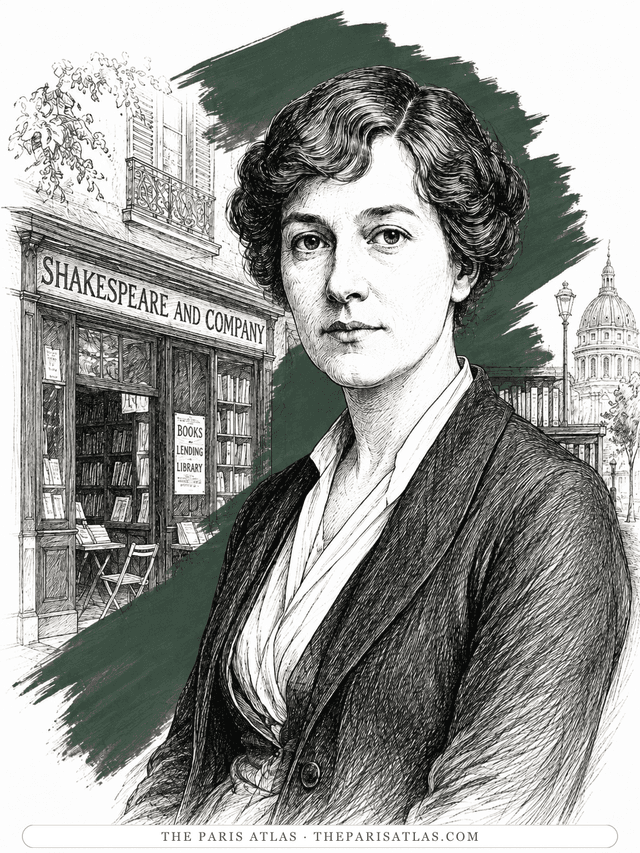
Sylvia Beach
His publisher of last resort and first devotion — the bookseller who printed Ulysses when no one else would.
View author
Louis-Ferdinand Céline
The doctor of the Paris slums who wrote the century's blackest, funniest novel — and changed the sound of French prose.
View author