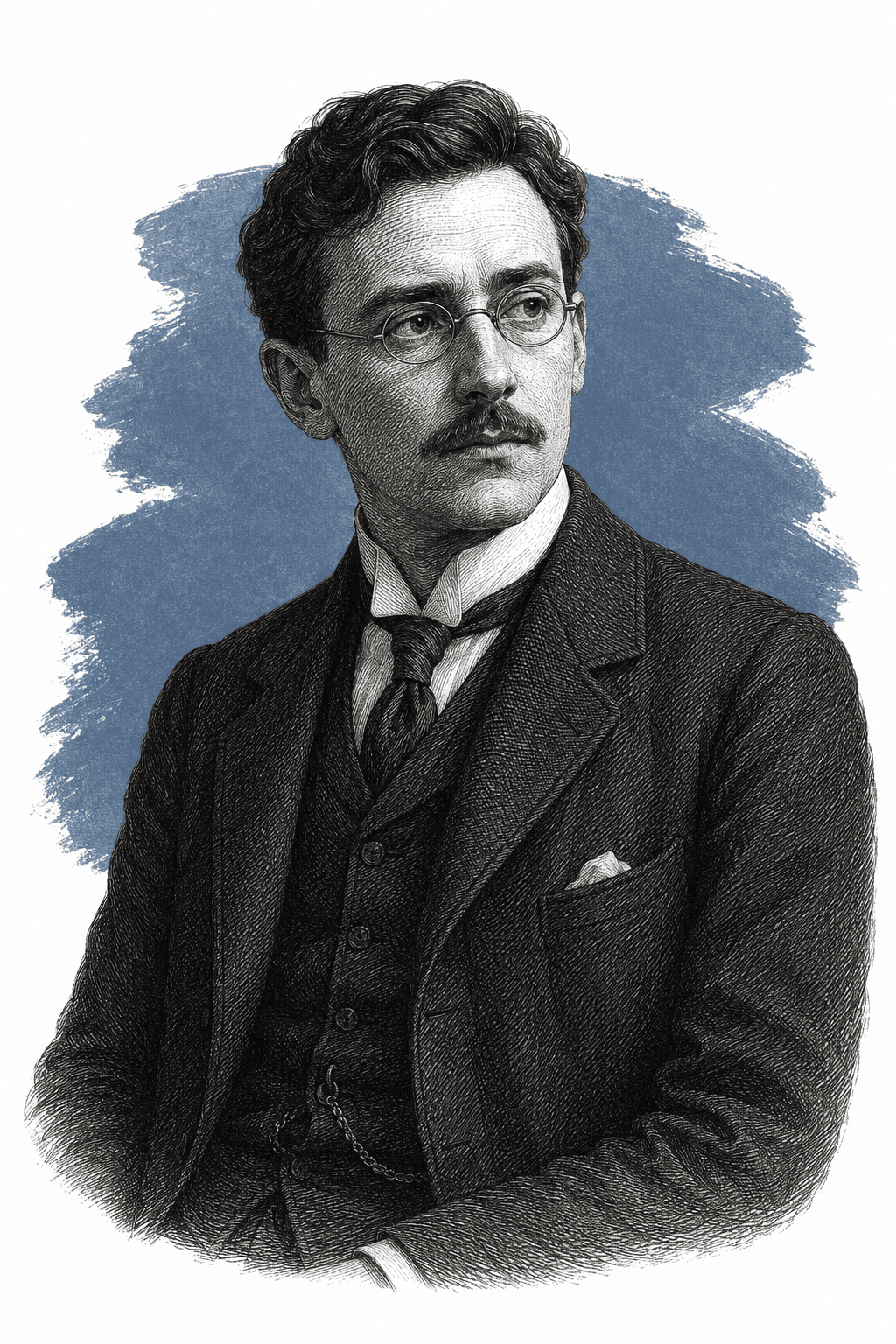
Little Chandler
The mild law clerk in "A Little Cloud" who meets a friend home from London and starts wondering what his own life is worth.
To be taken seriously as a poet. Walking to meet his friend he starts inventing the reviews his unwritten book would get, and wonders whether to put his mother's name in to sound more Irish: T. Malone Chandler.
The book

At a glance
- The subject of "A Little Cloud", the eighth story
- Thomas Chandler; "Tommy" to Gallaher; the poet's name he tries out on himself is T. Malone Chandler
- Thirty-two
- Clerk at the King's Inns, Dublin
- Married to Annie for about a year and a half; one baby son
- The Isle of Man, once — which is what he has to offer when Gallaher asks whether he has been anywhere
Who they are in the book
Spoiler-freeLittle Chandler is the subject of "A Little Cloud", the eighth of the fifteen stories in Dubliners, the 1914 collection by the Irish writer James Joyce. His name is Thomas Chandler and everyone calls him Little Chandler — not because he is unusually short, the story explains, but because he gives the impression of being a little man. He is thirty-two, works as a clerk at the King's Inns in Dublin, and has a wife named Annie and a baby son.
He has spent the day looking forward to a drink with Ignatius Gallaher, a friend who left Dublin eight years earlier and is now doing well as a journalist in London. Chandler has never written anything but has a shelf of poetry at home he bought as a bachelor, and somewhere in the walk across the city he starts believing that he could publish a book of poems himself if he only got out of Ireland. The evening does not go the way he imagined, and neither does the hour after it.
How Little Chandler Is Portrayed
- How he looksSmall white hands, a fragile frame, a quiet voice, careful manners, fair silken hair and moustache, perfect half-moon fingernails, and a discreet drop of scent on his handkerchief.
- The books at homeHe bought poetry before he married and has never once read a poem aloud to his wife, because he has never got up the nerve. He repeats lines to himself instead, and finds it consoling.
- The walk into townHe goes quickly through a street full of grimy children without looking at them, and for the first time in his life feels superior to the people he passes. Crossing Grattan Bridge he decides the houses along the quays look like a band of tramps, and wonders whether he could write a poem about it.
- In the barHe has never been inside Corless's and knows the name is expensive. He waters his whisky heavily while Gallaher drinks his neat, and three small ones are enough to go to his head.
- The one moment he pushes backWhen Gallaher says he means to marry money and is in no hurry, Chandler tells him twice, quietly and stubbornly, that he will put his head in the sack like everyone else if he finds the girl. He knows as he says it that he has given himself away.
- At home with the babyLeft holding the sleeping child while his wife runs out for tea, he studies her photograph and decides there is something mean in her face. Then he opens Byron, gets four lines in, and the child starts to cry.
- What he does about itHe cannot make the child stop, cannot read, decides he is a prisoner for life, and bends down and shouts "Stop!" into its face. It screams for as long as it takes his wife to get home.
Annie comes back to find the baby screaming, snatches it out of his arms and asks what he has done to him. Chandler meets her eyes for a moment and sees hatred in them. She walks up and down the room murmuring to the child, and he stands back out of the lamplight with tears of remorse in his eyes. That is the end. He has not written a poem, he has not gone to London, he has frightened his own son, and the friend he spent the evening envying is not coming back.
The title comes from the Book of Kings, where a cloud the size of a man's hand rises out of the sea and turns into a downpour: a very small thing that changes the weather. Nothing in Chandler's life changes at all.
If you like Dubliners


If you like James Joyce
Explore authors with a similar voice, perspective, and influence.
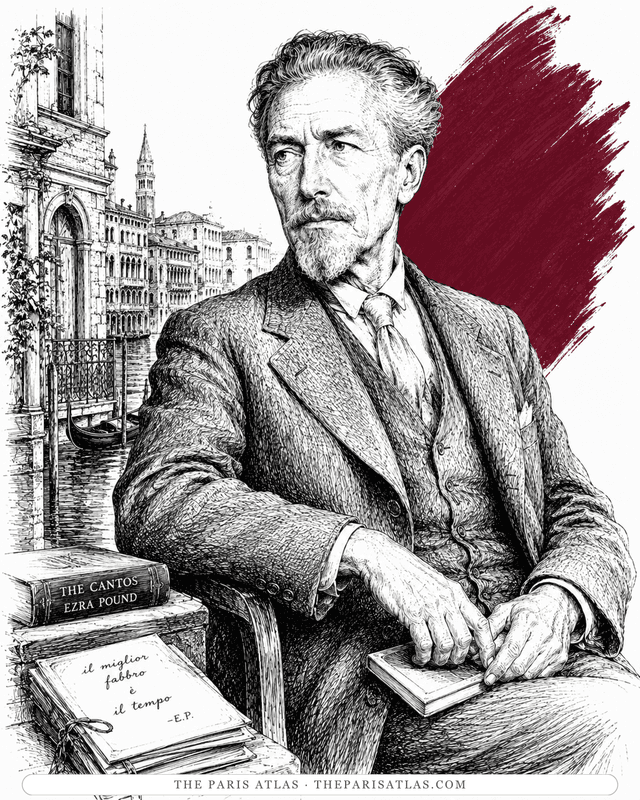
Ezra Pound
The impresario who dragged Joyce's early books into print, brought him to Paris, and championed Ulysses until the world caught up.
View author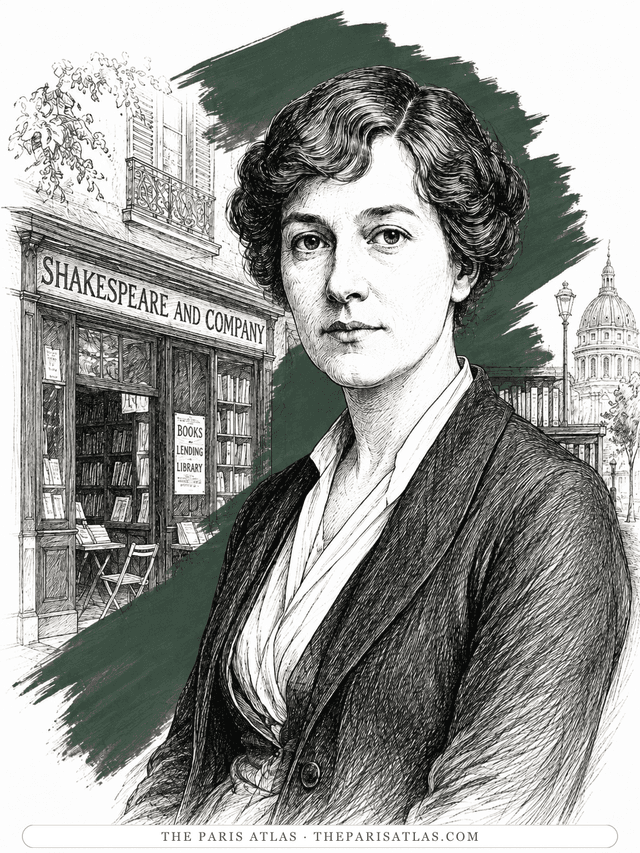
Sylvia Beach
His publisher of last resort and first devotion — the bookseller who printed Ulysses when no one else would.
View author
Louis-Ferdinand Céline
The doctor of the Paris slums who wrote the century's blackest, funniest novel — and changed the sound of French prose.
View author