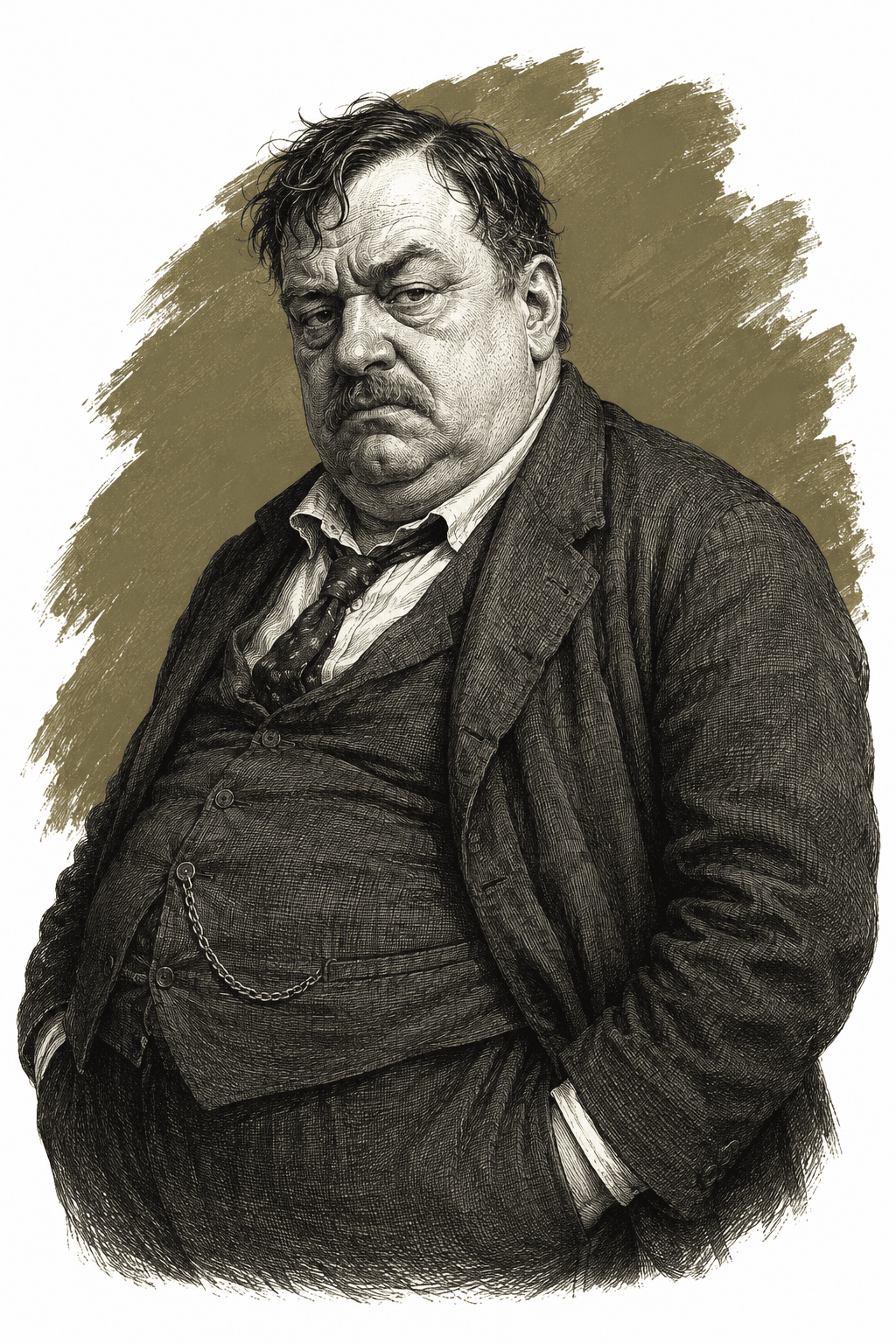
Mr Tom Kernan
The tea salesman in "Grace" who falls down a pub staircase and bites his tongue, and whose friends decide the cure is a religious retreat.
To keep his standing. Propped up in bed apologising to his visitors for the state of the room, he looks at them at the same time a little proudly, with a veteran's pride.
The book

At a glance
- The subject of "Grace", the fourteenth story
- Commercial traveller in tea, with an office in Crowe Street, Dublin
- Married twenty-five years; two grown sons in Glasgow and Belfast, younger children still at school
- Protestant stock, converted at his marriage, and not within the Church for twenty years
- A bar off Grafton Street, his bedroom on the Glasnevin road, and the Jesuit church in Gardiner Street
- Mr Crofton, the canvasser from "Ivy Day in the Committee Room", is an old companion of his and turns up at the church
- He appears again in Ulysses, walking Dublin and pleased with his own reflection
Who they are in the book
Spoiler-freeMr Tom Kernan is the subject of "Grace", the fourteenth of the fifteen stories in Dubliners, the 1914 collection by the Irish writer James Joyce. He is a commercial traveller in tea, of the old school that believed in the dignity of its calling, and the story opens with him at the bottom of a pub lavatory staircase, unconscious, with a piece of his tongue bitten off. He has been drinking since Friday.
Three friends take charge. They get him home, and then, with his wife's approval and without telling him, they arrange to bring him to a businessmen's retreat at the Jesuit church in Gardiner Street. Kernan came of Protestant stock, converted when he married, has not been inside a Catholic church in twenty years and is fond of giving side-thrusts at Catholicism. The middle of the story is four men at his bedside discussing popes and Jesuits and getting most of it wrong, and Joyce keeps a straight face the whole way through.
How Mr Tom Kernan Is Portrayed
- How he is introducedFace down at the foot of a staircase in a bar off Grafton Street, unable to stand, his hat rolled a few yards away, his clothes smeared with the filth of the floor and a thin stream of blood at the corner of his mouth. Nobody in the bar knows who he is.
- What he says about it"Sha, 's nothing," said the injured man, trying to stand up. He says a version of it three times: while he is being lifted, while brandy is being forced down him, and while a constable asks him twice where he lives.
- The tradeTea. He has a little office in Crowe Street with a leaden battalion of canisters on the mantelpiece and china bowls of black liquid on the table. He takes a mouthful, draws it up, saturates his palate, spits it into the grate, and then pauses to judge.
- The hat and the gaitersHe has never been seen in the city without a silk hat of some decency and a pair of gaiters. By grace of those two articles of clothing, he said, a man could always pass muster.
- At homeHis wife has been married to him twenty-five years. She empties his pockets when he is carried in, accepts his frequent intemperance as part of the climate, heals him dutifully and always tries to make him eat a breakfast. Two grown sons are away in Glasgow and Belfast. There were worse husbands, the story says, and he had not been violent since the boys grew up.
- The talk at the bedsideHe listens with an air of calm enmity while his friends praise the Jesuits, then gives ground and allows that they are an educated order and that he believes they mean well. He recalls hearing a famous preacher years before, with an Orangeman friend who told him afterwards that they worship at different altars but their belief is the same. That struck him, he says, as very well put.
- The one thing he refusesTold he will have to stand up in the church with a lighted candle in his hand and renew his baptismal vows, he draws the line at that and nothing else. He will do the retreat and the confession and, as he puts it, all that business. But he bars the candles: "I bar the magic-lantern business."
The last scene is the retreat. The transept of the Jesuit church in Gardiner Street is nearly full of well-dressed businessmen, and Kernan sits near the pulpit with his rehabilitated silk hat on his knee, recognising faces — a moneylender, the registration agent who makes mayors, a man who owns three pawnbrokers' shops — and gradually feeling at home. Father Purdon takes a hard text about the children of this world being wiser in their generation than the children of light, tells the congregation he is a man of the world speaking to his fellow men, and offers himself as their spiritual accountant. He asks them to open the books of their spiritual lives, see whether they tally with conscience, and where they do not, to say like a man that they will set the accounts right. The story ends there, in the middle of the sermon. It never goes back to Kernan.
Joyce's brother Stanislaus recorded that the three parts of the story were built on Dante's Divine Comedy: the underground lavatory for hell, the sickbed for purgatory, and the church for paradise. Whether the retreat does Kernan any good is not a question the story asks, and it is worth noticing that in the whole of it — the friends, the wife, the priest — nobody once mentions the drinking.
If you like Dubliners


If you like James Joyce
Explore authors with a similar voice, perspective, and influence.
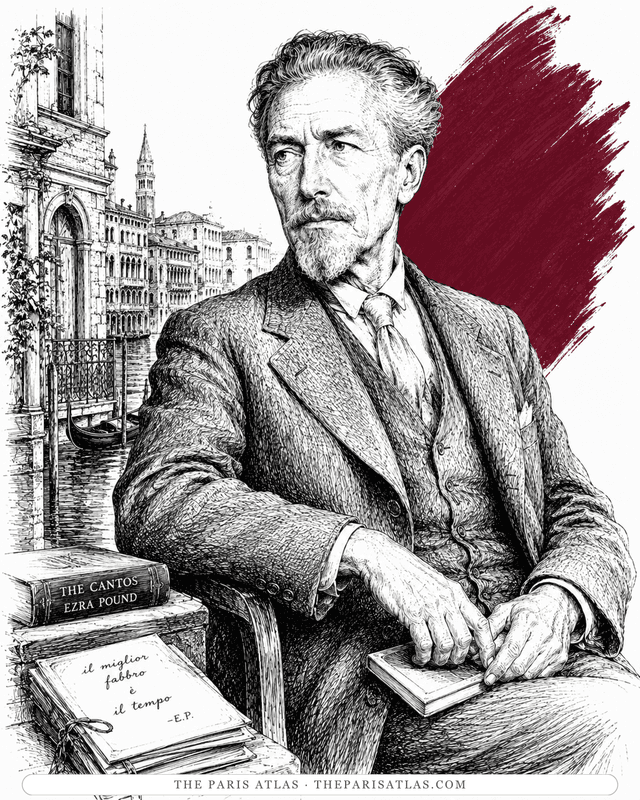
Ezra Pound
The impresario who dragged Joyce's early books into print, brought him to Paris, and championed Ulysses until the world caught up.
View author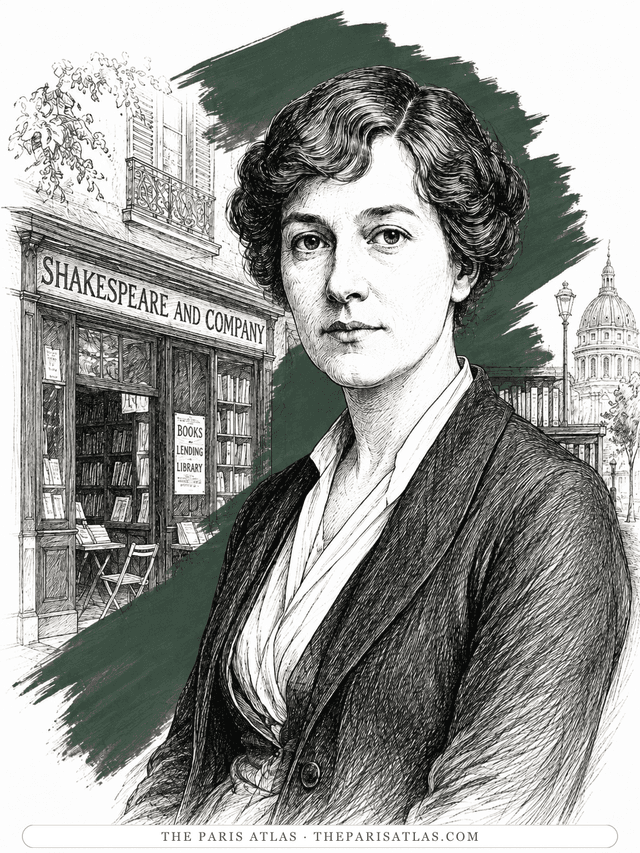
Sylvia Beach
His publisher of last resort and first devotion — the bookseller who printed Ulysses when no one else would.
View author
Louis-Ferdinand Céline
The doctor of the Paris slums who wrote the century's blackest, funniest novel — and changed the sound of French prose.
View author