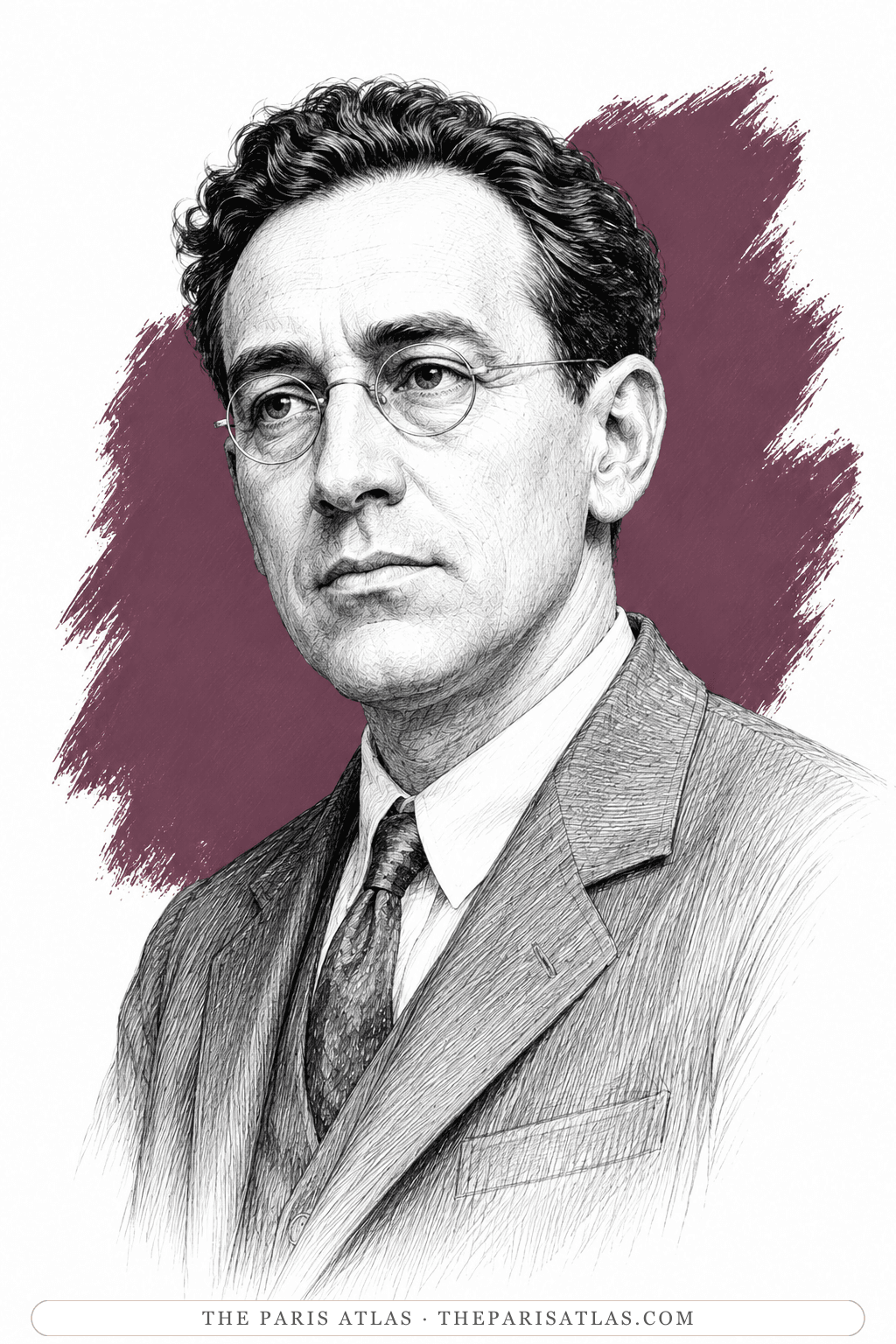
Andrés Nin
The leader of the P.O.U.M., arrested in his office on 15 June 1937 and never seen alive again. Orwell never met him, and reports what he was told and what the governments said afterwards.
In Orwell's account, workers' control rather than a parliamentary republic, and the political argument for it — the position the P.O.U.M. summed up in the slogan that the war and the revolution were inseparable.
The book

At a glance
- Leader of the P.O.U.M.; Orwell never met him
- 15 June 1937, in his office in Barcelona
- 16 June 1937
- Rumours of his death reached Barcelona by 21 June 1937
- Chapters 11 and 13
Who they are in the book
Spoiler-freeAndrés Nin led the P.O.U.M., the party whose militia George Orwell served in for six months without ever joining it. Orwell does not meet him in the book; Nin reaches the page through the Communist press, through the arrests of June 1937, and through what ministers told visiting delegations afterwards. He had become leader after the party's founder, Joaquín Maurín, was captured by Franco's side while trying to organise resistance behind the lines, and he had built the P.O.U.M. by amalgamating Opposition Communists with an earlier group, the Workers' and Peasants' Bloc.
The charge that mattered was that Nin had once been Trotsky's secretary. He had left him some years before, and the P.O.U.M. had no connection with Trotsky's organisation — Trotsky had in fact ordered his followers to attack P.O.U.M. policy, and they were purged from the party offices. Orwell spends much of the eleventh chapter separating the three distinct things the word "Trotskyist" was being used to mean at that moment, because the third of them, a disguised Fascist, was what the accusation was intended to convey.
On 15 June 1937 the police arrested Nin in his office. The following day the P.O.U.M. was declared illegal. By 21 June the rumour had reached Barcelona that he had been shot; later it took a firmer shape, that he had been killed in prison by the secret police and his body left in the street, and it came from several sources including Federica Montseny, a former member of the Government. Questioned by delegations from other countries, the Government said only that he had disappeared and that they did not know where he was. Some newspapers said he had escaped to Franco's territory, without producing evidence for it.
How Andrés Nin Is Portrayed
- How he got the partyHe formed the P.O.U.M. by amalgamating various Opposition Communists with the Workers' and Peasants' Bloc, and led it after its founder Joaquín Maurín was taken prisoner by the other side in the first months of the war.
- The Trotsky connectionHe had been Trotsky's secretary years earlier and had left him. Orwell's comparison for the argument built on that fact is that it would prove the English Communist Party a Fascist organisation on the strength of one member's former association with Oswald Mosley.
- The arrest15 June 1937, in his office, without warning. The same evening the police raided the Hotel Falcon and arrested everyone in it, mostly militiamen on leave, and turned the building into a prison.
- The document signed N.Among the evidence the Communist press announced was a mysterious paper signed with the letter N. Irujo, the Minister of Justice, told an international delegation headed by James Maxton that he had been through the dossier, that none of the evidence would bear examination, and that the document was valueless.
- What Orwell concludesThat a political prisoner of Nin's importance would be unlikely to be allowed to escape, and that unless he is produced alive it must be taken that he was murdered in prison. He writes it as a judgement, and says so.
If you like Homage to Catalonia


If you like George Orwell
Explore authors with a similar voice, perspective, and influence.

Henry Miller
The Brooklyn dropout who arrived in Paris broke at thirty-eight and wrote the exuberant, banned books that ended American censorship.
View author
Louis-Ferdinand Céline
The doctor of the Paris slums who wrote the century's blackest, funniest novel — and changed the sound of French prose.
View author
Simone de Beauvoir
French writer and philosopher whose novels, memoirs, and social analysis examined freedom, gender, responsibility, aging, and the material conditions that shape a life.
View author