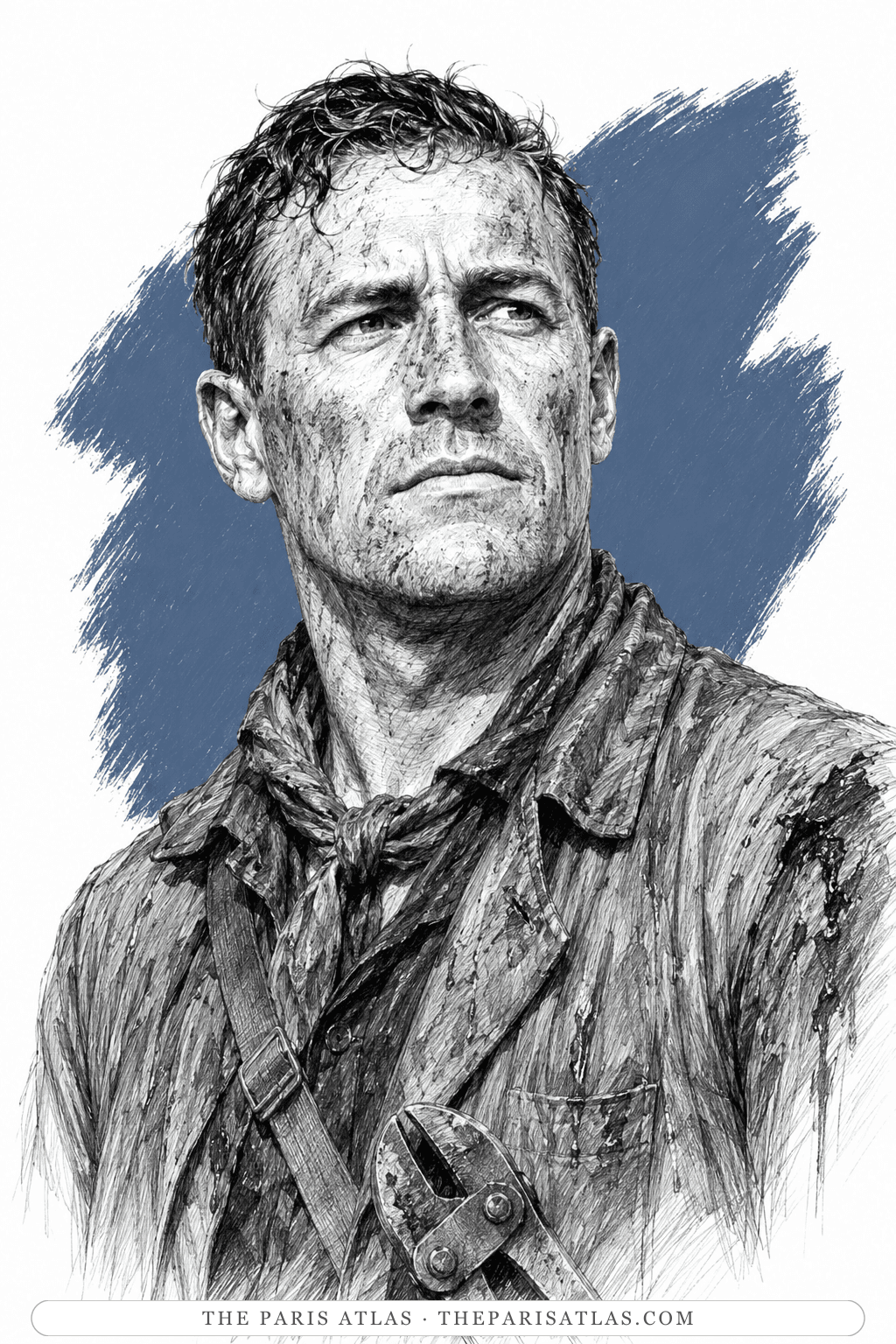
Jorge Roca
Orwell's battalion commander and Kopp's personal friend, who cut the Fascist wire with the raiding party's only pair of wire-cutters and threw the first bomb. He was hit at the first volley and was missing for hours; the wound turned out to be a light one through the shoulder.
The book

At a glance
- Orwell's battalion commander in the P.O.U.M. militia
- A battalion, about four hundred men
- A personal friend, and one of his best officers
- A light one, through the shoulder
- Chapter 7
Who they are in the book
Spoiler-freeJorge Roca commanded the battalion George Orwell served in on the Aragón front in the spring of 1937, about four hundred men in the militia of the P.O.U.M., the small revolutionary party Orwell had joined in Barcelona more or less by accident. He was a personal friend of Georges Kopp, the Belgian who commanded Orwell's own unit, and one of Kopp's best officers. The book puts him at the head of a single action, and then loses him.
The action was a night raid on a Fascist redoubt outside Huesca. Kopp explained the plan in a farmyard at Torre Fabian in pelting rain: thirty men, half English and half Spanish, under Roca and a Spanish captain named Benjamin, were to creep up and cut the Fascist wire, and Roca would throw the first bomb as the signal for the rest. There were no white armlets to tell friend from enemy in the dark, and out of the darkness a voice suggested arranging for the Fascists to wear them instead.
Roca waited on the grass outside the militia's own parapet until all thirty men had come through the gap, then bent almost double and started creeping forward. The Fascist parapet was about a hundred and fifty yards off across beet fields turned to mud, and the whole chance of the raid was moving without noise. He carried the party's only pair of wire-cutters in his pocket. At the outer wire he knelt, fumbled, snipped, and lifted the trailing stuff delicately aside; at the inner wire, twenty yards from the parapet, he did it again, and there was no way of cutting it silently.
The sentry heard them as the men behind were filing through the gap. There was a flash and a bang, and Roca went down on one knee and swung his arm like a bowler. His bomb burst somewhere over the parapet, and ten or twenty rifles opened up at once. He was hit at that first volley and was out of sight for the rest of the night.
When the raiding party got back over its own parapet, every wounded man had been brought in except Roca and an Englishman named Hiddlestone. Kopp was pacing up and down inside the parapet, very pale — pale even in the fat folds at the back of his neck — paying no attention to the bullets cracking past his head, and muttering the name over and over. He asked for five volunteers to go out and look. Orwell and Douglas Moyle went with three Spaniards into a sky that was already turning blue, were fired on, and found nothing. Roca had in fact been carried to the dressing-station early, lightly wounded through the shoulder.
The book never says what he looked like, how old he was or how he spoke. It records what he did on one night in the dark, at the head of thirty men, and nothing else about him.
How Jorge Roca Is Portrayed
- Leading the approachHe waited on the grass until all thirty men were through the gap in the parapet, then bent almost double and began creeping forward. Orwell went in the front rank with him and Benjamin.
- The wire-cuttersHe had the raid's only pair, in his pocket. He knelt at the outer wire, cut it and lifted the trailing strands aside, then knelt again at the inner wire twenty yards from the Fascist parapet.
- The first bombWhen the sentry fired, he poised himself on one knee and swung his arm like a bowler. The bomb burst somewhere over the parapet, and that was the signal for the rest of the party.
- Hit at the first volleyTen or twenty rifles answered the bomb from the parapet. Roca dropped wounded within seconds and was somewhere out of sight for the whole of the fighting that followed.
- MissingAt the end of the night he and one other man were unaccounted for, and Orwell went back out into no man's land at first light to look for him. He had already been taken to the dressing-station.
If you like Homage to Catalonia


If you like George Orwell
Explore authors with a similar voice, perspective, and influence.
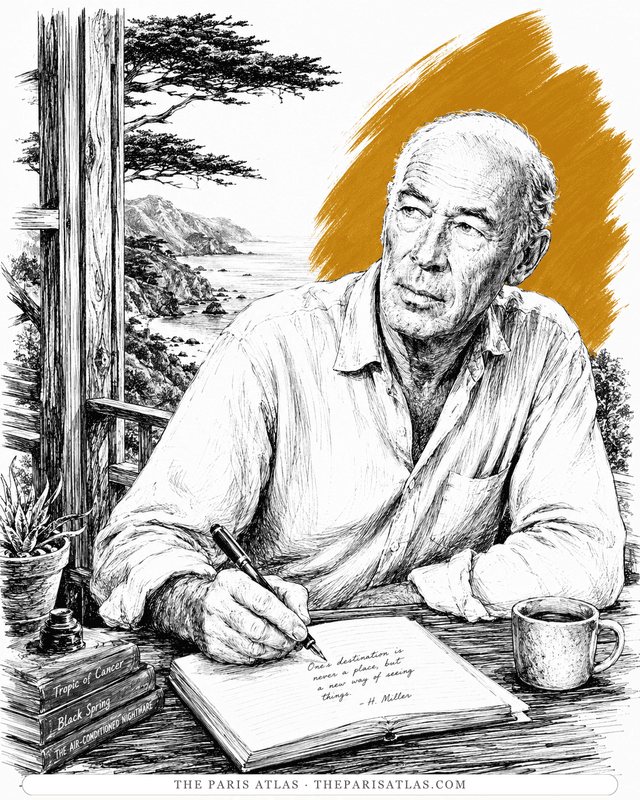
Henry Miller
The Brooklyn dropout who arrived in Paris broke at thirty-eight and wrote the exuberant, banned books that ended American censorship.
View author
Louis-Ferdinand Céline
The doctor of the Paris slums who wrote the century's blackest, funniest novel — and changed the sound of French prose.
View author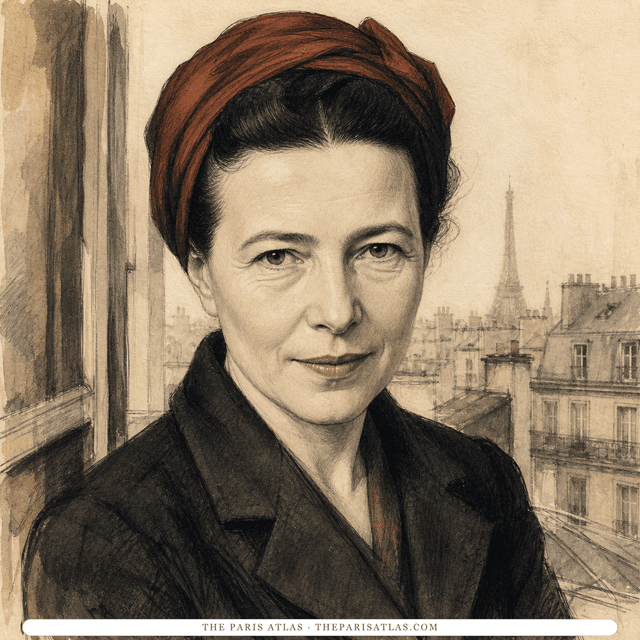
Simone de Beauvoir
French writer and philosopher whose novels, memoirs, and social analysis examined freedom, gender, responsibility, aging, and the material conditions that shape a life.
View author