The Italian militiaman
The stranger in the Lenin Barracks who shook Orwell's hand on the day before he joined the militia, and who opens the book. They exchanged perhaps four words and never met again.
In Orwell's account, nothing he ever states. The man is given no ambitions in the book, only a face and a handshake, and Orwell builds the opening chapter on what he thought both meant.
The book

At a glance
- A militiaman at the Lenin Barracks, seen once
- Twenty-five or six
- Late December 1936, the day before Orwell joined the militia
- Never given
- The opening pages of Chapter 1
Who they are in the book
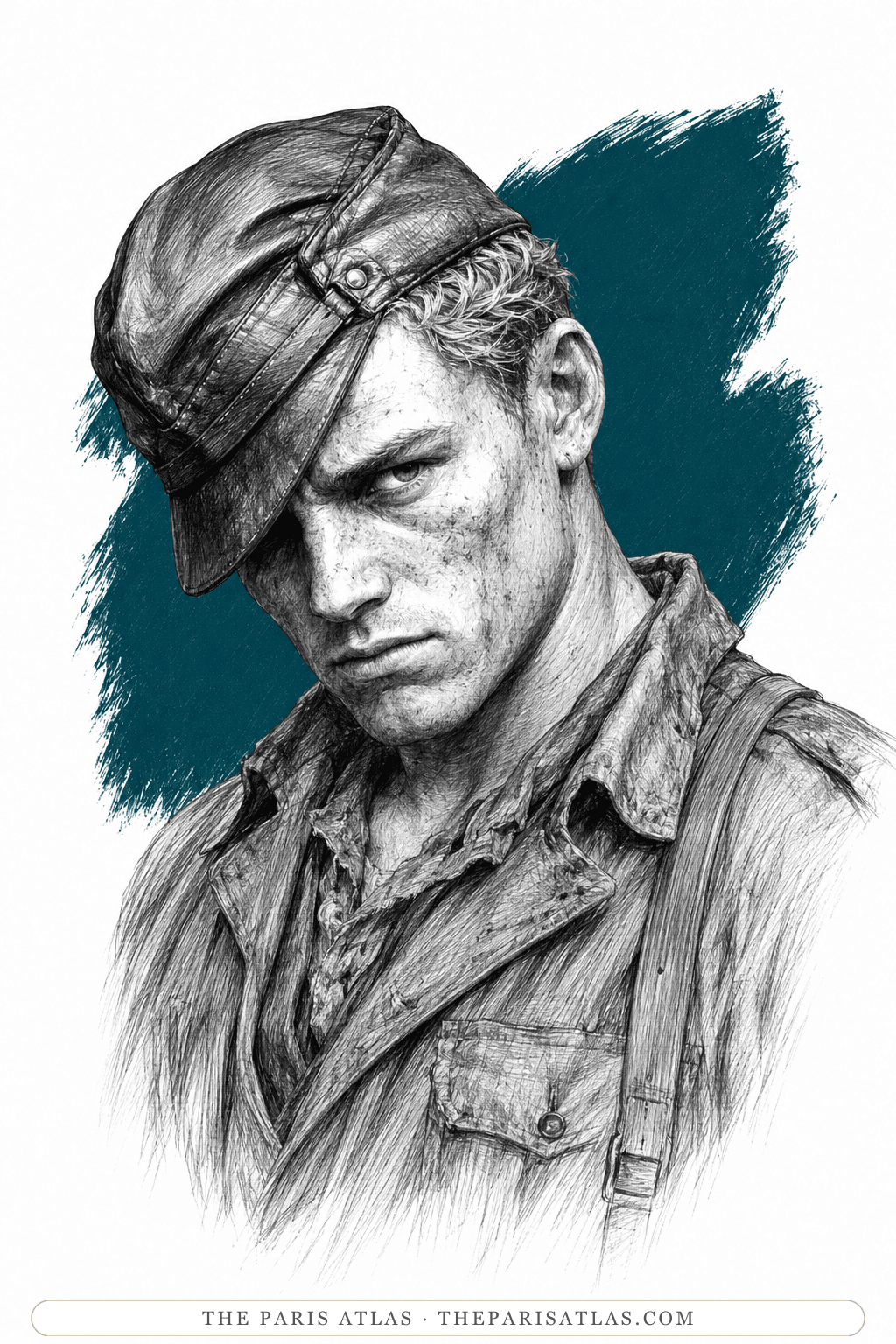
Spoiler-freeThe first person in Homage to Catalonia is a man George Orwell saw once. He was standing in front of the officers' table in the Lenin Barracks in Barcelona in late December 1936, frowning at a map one of the officers had spread out, and clearly unable to make anything of it. Orwell describes a tough-looking youth of twenty-five or six with reddish-yellow hair and powerful shoulders, his peaked leather cap pulled fiercely over one eye, and a face holding both candour and ferocity — the kind of face, he writes, you would expect in an Anarchist, though as likely as not the man was a Communist.
Somebody at the table mentioned that Orwell was a foreigner. The Italian looked up and asked whether he was Italian; Orwell answered in bad Spanish that he was English, and asked the same question back. On the way out the man crossed the room and gripped his hand very hard. That is the whole of the encounter.
Orwell knew immediately that he did not want to see him again, on the grounds that a second meeting would spoil the first, and never did. He keeps him at the front of the book because the man carries the atmosphere of that winter: the red flags in Barcelona, the trains of shabby soldiers creeping up to the front, the grey towns further up the line, the ice-cold trenches in the mountains.
How The Italian militiaman Is Portrayed
- How he is drawnTwenty-five or six, reddish-yellow hair, powerful shoulders, a peaked leather cap pulled over one eye, standing in profile with his chin on his breast. Orwell reads the face as one belonging to a man who would commit murder and throw away his life for a friend.
- What he woreThe book calls his uniform shabby and says nothing else about it. Orwell gives no height, eye colour or weapon either. What the militia wore that December is described as a body rather than a man: corduroy knee-breeches on practically everyone, a zipper jacket of leather or wool in any colour going, a cap of no fixed kind with a party badge on the front of it, and on nearly every man a red or red-and-black handkerchief round the throat. Orwell called it not a uniform but a multiform.
- The mapHe could not make head or tail of it and plainly regarded map-reading as a stupendous intellectual feat. Orwell records the reverence illiterate men had for their supposed superiors as part of what moved him.
- Four words"Italiano?" — "No, Inglés. Y tú?" — "Italiano." That is the entire recorded conversation between them, conducted in Orwell's bad Spanish.
- The handshakeOn the way out he stepped across the room and gripped Orwell's hand very hard. "Queer, the affection you can feel for a stranger!" Orwell writes, and says he hoped the liking ran both ways.
- Why they never met againBecause Orwell decided on the spot that keeping the first impression meant not risking a second, and because, as he puts it, one was always making contacts of that kind in Spain.
If you like Homage to Catalonia


If you like George Orwell
Explore authors with a similar voice, perspective, and influence.

Henry Miller
The Brooklyn dropout who arrived in Paris broke at thirty-eight and wrote the exuberant, banned books that ended American censorship.
View author
Louis-Ferdinand Céline
The doctor of the Paris slums who wrote the century's blackest, funniest novel — and changed the sound of French prose.
View author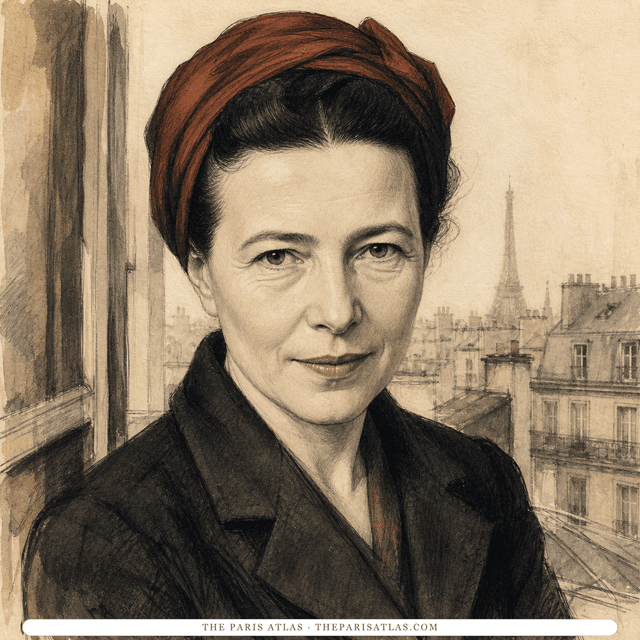
Simone de Beauvoir
French writer and philosopher whose novels, memoirs, and social analysis examined freedom, gender, responsibility, aging, and the material conditions that shape a life.
View author