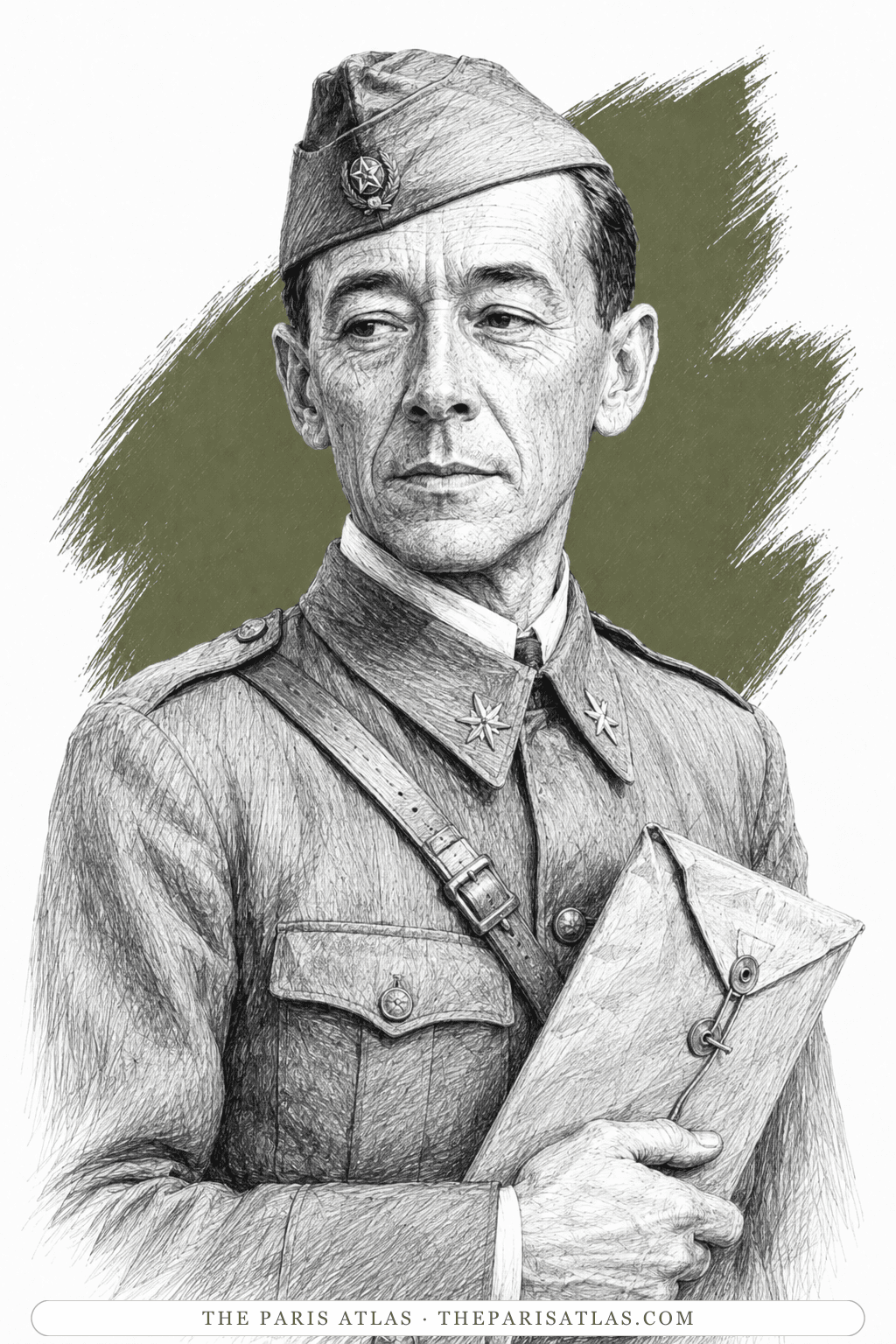
The officer at the War Department
A colonel's aide-de-camp in Barcelona, a little slip of an officer in smart uniform with large squinting eyes, who heard out a hoarse foreigner asking for a confidential letter back on behalf of a P.O.U.M. major under arrest, and then went and got it. The handshake he offered afterwards is the moment George Orwell singles out from the whole of that week.
In Orwell's account he wants to do the correct thing by an officer's letter, and does it after learning exactly what it will cost him to be seen doing it.
The book

At a glance
- Aide-de-camp to a colonel at the War Department in Barcelona
- Recovering Georges Kopp's confidential letter after his arrest
- Chapter 14
Who they are in the book
Spoiler-freeGeorges Kopp had been arrested with a confidential letter on him addressed to a colonel at the War Department. George Orwell went to get it back, with the police already rounding up P.O.U.M. members and his own voice reduced by his throat wound to a croak. He did not see the colonel. He saw the aide-de-camp: a little slip of an officer in smart uniform with large and squinting eyes, who came out into the ante-room to hear him.
The interview turns on one question. Orwell piles on the urgency of Kopp's mission to the front, and the officer nods a great many times and gives a guarded assent. Then he asks what force Major Kopp was serving in. Orwell has to say the P.O.U.M. militia, at the height of the spy scare, to an officer in the Popular Army. He compares it to walking into a London club after a Red scare and announcing yourself a Communist. The officer's dark eyes move obliquely across his face, and he asks whether that means Orwell served in the P.O.U.M. himself. Orwell says yes.
The officer disappears into the colonel's room, and Orwell listens to the agitated conversation on the other side of the door and assumes it is all over. Instead the man comes out putting on his cap and signs to Orwell to follow. They walk twenty minutes to the Chief of Police's office without a word, the officer marching stiffly in front with a military step, past the informers hanging about the door. He goes in, there is a long heated argument, and he comes out flushed and carrying the envelope.
How The officer at the War Department Is Portrayed
- How Orwell describes himA little slip of an officer in smart uniform, with large and squinting eyes. He hears out a stranger whose voice keeps failing and never asks what is wrong with it.
- The word"P.O.U.M.!" Orwell says he wishes he could convey the shocked alarm in the man's voice, and then records that the alarm changed nothing about what the officer did next.
- MañanaHis first offer, and the standard one. Orwell protests that the matter is urgent, and the officer seems to agree, which in that week meant very little until he acted on it.
- The walkTwenty minutes to the Chief of Police's office, the officer marching stiffly in front with a military step, and not one word exchanged the whole way.
- The envelopeHe came out of the argument flushed, carrying a large official envelope. Orwell calls it a tiny victory which, as it turned out, made not the slightest difference: the letter was delivered and Kopp stayed in jail.
- The handshakeHe hesitated, stepped across and shook hands. Orwell says he does not know whether he can bring home how deeply that touched him, and uses it as his example of the flashes of magnanimity he kept meeting in Spaniards.
If you like Homage to Catalonia


If you like George Orwell
Explore authors with a similar voice, perspective, and influence.

Henry Miller
The Brooklyn dropout who arrived in Paris broke at thirty-eight and wrote the exuberant, banned books that ended American censorship.
View author
Louis-Ferdinand Céline
The doctor of the Paris slums who wrote the century's blackest, funniest novel — and changed the sound of French prose.
View author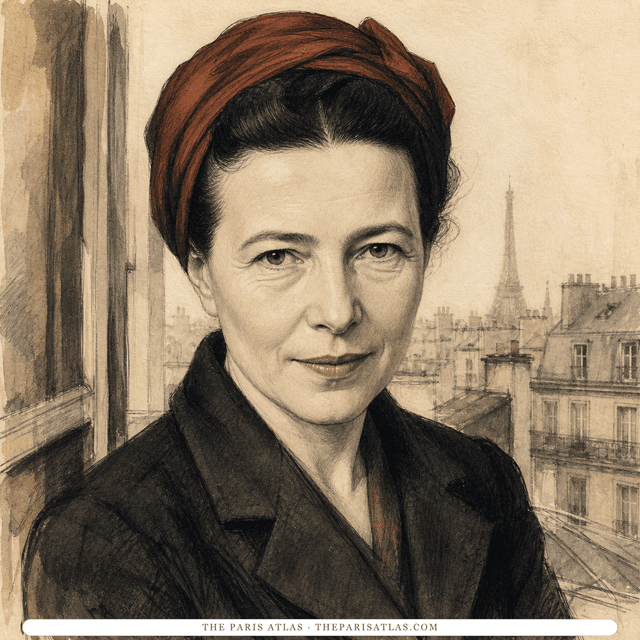
Simone de Beauvoir
French writer and philosopher whose novels, memoirs, and social analysis examined freedom, gender, responsibility, aging, and the material conditions that shape a life.
View author