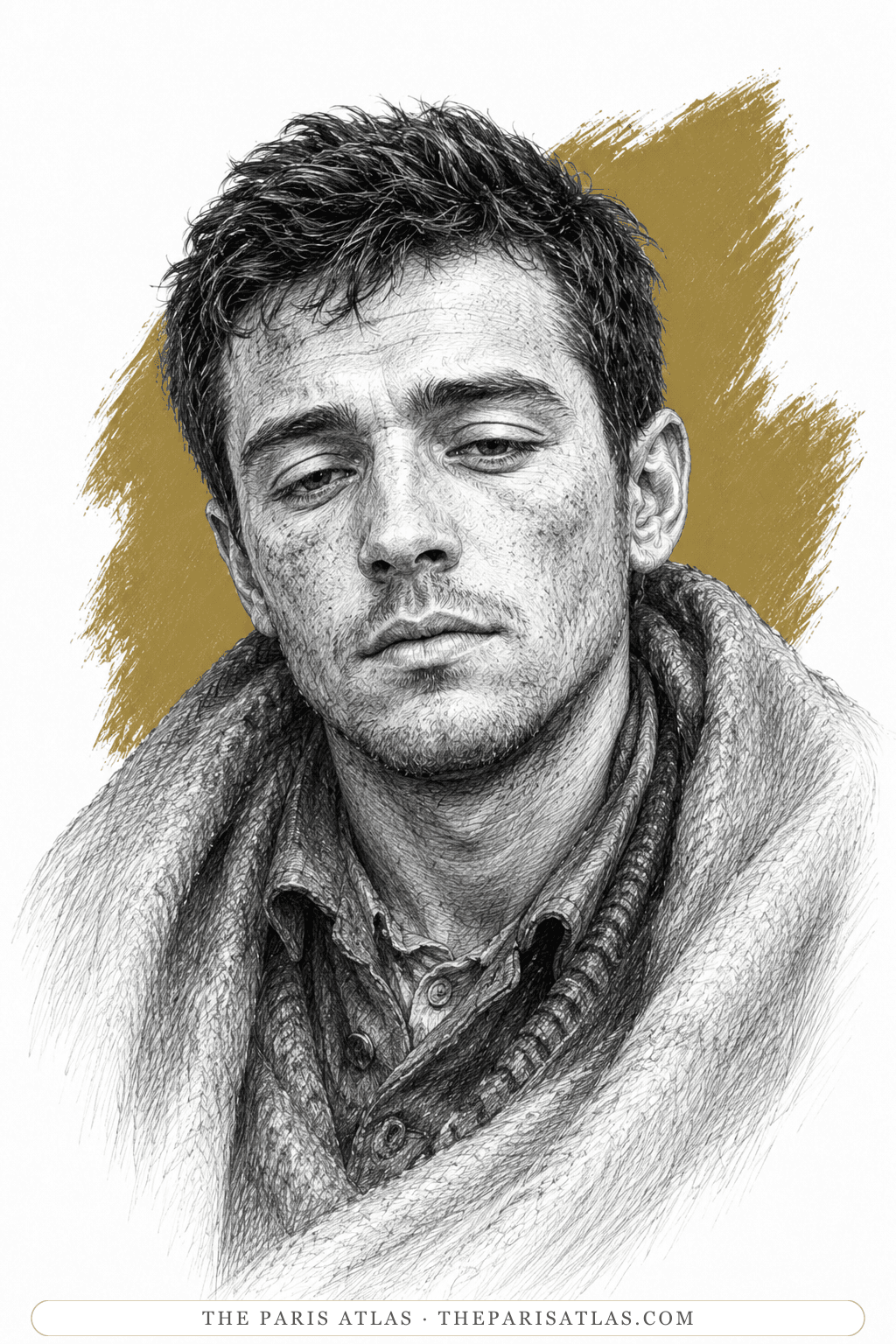
Ramon
Williams's brother-in-law, the one Spaniard among the thirty-odd English at Monte Oscuro, and the man whose nose is flattened between George Orwell's shoulder-blades in the passage remembering the dug-out at Monte Pocero, where a ledge of limestone served as a bed.
The book

At a glance
- A young Spanish volunteer serving with the English in the P.O.U.M. militia
- Brother-in-law of Williams, an English militiaman married to a Spanish woman
- Nothing beyond the word "young"
- Monte Pocero, then Monte Oscuro, both hilltop positions in Aragon
- Chapters 2 and 4, and once more in the remembered scenes of Chapter 8
Who they are in the book
Spoiler-freeRamon was a young Spaniard who served alongside the English volunteers George Orwell fought with in Spain. Orwell was an English writer who reached Barcelona at the end of 1936 to fight for the Spanish Republic against the army revolt led by General Franco, and joined the militia of the P.O.U.M., a small revolutionary socialist party. Orwell names him twice in the book and refers to him a third time without using the name. On two of those three occasions he calls him the brother-in-law of Williams, an English militiaman who had married a Spanish woman, rather than calling him Ramon.
He first appears on the day Orwell's group reached the front. Their position was Monte Pocero, a hilltop in the hills of Aragon, in north-eastern Spain, and it was not a trench line but a semicircular enclosure about fifty yards across behind a wall of sandbags and lumps of limestone, with thirty or forty dug-outs bored into the ground. The company they were relieving had been three months in the line and had mud-caked uniforms and boots falling to pieces. Williams, Orwell and Ramon made a dive for the nearest empty dug-out that looked liveable.
About three weeks later a contingent of twenty or thirty men arrived from England, and Orwell and Williams were moved several miles west to Monte Oscuro so that the English on that front were kept together. Ramon was there too. Counting the group, Orwell writes that there were about thirty of themselves including one Spaniard, Ramon, plus a dozen Spanish machine-gunners. He adds that the English and the Spaniards always got on well together in spite of the language difficulty.
The last glimpse of him is in a later chapter of remembered pictures. Orwell is back in the dug-out at Monte Pocero, lying on the ledge of limestone that served as a bed, and young Ramon is asleep behind him with his nose flattened between Orwell's shoulder-blades. Young is the only word of physical description Ramon gets in the whole book.
How Ramon Is Portrayed
- The brother-in-law of an English militiamanOrwell identifies him by that family connection twice, once without giving his name at all. Williams was one of the other English volunteers and had married a Spanish woman, and the relationship is the only thing Orwell offers about how a Spaniard came to be moving around with the English.
- Diving for a dug-out on the first day at the frontThe position they took over at Monte Pocero had thirty or forty dug-outs bored into the ground, which Orwell says ran in like rat-holes. As soon as they arrived, he, Williams and Ramon made a dive for the nearest unoccupied one that looked habitable.
- The one Spaniard among about thirty EnglishmenAt Monte Oscuro, farther west and within sight of the city of Zaragoza, Orwell counts the group: about thirty of themselves, of whom Ramon was the only Spaniard, and a dozen Spanish machine-gunners besides. Orwell writes that the English and the Spaniards always got on well in spite of the language difficulty.
- Asleep against Orwell's backIn the dug-out at Monte Pocero the bed was a ledge of limestone. Orwell's picture of it is Ramon asleep behind him, snoring, with his nose flattened between Orwell's shoulder-blades. Orwell files it among the incidents he says might seem too petty to be worth recalling.
If you like Homage to Catalonia


If you like George Orwell
Explore authors with a similar voice, perspective, and influence.
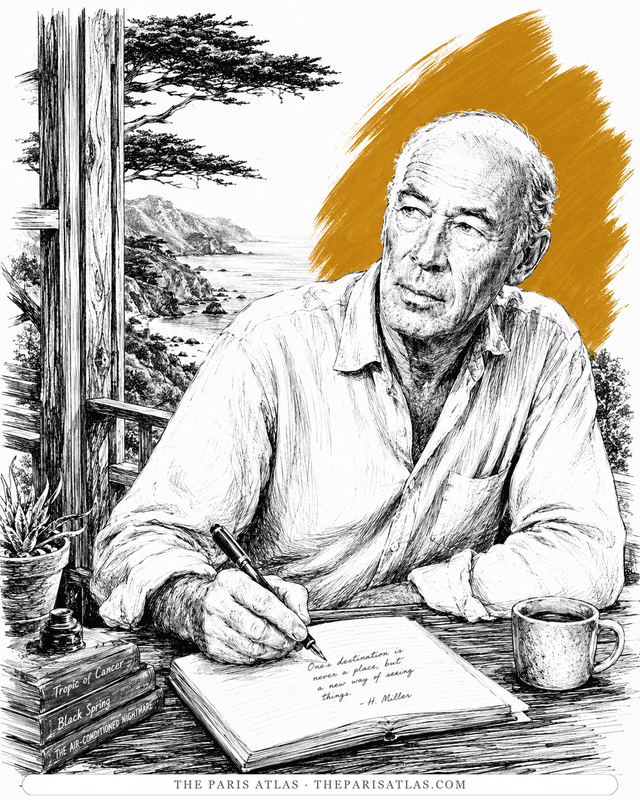
Henry Miller
The Brooklyn dropout who arrived in Paris broke at thirty-eight and wrote the exuberant, banned books that ended American censorship.
View author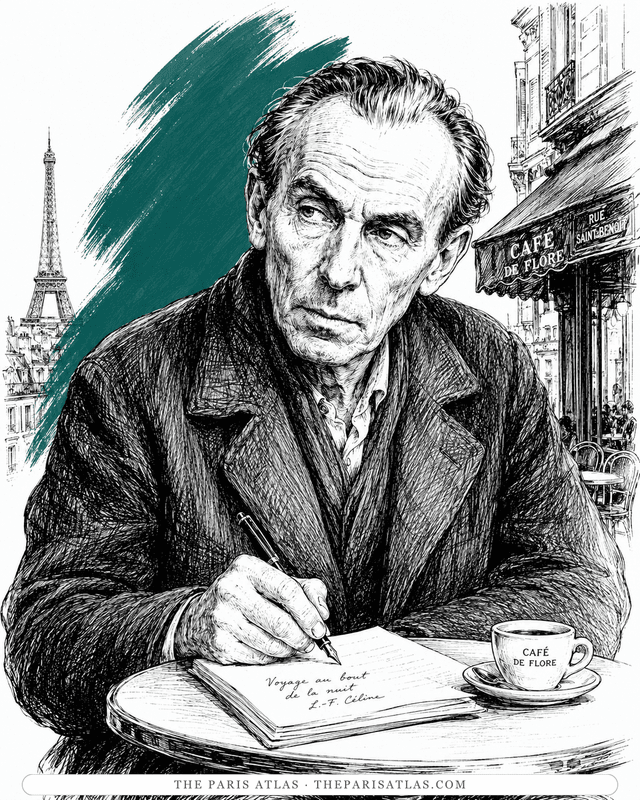
Louis-Ferdinand Céline
The doctor of the Paris slums who wrote the century's blackest, funniest novel — and changed the sound of French prose.
View author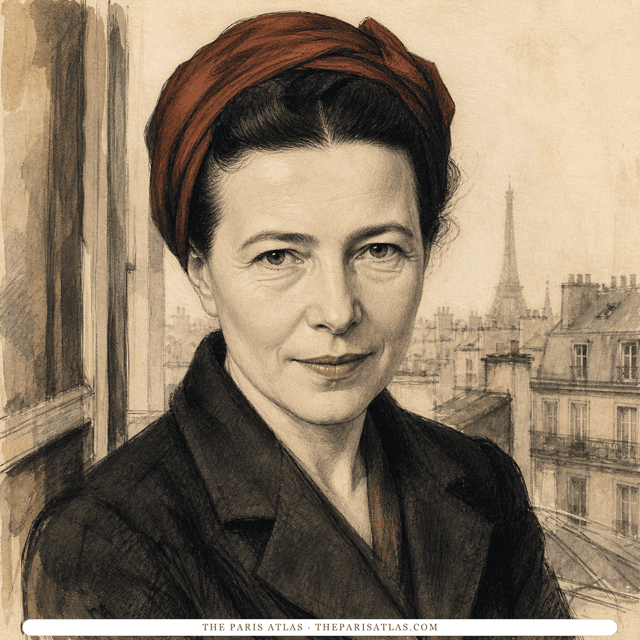
Simone de Beauvoir
French writer and philosopher whose novels, memoirs, and social analysis examined freedom, gender, responsibility, aging, and the material conditions that shape a life.
View author