The Fascist deserter
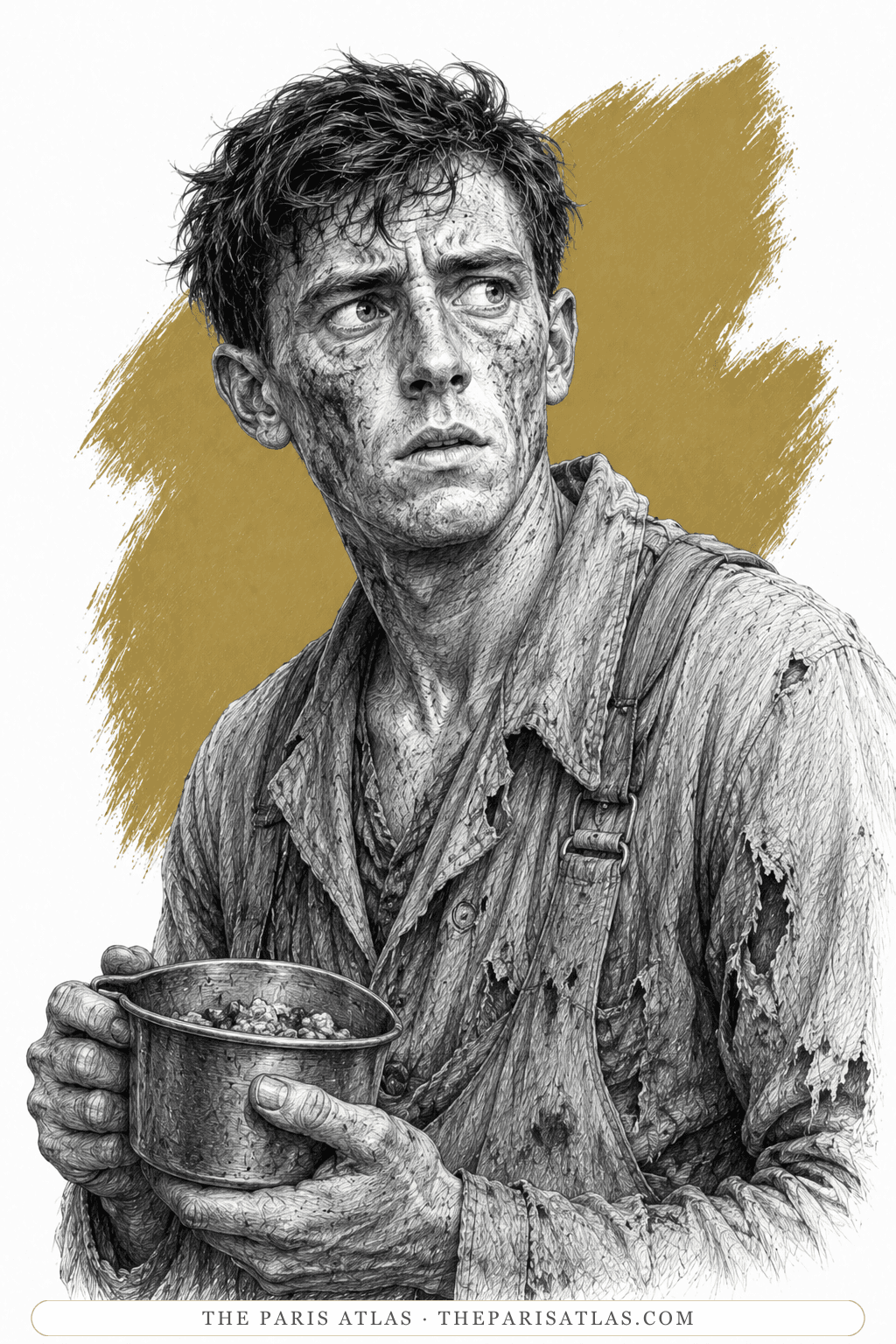
A tall boy of twenty, deeply windburnt and in rags, whom George Orwell watched being fed in a peasant's house at Alcubierre after crossing no man's land. He ate a pannikin of stew at desperate speed while his eyes went round the ring of militiamen watching him, still half believing they were going to shoot him when he had finished.
In Orwell's account he wants the meal finished before anything happens to him. He eats at desperate speed and watches the room while he does it.
The book

At a glance
- A deserter from the Fascist lines, fed by the militia
- Twenty
- Chapter 2
Who they are in the book
Spoiler-freeDeserters came over from the Fascist lines fairly regularly in that sector, and the militia's loudspeaker propaganda was designed to produce them. George Orwell notes that they were the first real Fascists he had ever seen and that they were indistinguishable from his own side except for the khaki overalls. They arrived ravenously hungry after a day or two of dodging about in no man's land, which was always pointed to in triumph as proof that the Fascist troops were starving.
He watched one of them being fed in a peasant's house and calls the sight rather pitiful. A tall boy of twenty, deeply windburnt, clothes in rags, crouched over the fire shovelling stew into himself as fast as he could, with his eyes flitting round the ring of militiamen standing watching him. Orwell thinks he still half believed they were bloodthirsty Reds who would shoot him as soon as the meal was over. The armed man guarding him kept stroking his shoulder and making reassuring noises.
How The Fascist deserter Is Portrayed
- How he lookedTall, twenty years old, deeply windburnt, with his clothes in rags after a day or two crossing no man's land.
- The stewCrouched over the fire, shovelling a pannikinful into himself at desperate speed, in a peasant's house at Alcubierre.
- The eyesFlitting nervously round the ring of militiamen who stood watching him eat. Orwell reads it as a man expecting to be shot at the end of the meal.
- The guardThe armed man watching him kept stroking his shoulder and making reassuring noises, which is the detail Orwell chooses to end the picture on.
If you like Homage to Catalonia


If you like George Orwell
Explore authors with a similar voice, perspective, and influence.

Henry Miller
The Brooklyn dropout who arrived in Paris broke at thirty-eight and wrote the exuberant, banned books that ended American censorship.
View author
Louis-Ferdinand Céline
The doctor of the Paris slums who wrote the century's blackest, funniest novel — and changed the sound of French prose.
View author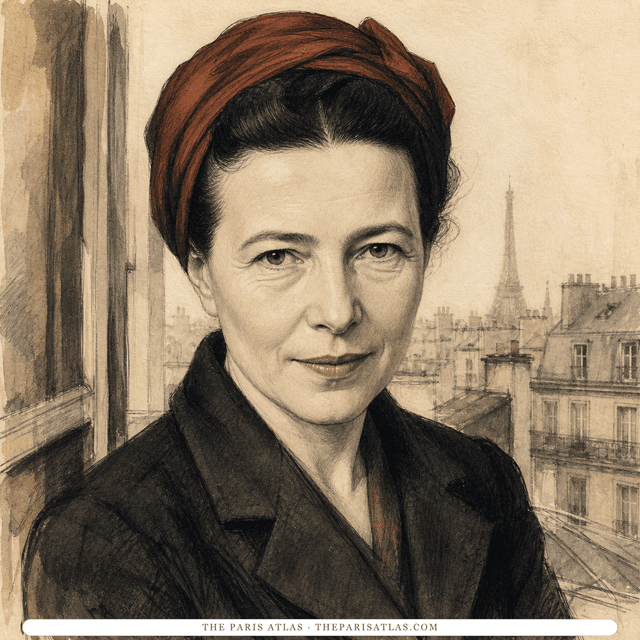
Simone de Beauvoir
French writer and philosopher whose novels, memoirs, and social analysis examined freedom, gender, responsibility, aging, and the material conditions that shape a life.
View author