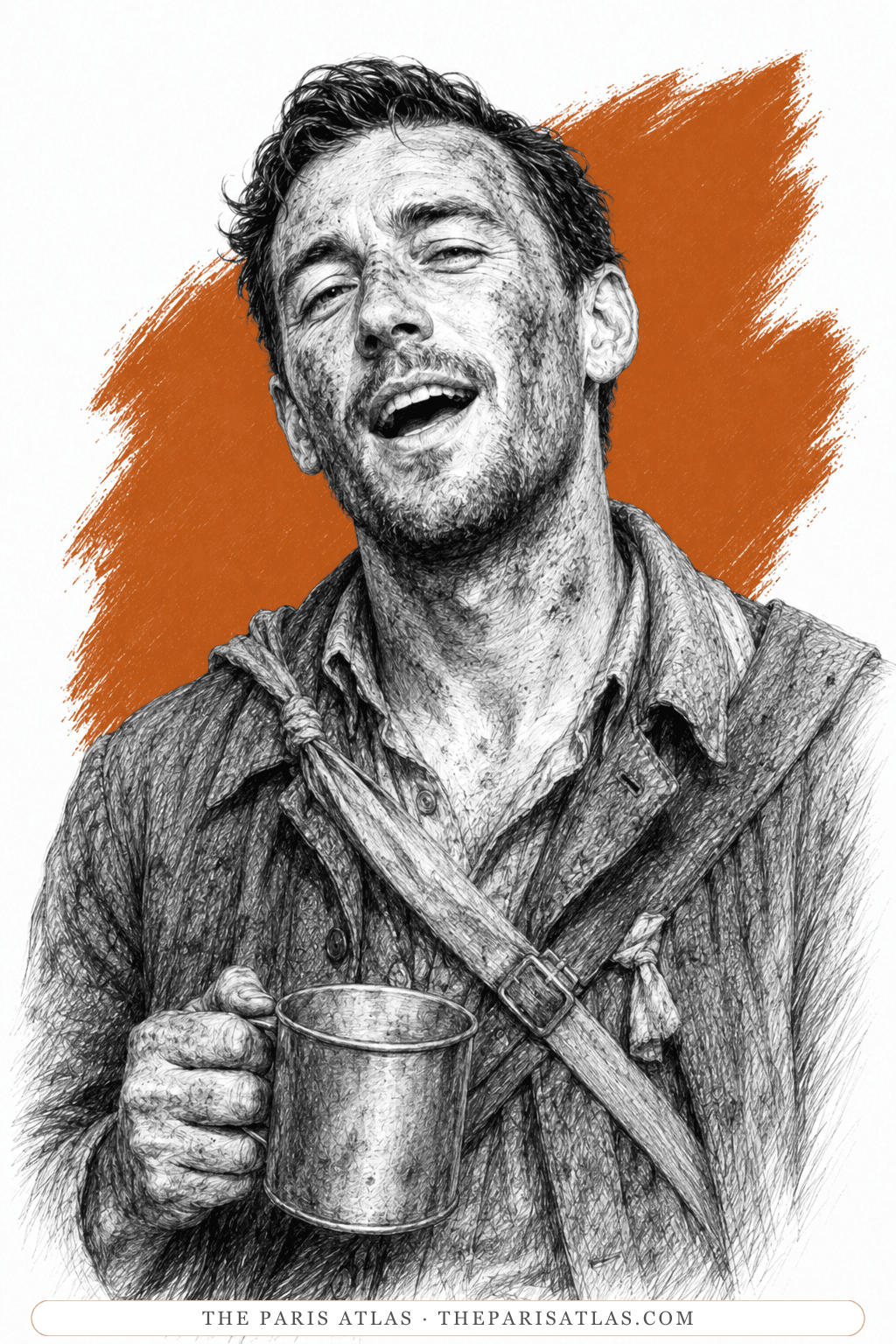
Bill Chambers
A Cockney voice in the queue at the La Granja cookhouse, singing the old army song about rats as big as cats. Orwell mentions in the same sentence that they quarrelled bitterly and that Chambers was afterwards killed outside Huesca.
The book

At a glance
- An English volunteer in the P.O.U.M. militia, in Orwell's part of the line
- None. Orwell identifies him only as a Cockney voice behind him in the queue
- An old army song about rats as big as cats in the quartermaster's store
- Outside Huesca, at some point after the spring of 1937
- Chapter 8, in one remembered scene at the La Granja cookhouse
Who they are in the book
Spoiler-freeBill Chambers was one of the English volunteers George Orwell served with in the Spanish Civil War. Orwell was an English writer who arrived in Barcelona at the end of 1936 to fight for the Spanish Republic against the army revolt led by General Franco, and joined the militia of the P.O.U.M., a small revolutionary socialist party that had raised its own column of volunteers. Chambers gets one sentence in the book, and Orwell puts three separate facts inside it: that Chambers was a Cockney, meaning a working-class Londoner, that the two of them quarrelled bitterly, and that Chambers was later killed outside Huesca.
The sentence sits inside a chapter made up of remembered pictures. Orwell writes that the whole period stayed with him with curious vividness, and that he found himself living over incidents that might seem too petty to be worth recalling. One of them is the muddy yard at La Granja, a country house a few hundred yards behind the front line that served that sector as store, headquarters and cookhouse. Men are jostling round a cauldron of stew with their tin mugs while the cook wards them off with a ladle. At a table nearby a bearded man with a large automatic pistol on his belt is cutting loaves of bread into five pieces. Behind Orwell in the crowd, a Cockney voice is singing. Then a shell comes over, boys of fifteen throw themselves flat, the cook dodges behind the cauldron, and everybody stands up again looking sheepish when it lands a hundred yards away.
What Chambers was singing was an old army song about rats as big as cats in the quartermaster's store. Orwell breaks off in the middle of the line and does not finish it. He had already explained the joke earlier in the book: at La Granja every room that was not being used had been turned into a latrine, the yard where the cooks ladled out rations was a bed of rusty tins, mud, mule dung and rotting food, and the rats there really were nearly the size of cats. Orwell describes them as bloated animals that waddled over the muck and were too impudent to run away unless you shot at them.
The quarrel is never explained. Orwell does not say what it was about, when it happened or how it ended, and he never mentions Chambers again. The same short aside records that Chambers was afterwards killed outside Huesca, the town in north-eastern Spain that the Republican forces spent that year encircling. That is everything the book has about him.
How Bill Chambers Is Portrayed
- A Cockney voice in the food queueOrwell never says what Chambers looked like, how old he was or what he did before the war. He identifies him by his accent, as a Cockney voice standing behind him in a crowd of men waiting for stew.
- The song about the ratsHe was singing an old army song about rats as big as cats in the quartermaster's store. Orwell had already noted that the rats at La Granja were nearly that size, and that they would not bother to run away unless you shot at them.
- The bitter quarrel Orwell never explainsIn the middle of naming him, Orwell says he quarrelled bitterly with Chambers. He gives no cause, no date and no outcome, and it is the only thing in the book about how the two of them got on.
- Killed outside HuescaThe rest of the same aside says that Chambers was afterwards killed outside Huesca, the town in north-eastern Spain that Orwell's unit spent the spring of 1937 helping to surround. Orwell records the death in passing and goes straight on with the scene.
If you like Homage to Catalonia


If you like George Orwell
Explore authors with a similar voice, perspective, and influence.

Henry Miller
The Brooklyn dropout who arrived in Paris broke at thirty-eight and wrote the exuberant, banned books that ended American censorship.
View author
Louis-Ferdinand Céline
The doctor of the Paris slums who wrote the century's blackest, funniest novel — and changed the sound of French prose.
View author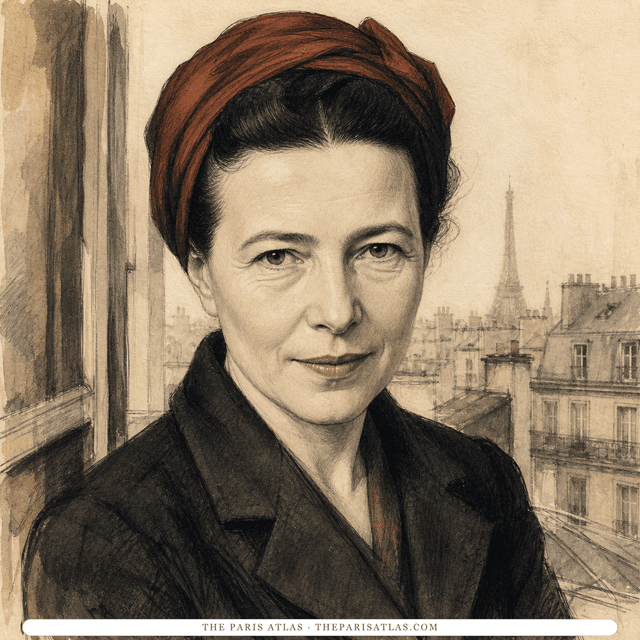
Simone de Beauvoir
French writer and philosopher whose novels, memoirs, and social analysis examined freedom, gender, responsibility, aging, and the material conditions that shape a life.
View author