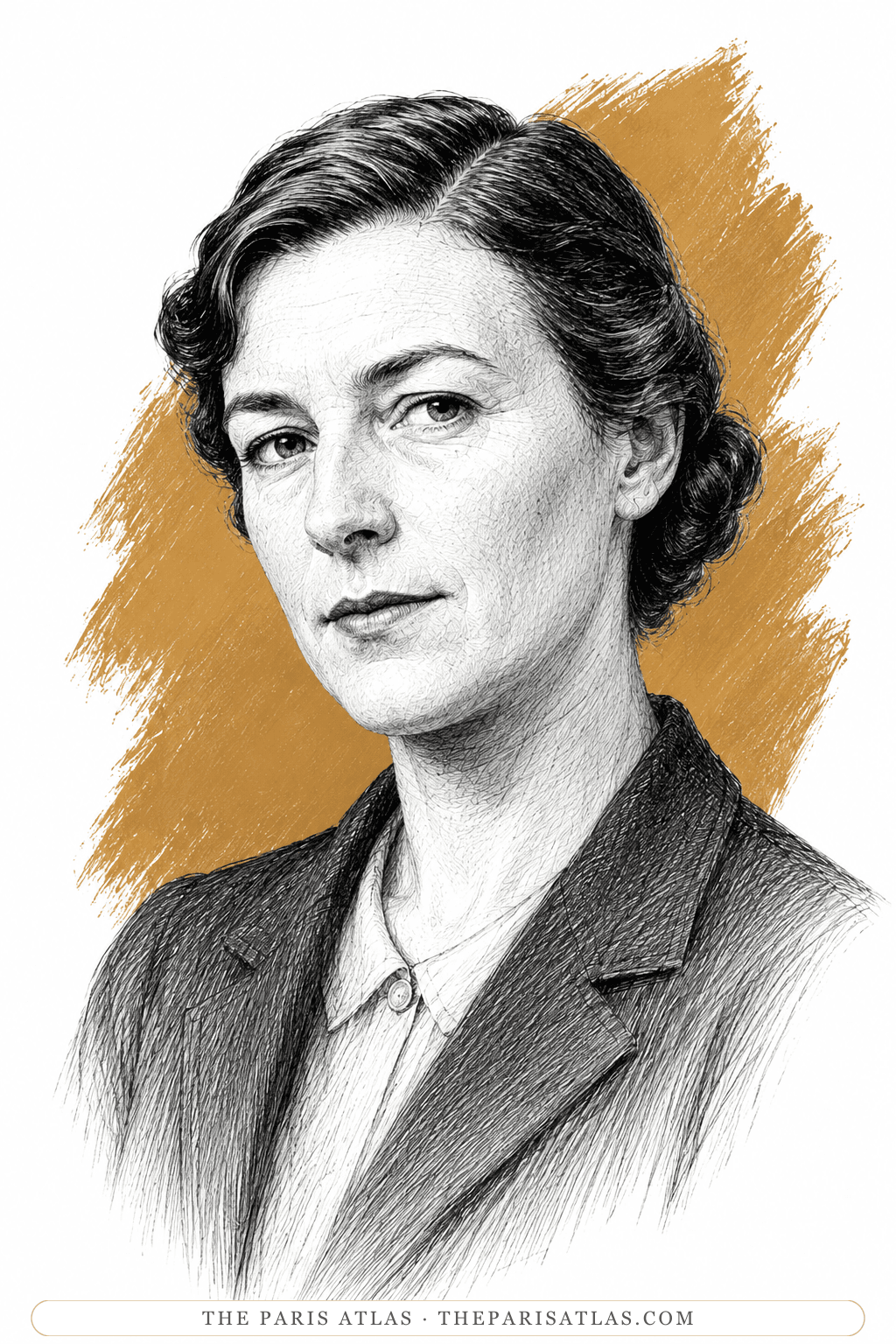
Orwell's wife
The book calls her only "my wife" and never gives her name. She sent tea and cigars up to the trenches, came down to the barricaded P.O.U.M. building in case a nurse was needed, and got Orwell out of the hotel lounge before the police could be called.
In Orwell's account, to get both of them out of Spain alive without either of them looking as though that is what they are doing. She stayed on at the hotel as bait rather than disappear, kept up appearances in the lounge, and left for the station at the last possible moment so the staff could not telephone the police in time.
The book

At a glance
- "My wife", present in Barcelona from Chapter 6 onward
- Never given in the text. She was Eileen O'Shaughnessy
- From February 1937, working in the Independent Labour Party office
- The Hotel Continental, which was treated as neutral ground
- Chapters 6, 7, 9, 10, 12, 13 and 14
Who they are in the book
Spoiler-freeThe most consequential person in the second half of the book is never named in it. George Orwell calls her "my wife" throughout. She was Eileen O'Shaughnessy, who came out to Barcelona in February 1937 to work in the Independent Labour Party office there; the book itself supplies none of that, and a reader relying on the text alone learns only that she was in Barcelona, that she was allowed into the P.O.U.M. buildings, and that she was extremely calm.
She appears first as a supply line. Parcels sent from England were refused by the Post Office or seized in France, and almost the only things that got through were what she sent up from Barcelona: tea, chocolate, cigars when they could be had. The tiny electric torch Orwell used to search the captured Fascist position — the only light of any description the raiding party had between them — was one she had managed to buy in the city.
During the May fighting she came down from the hotel to the barricaded P.O.U.M. Executive Building in case a nurse should be needed, on a night when a dozen men were preparing to storm the café opposite and the building had neither iodine nor bandages. Orwell lay down for half an hour's rest before an attack he expected to be killed in, woke to find it was broad daylight and nothing had happened, and learned that she had not had the heart to wake him and had slept in an armchair in one of the front rooms.
Six weeks later she is the reason he was not arrested. He walked into the hotel lounge not knowing the P.O.U.M. had been suppressed; she crossed the room, put an arm round his neck, smiled for the benefit of the other guests, and hissed at him to get out. Then she went through his pockets with him in a side-street café and made him tear up his militiaman's card and a photograph of men standing in front of a P.O.U.M. flag.
How Orwell's wife Is Portrayed
- Never named"My wife" on every appearance, from the parcels in Chapter 6 to the frontier in Chapter 14. The book gives her no name, no description, and no history.
- The parcelsTea, chocolate and the occasional cigar, sent up to the Huesca front from Barcelona when almost nothing sent from England arrived at all. Orwell hoarded one of the cigars for weeks and smoked it after the night raid.
- The torchShe bought it in Barcelona, where such things were nearly unobtainable. Inside the captured Fascist redoubt it was the only light the raiding party had, and it was what Orwell used to find out that the machine-gun had gone.
- In case a nurse was neededShe came down from the hotel to the fortified P.O.U.M. building on the night the attack on the Café Moka was expected. There was a sofa upstairs meant to serve as a dressing station and no iodine or bandages in the building.
- "Get out!"Her greeting in the hotel lounge when he came back from the front with his discharge papers, delivered with an arm round his neck and a sweet smile for the room. He asked what she meant three times before he was on the pavement.
- The searchSix plain-clothes police came into her room in the small hours, sounded the walls, took up the mats, probed under the bath, and picked apart packets of cigarette papers looking for messages. They took the diaries, the books, the letters and the press cuttings. She was lying in the bed the whole time and they never looked under it.
- The decoyThe police did not arrest her, which Orwell reads as their leaving her in place to see who came to her. She stayed at the Hotel Continental anyway, on the grounds that vanishing would have brought them straight after her.
- The last morningThe plan was that she would order a taxi in advance, pack, pay the bill and leave at the last possible moment, because giving the hotel notice meant giving the police notice. She slipped out successfully and made the train.
If you like Homage to Catalonia


If you like George Orwell
Explore authors with a similar voice, perspective, and influence.

Henry Miller
The Brooklyn dropout who arrived in Paris broke at thirty-eight and wrote the exuberant, banned books that ended American censorship.
View author
Louis-Ferdinand Céline
The doctor of the Paris slums who wrote the century's blackest, funniest novel — and changed the sound of French prose.
View author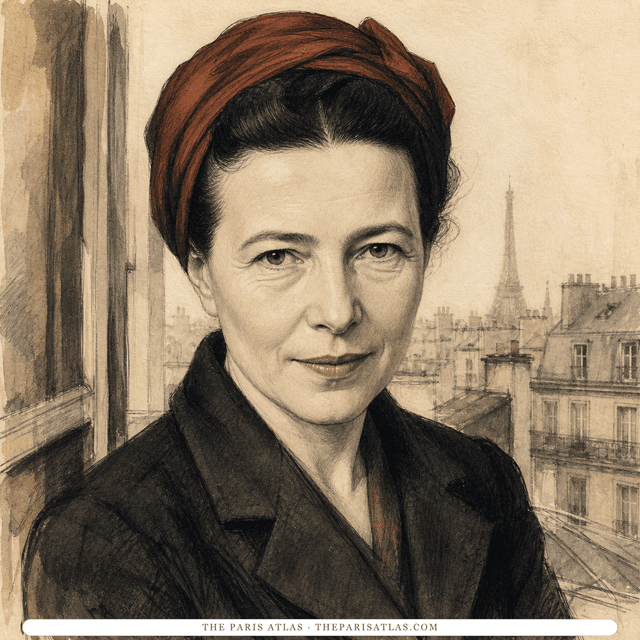
Simone de Beauvoir
French writer and philosopher whose novels, memoirs, and social analysis examined freedom, gender, responsibility, aging, and the material conditions that shape a life.
View author