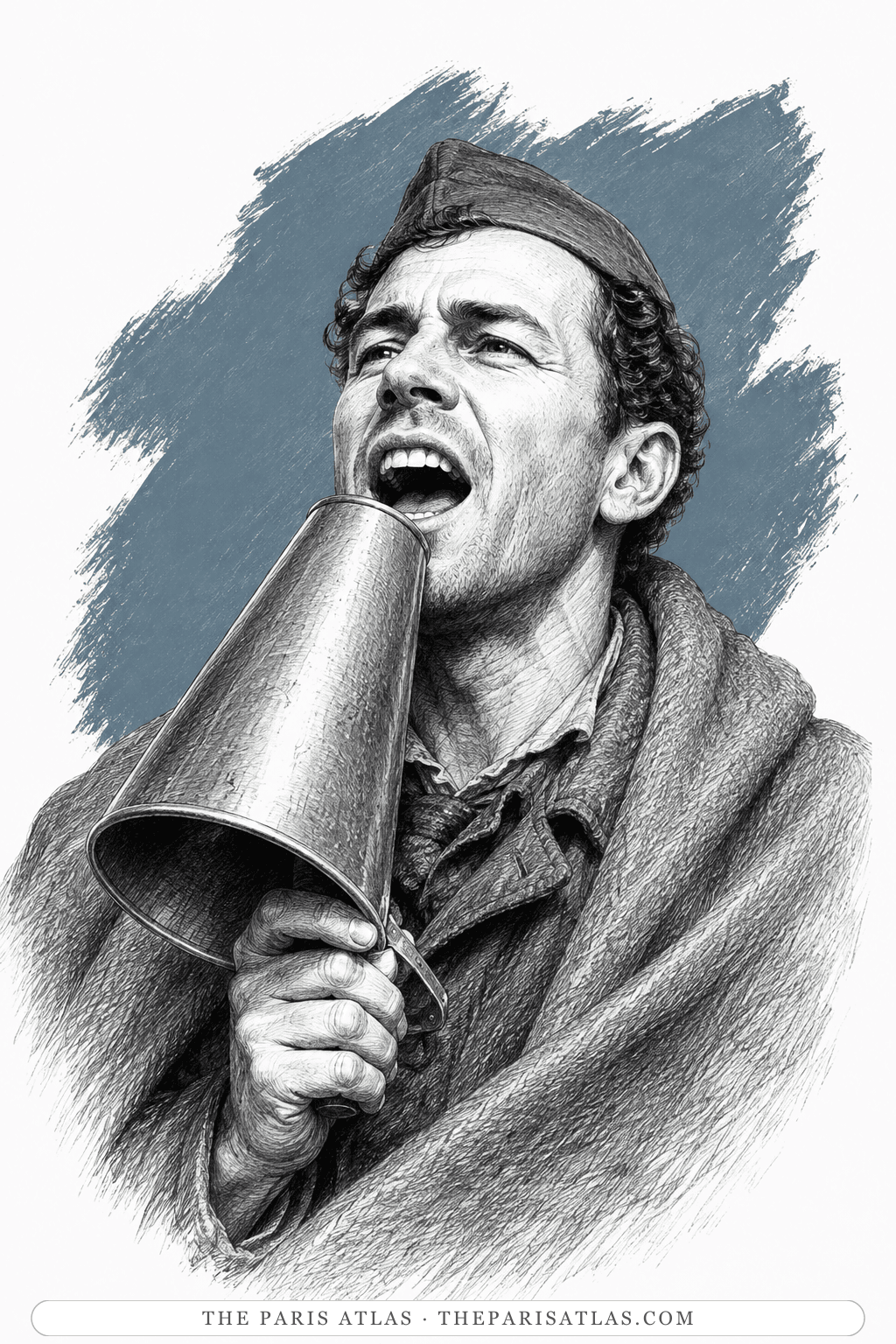
The shouter at the P.S.U.C. post
The militiaman down on the right whose job was to shout propaganda across no man's land at the Fascist trenches, and who George Orwell says was an artist at it. Instead of revolutionary slogans he told the enemy how much better the Government fed its men, and his account of the rations was a little imaginative: buttered toast, lovely slices of buttered toast, echoing across the valley on a freezing night. Orwell knew he was lying and says it made his own mouth water.
In Orwell's account, to talk the men in the opposite trench into walking across, and he had worked out that food did it better than politics.
The book

At a glance
- A militiaman on shouting-duty at the nearest P.S.U.C. post
- Never given. Orwell knew him only as a voice across the valley
- A megaphone
- Five hundred yards to the right of Orwell's position, at the bend of the Alcubierre road
- Chapter 4
Who they are in the book
Spoiler-freeOn the Aragón front in the winter of 1936 to 1937 the two sides sat several hundred yards apart with almost no artillery between them, and one of the weapons the Republican side used instead was a megaphone. Men were detailed for shouting-duty, usually machine-gunners, and given a speech to bawl across no man's land at the enemy trenches. It told the soldiers opposite that they were the hirelings of international capitalism, that they were fighting against their own class, and that they should come over. Relays of men kept it up, sometimes almost all night.
George Orwell says he was amazed and scandalised the first time he saw it done, because the idea of converting your enemy instead of shooting him did not fit the English idea of war. He changed his mind. Everyone agreed the shouting was part of what produced the steady trickle of deserters from the other side, and a deserter, as he points out, is more use to you than a corpse, because he can tell you things.
Five hundred yards to the right of Orwell's position there was a post held by the P.S.U.C., the Catalan party that was under Communist control and was the political rival of the P.O.U.M., the party whose militia Orwell served in. Both were fighting on the same side. The man who did the shouting at that post was, in Orwell's words, an artist at the job. He would drop the political speech and simply tell the enemy how much better the Government fed its men, and his account of the rations was apt to be a little imaginative. "Buttered toast!" carried across the empty valley on freezing nights. "We're just sitting down to buttered toast over here! Lovely slices of buttered toast!"
Orwell did not believe a word of it. He writes that the man had almost certainly not seen butter for weeks or months, like everyone else in the line, and that the news of buttered toast on a cold night probably set a good many mouths watering in the Fascist trenches. It set his own watering too.
How The shouter at the P.S.U.C. post Is Portrayed
- The job he had been givenShouting-duty. Suitable positions along the line had men told off for it and issued with megaphones, and they worked in relays through the night at whichever enemy trench was in earshot.
- The speech he was supposed to giveA set piece about the soldiers opposite being the hired hands of international capitalism and fighting against their own class, ending with an invitation to come over. Orwell says it worked, and that everyone put part of the flow of deserters down to it.
- What he shouted insteadHow much better the Republic fed its soldiers. Orwell calls him an artist at the job and notes drily that his figures on the rations were apt to be a little imaginative.
- Buttered toastThe line Orwell quotes: that they were just sitting down to buttered toast over here, lovely slices of buttered toast, with the voice carrying right across the valley on a freezing night.
- Orwell knew he was lyingNobody in that part of the line had seen butter for weeks or months. Orwell says the shouting probably set many a Fascist mouth watering on an icy night, and admits that it made his own water as well.
If you like Homage to Catalonia


If you like George Orwell
Explore authors with a similar voice, perspective, and influence.
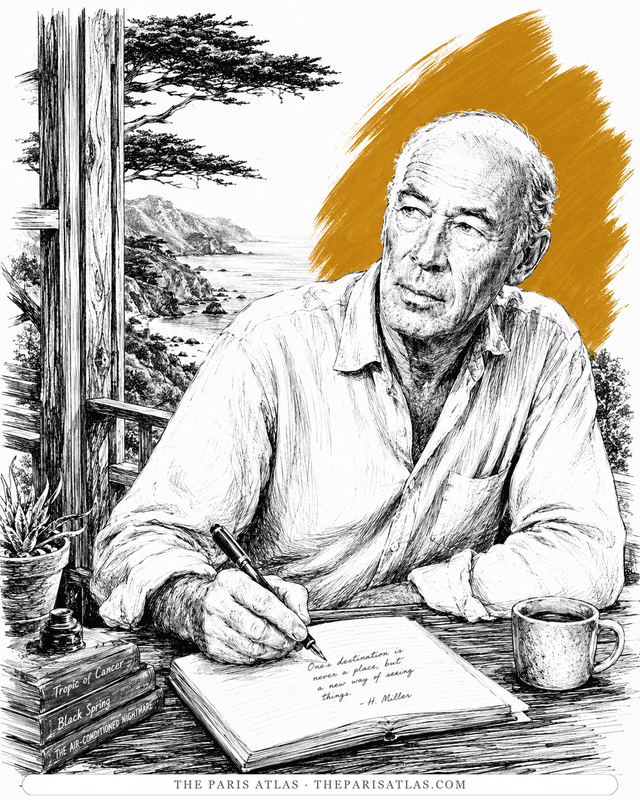
Henry Miller
The Brooklyn dropout who arrived in Paris broke at thirty-eight and wrote the exuberant, banned books that ended American censorship.
View author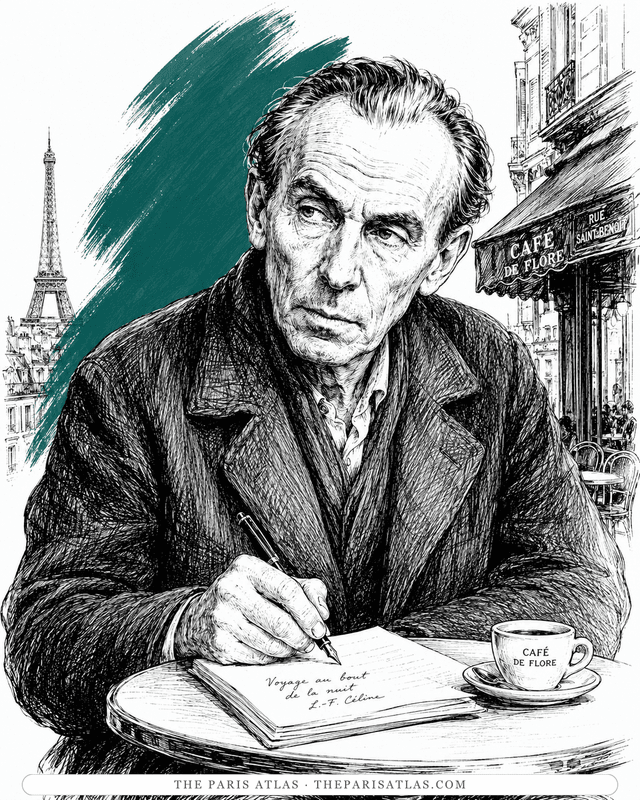
Louis-Ferdinand Céline
The doctor of the Paris slums who wrote the century's blackest, funniest novel — and changed the sound of French prose.
View author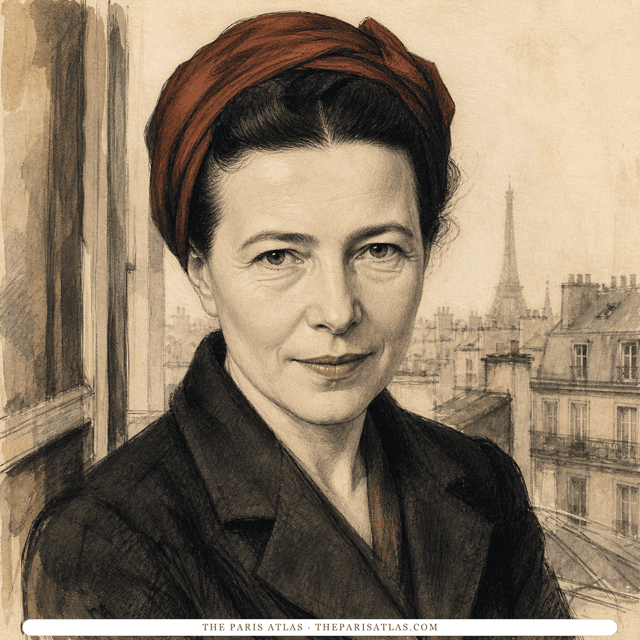
Simone de Beauvoir
French writer and philosopher whose novels, memoirs, and social analysis examined freedom, gender, responsibility, aging, and the material conditions that shape a life.
View author