Arthur Clinton
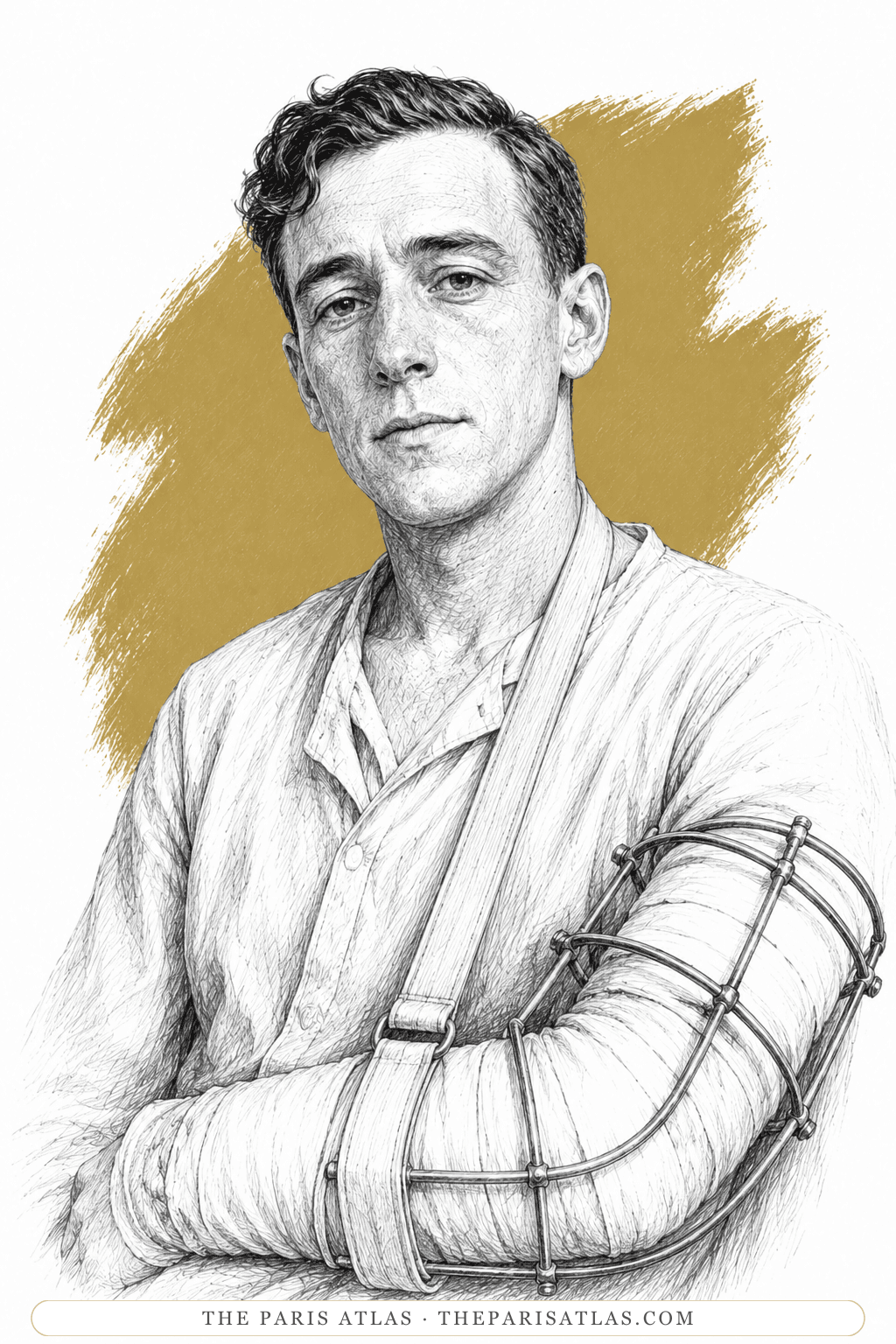
Hit by a stray bullet outside Huesca that smashed his left shoulder and disabled the arm permanently. He turns up again at the Sanatorium Maurin with the arm strapped to one of the huge wire frames the Spanish hospitals used, which the patients called aeroplanes.
The book

At a glance
- One of the English volunteers in the P.O.U.M. militia
- Orwell gives none: no age, no description, no first sight of him
- Left shoulder smashed by a stray bullet, and the arm disabled
- Still in a P.O.U.M. convalescent home outside Barcelona months later
- Chapter 6, on the Huesca front in spring 1937, and Chapter 13, at the Sanatorium Maurin
Who they are in the book
Spoiler-freeArthur Clinton was one of the English volunteers George Orwell served with in Spain. Orwell was an English writer who went out to Barcelona at the end of 1936 to fight for the Spanish Republic against the army revolt led by General Franco, and joined the militia of the P.O.U.M., a small revolutionary socialist party. At that point in the Spanish Civil War a militia was not a regular army unit but a column of volunteers raised, armed and fed by a single party or trade union. Orwell mentions Clinton twice, several months apart, and both mentions are about the same bullet.
The first comes in the spring of 1937, on the stretch of front east of Huesca, a town in north-eastern Spain that Franco's side held and that the Republican forces surrounded for the whole of that year without ever taking. Almost nothing was happening there. Orwell writes that the English had got into the habit of saying this wasn't a war, it was a bloody pantomime, and that they were hardly under direct fire at all. The one real danger was stray bullets. The trench lines curved forward on both sides, so shots meant for somebody else arrived from several directions at once, and every casualty in that period was caused by one of them. Orwell's sentence about Clinton is: "Arthur Clinton got a mysterious bullet that smashed his left shoulder and disabled his arm, permanently, I am afraid." Mysterious means nobody could say who had fired it or from where.
The second mention comes months later, in Barcelona. By then Orwell had been shot through the throat himself and was convalescing at the Sanatorium Maurin, a large house in the hills behind the city that had belonged to a wealthy family, been seized during the revolution of 1936 and turned into a convalescent home run by the P.O.U.M. Most of the men there had either been invalided out of the fighting or carried a wound that had disabled them for good, some of them with amputated limbs. Clinton was one of them, alongside two other Englishmen: Williams, with a damaged leg, and Stafford Cottman, a boy of eighteen sent back from the trenches with suspected tuberculosis. Clinton's left arm was still strapped to one of the large wire frames the Spanish hospitals used to hold a broken arm out from the body. The patients had nicknamed them aeroplanes.
How Arthur Clinton Is Portrayed
- Hit by a stray bulletHe was not wounded in an attack. Orwell's sector east of Huesca was quiet that spring, and the only thing coming at the men was stray fire from lines that curved forward on either side of them. Orwell records that every casualty at that time came from a stray, and Clinton's was one.
- The woundThe bullet smashed his left shoulder and disabled the arm. Orwell adds four words about how long that would last: permanently, I am afraid. He is admitting there that he does not know for certain and expects the worst.
- In the convalescent home months laterOrwell met him again at the Sanatorium Maurin, a seized country house near Tibidabo, the mountain behind Barcelona, which the P.O.U.M. ran as a home for the wounded of its own militia. Orwell writes that most of the men there had been invalided out of the line for good, some with amputated limbs.
- The wire frame the patients called an aeroplaneHis smashed left arm was still strapped to one of the big wire contraptions Spanish hospitals used to keep a broken arm held out away from the body. The men in the sanatorium had nicknamed them aeroplanes.
If you like Homage to Catalonia


If you like George Orwell
Explore authors with a similar voice, perspective, and influence.

Henry Miller
The Brooklyn dropout who arrived in Paris broke at thirty-eight and wrote the exuberant, banned books that ended American censorship.
View author
Louis-Ferdinand Céline
The doctor of the Paris slums who wrote the century's blackest, funniest novel — and changed the sound of French prose.
View author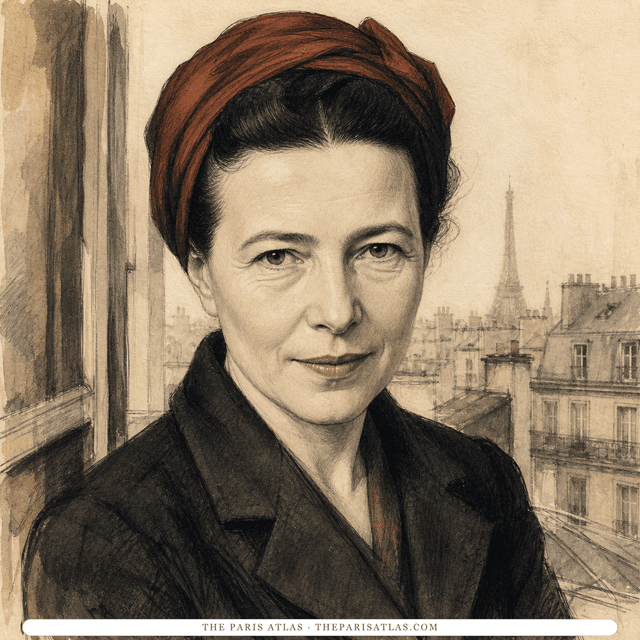
Simone de Beauvoir
French writer and philosopher whose novels, memoirs, and social analysis examined freedom, gender, responsibility, aging, and the material conditions that shape a life.
View author