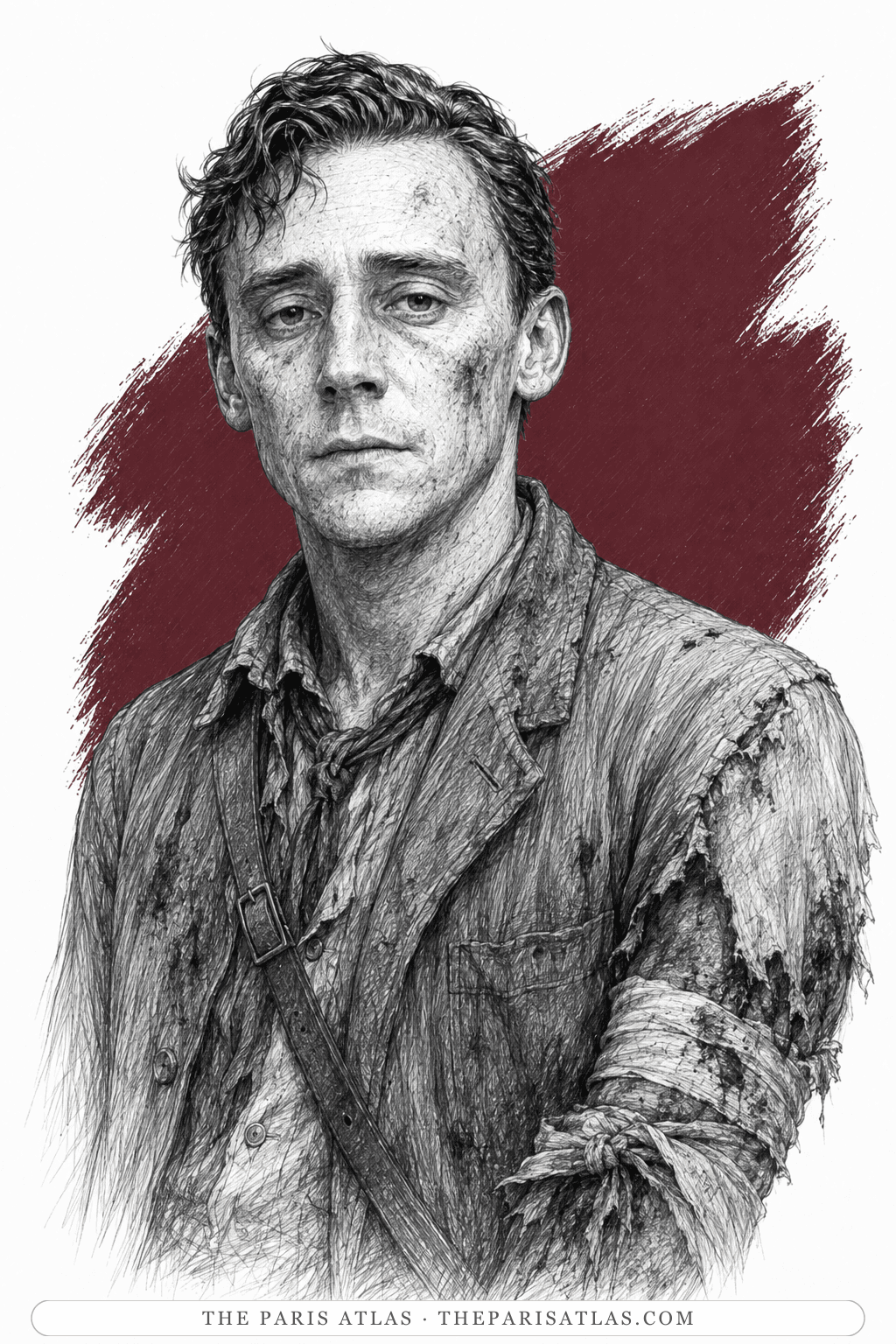
Hiddlestone
Missing after the night raid, and one of the two men Orwell went back into no man's land at dawn to look for. A bullet had travelled the length of his left arm and broken the bone in several places, and a bomb had burst near him where he lay. He dragged himself clear with a wounded Spaniard and recovered.
The book

At a glance
- One of the English volunteers in the P.O.U.M. militia, on the April 1937 raid outside Huesca
- A surname only. Orwell never gives a first name or a description
- Left arm broken in several places by a bullet, and further wounds from a bomb that burst beside him
- He recovered
- Chapter 7
Who they are in the book
Spoiler-freeHiddlestone was one of the English volunteers on a night raid that George Orwell took part in outside the town of Huesca in April 1937. Orwell was serving in the militia of the P.O.U.M., a small revolutionary socialist party that had raised its own column of volunteers to fight for the Spanish Republic against the army revolt led by General Franco. The book gives Hiddlestone a surname and nothing else: no first name, no age, no description. What it does give him is one very bad night, and an account of how he got himself out of it.
About fifteen men crawled through mud and rain to the Fascist position, cut the wire, took it, held it for a while and were then ordered back. When they were inside their own parapet again the doctor and the stretchers had gone and everyone had been accounted for except two men: Jorge, a Spanish officer, and Hiddlestone. Georges Kopp, the Belgian who commanded the unit and Jorge's close friend, walked up and down in the open muttering Jorge's name and paying no attention to the bullets, and then asked for five volunteers to go out and search. Orwell went with Douglas Moyle and three Spaniards. The sky was already turning light, the Fascists had reoccupied their position in force, and heavy fire drove the party flat; then they thought they heard voices coming after them and ran. Orwell went out a second time on his own, reckoning that one man is invisible where five are not, crawled as far as the outer wire and searched what ground he could see while lying on his stomach. There was no sign of either man.
Both had in fact been carried to the dressing station earlier. Jorge's shoulder wound was slight. Hiddlestone had been hit by a bullet that travelled the whole length of his left arm and broke the bone in several places, and while he lay helpless on the ground a bomb burst near him and tore other parts of his body. He recovered, which Orwell reports in five words and with evident relief. Hiddlestone told him afterwards how he had got back: he worked his way some distance lying on his back, then took hold of a wounded Spaniard, and the two of them helped one another in.
How Hiddlestone Is Portrayed
- Missing after the raidWhen the raiding party was counted inside its own parapet at first light, he and a Spanish officer named Jorge were the only two unaccounted for. Everyone else, wounded included, had been brought in.
- The search partyGeorges Kopp, the Belgian who commanded the unit, asked for five volunteers to go back into the open ground and look for the two of them. The five got sixty or seventy yards out before rifle fire and panic sent them back, and Orwell then crawled out alone to the enemy wire. He found nothing.
- The woundA bullet ran the length of his left arm and broke the bone in several places. He was lying on the ground unable to move when a bomb burst near him and tore other parts of his body. Orwell calls it a dreadful wound and does not soften it.
- How he got himself inHe told Orwell later that he had dragged himself along for some distance lying on his back, then got hold of a wounded Spaniard, and that the two of them had helped each other back to the lines. He recovered.
If you like Homage to Catalonia


If you like George Orwell
Explore authors with a similar voice, perspective, and influence.
Henry Miller
The Brooklyn dropout who arrived in Paris broke at thirty-eight and wrote the exuberant, banned books that ended American censorship.
View author
Louis-Ferdinand Céline
The doctor of the Paris slums who wrote the century's blackest, funniest novel — and changed the sound of French prose.
View author
Simone de Beauvoir
French writer and philosopher whose novels, memoirs, and social analysis examined freedom, gender, responsibility, aging, and the material conditions that shape a life.
View author