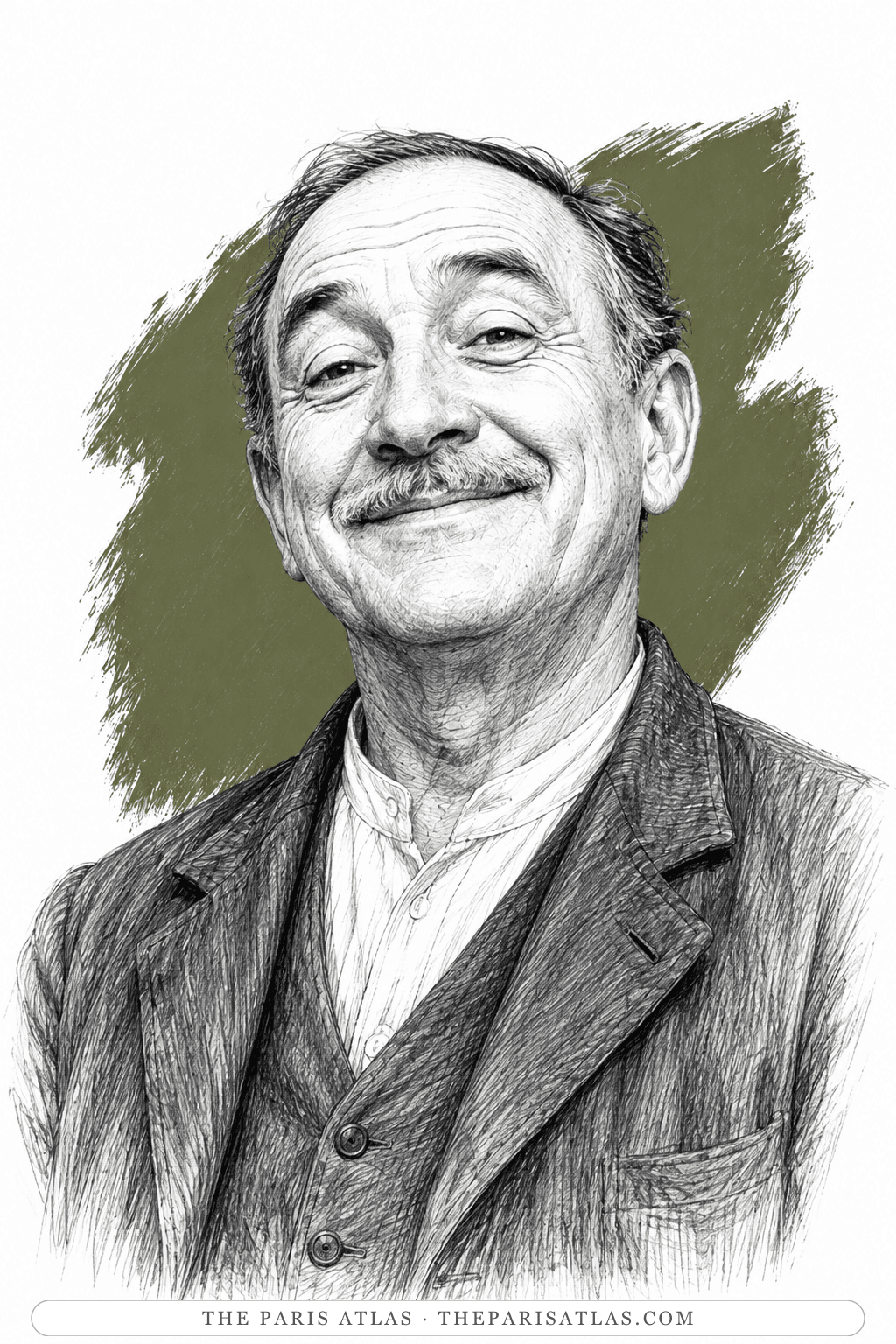
The caretaker at the Poliorama
The little man who looked after the museum above the Poliorama, where George Orwell spent three days of the May fighting on the roof. He seemed to regard the whole affair as a social occasion, was delighted to have the English visiting him, said the English were so simpático, and hoped they would all come and see him again when the trouble was over. Orwell did go back.
In Orwell's account, to have his visitors back once the shooting stopped. He spent the week playing host to armed foreigners on his roof and asked them to come again.
The book

At a glance
- Caretaker of the museum above the Poliorama cinema, on the Ramblas in Barcelona
- Never given. Orwell calls him the little man
- Orwell says the caretakers at the cinema were members of the C.N.T., the anarchist trade unions
- An observatory with twin domes, held by armed P.O.U.M. men for three days and nights in May 1937. Six rifles were counted up there
- Chapter 10
Who they are in the book
Spoiler-freeThe Poliorama was a cinema on the Ramblas, the wide central promenade of Barcelona. It had a museum on the floor above it and, on the roof, a small observatory with twin domes standing well above the surrounding buildings. The little man who looked after the museum is never named. George Orwell puts him among the chance encounters that stuck in his mind afterwards.
In May 1937 the political parties on the Republican side of the Spanish Civil War spent the best part of a week shooting at each other in the streets of Barcelona. Orwell was down from the front on leave and found himself helping to defend the offices of the P.O.U.M., the small revolutionary socialist party whose volunteer militia he had joined. Those offices stood directly opposite the Poliorama, and the twin domes on the roof looked straight down into the street, so a handful of men with rifles posted up there could stop any attack on the building. Orwell spent three days and nights on that roof. He says he was in no danger and suffered from nothing worse than hunger and boredom, and that it was one of the most unbearable periods of his whole life.
The caretakers at the cinema belonged to the C.N.T., the huge anarchist trade union federation that was on the same side as the P.O.U.M. in the fighting, and they let the militiamen come and go as they pleased. The little man in the museum went considerably further than that. Orwell writes that he seemed to regard the whole affair as a social occasion and was delighted to have the English visiting him. The English, he said, were so simpático, which means likeable and easy to get along with. He hoped they would all come and see him again once the trouble was over. Orwell adds, in the same sentence, that he did go and see him.
How The caretaker at the Poliorama Is Portrayed
- The building he looked afterA museum on the floor above a cinema on the Ramblas, with a twin-domed observatory on the roof above that. It was the highest point on the street, which is why armed men from the P.O.U.M. were posted on it for three days and nights.
- Why the militiamen could get inOrwell says the caretakers at the cinema were C.N.T. members, meaning they belonged to the anarchist trade unions, and so let the P.O.U.M. men come and go freely through the building.
- A social occasionWith rifle and machine-gun fire going on outside for days, he seemed to Orwell to treat the whole thing as a visit. He was so pleased to have the English calling on him, and said the English were so simpático.
- Come again when it is overHe hoped they would all come back and see him once the trouble had finished. Orwell notes, without making anything of it, that he did go back.
If you like Homage to Catalonia


If you like George Orwell
Explore authors with a similar voice, perspective, and influence.

Henry Miller
The Brooklyn dropout who arrived in Paris broke at thirty-eight and wrote the exuberant, banned books that ended American censorship.
View author
Louis-Ferdinand Céline
The doctor of the Paris slums who wrote the century's blackest, funniest novel — and changed the sound of French prose.
View author
Simone de Beauvoir
French writer and philosopher whose novels, memoirs, and social analysis examined freedom, gender, responsibility, aging, and the material conditions that shape a life.
View author