
Mr Cheeseman
The Lambeth bookseller who hires Gordon at thirty shillings a week to run a twopenny library. He has never read a book in his life and can price one by the feel of it.
To make money out of books without ever having to read one. He boasts about his own astuteness in the evenings, and Gordon pictures him afterwards in a double-locked room with the shutters up, counting half-crowns into cigarette tins.
The book

At a glance
- Rare-book dealer in Lambeth; Gordon's second and worse employer
- Trades as Eldridge, south of Waterloo Bridge; inherited from an uncle three years earlier
- Thirty shillings a week, ten hours a day
- He has never read a book in his life
- Lives over the shop, unmarried, with no amusements and no visible friends
Who they are in the book
Spoiler-freeMr Cheeseman keeps a poky, mean-looking shop in the desolate stretch of road south of Waterloo Bridge, trading under the name Eldridge, which was his uncle's. He inherited it three years earlier and loathed it: books lying about in monstrous dusty piles with no attempt at classification, and no notion that there was money in them. Then he grasped that there was, and developed an astonishing flair. Within two years he had made it one of the best rare bookshops of its size in London. He has never read a book in his life and cannot conceive why anyone would, but he knows by the mere feel of one whether it is valuable, and his head is a mine of auction records and first-edition dates.
George Orwell describes him as almost small enough to be called a dwarf, and malformed the opposite way round from most: normal legs, and a torso so short that his buttocks seem to sprout just below his shoulder blades, which gives him in walking a resemblance to a pair of scissors. He bullies, he watches the till he does not have, and he is on the look-out for any excuse to dock wages. He is also not unlikeable. He takes Gordon Comstock into his confidence in the evenings and recounts, with nosy chuckles, the swindles he has lately worked.
How Mr Cheeseman Is Portrayed
- The clipped wordsHe speaks as though words cost money and ought not to be wasted, biting each one in half before it escapes. "'Ot c'n I do f'yer!" is how he greets a customer. "Hassome chips?" is how he offers a friendly gesture.
- The purseThere is no till. Change comes out of a very greasy wash-leather purse produced from somewhere under his waistcoat and handled secretively, almost lost in his large hands. "I like keep mi money i' mi pocket," he explains.
- How he buys stockThe libraries of people who have just died, clergymen for choice. They so often have good libraries and ignorant widows, he tells Gordon, and whenever one dies he is on the spot with the promptness of a vulture.
- The drunkenness as a leverHe had heard the whole story from Mr McKechnie at an auction and pricked up his ears, because an assistant sacked for drunkenness would come at reduced wages. He extorts the confession from Gordon anyway, and is faintly disappointed when the thirty shillings is accepted without an argument he could have won.
- The mushroom libraryFive hundred assorted titles, ordered as one might order a ton of coals, on shelves already marked Sex, Crime and Wild West. It is kept a street away from the shop, between a flyblown ham-and-beef shop and an undertaker, so that the collectors who come for rare books never see it.
- The suspicionHe is certain Gordon is pinching the takings and devises a new booking system to check the books issued against the day's money. It does not settle him: the thought that Gordon might still issue a book without recording it troubles him, Orwell says, like the pea under the princess's mattress.
- The crispsSometimes in the evening he produces a greasy packet of Smith's Potato Crisps and holds it out. It is always grasped so firmly in his large hand that no more than two or three can be extracted. He means it kindly.
If you like Keep the Aspidistra Flying


If you like George Orwell
Explore authors with a similar voice, perspective, and influence.
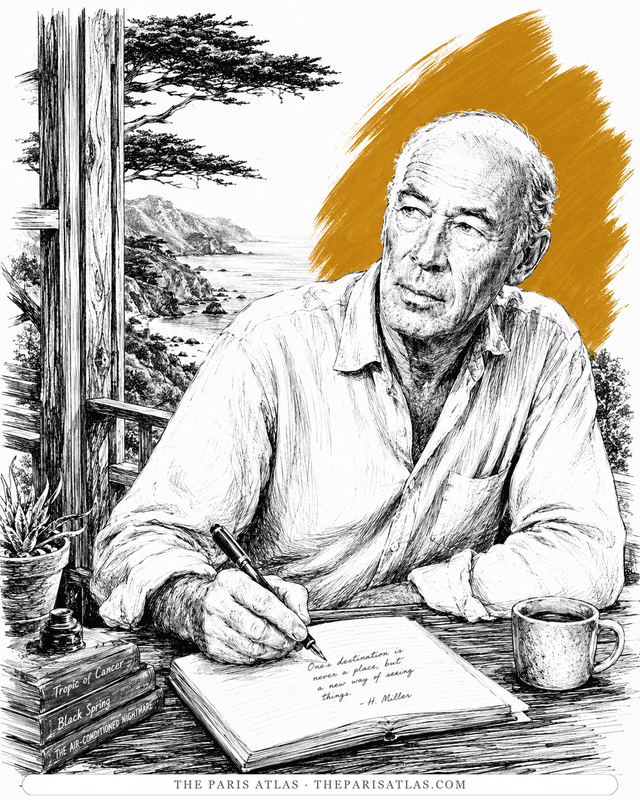
Henry Miller
The Brooklyn dropout who arrived in Paris broke at thirty-eight and wrote the exuberant, banned books that ended American censorship.
View author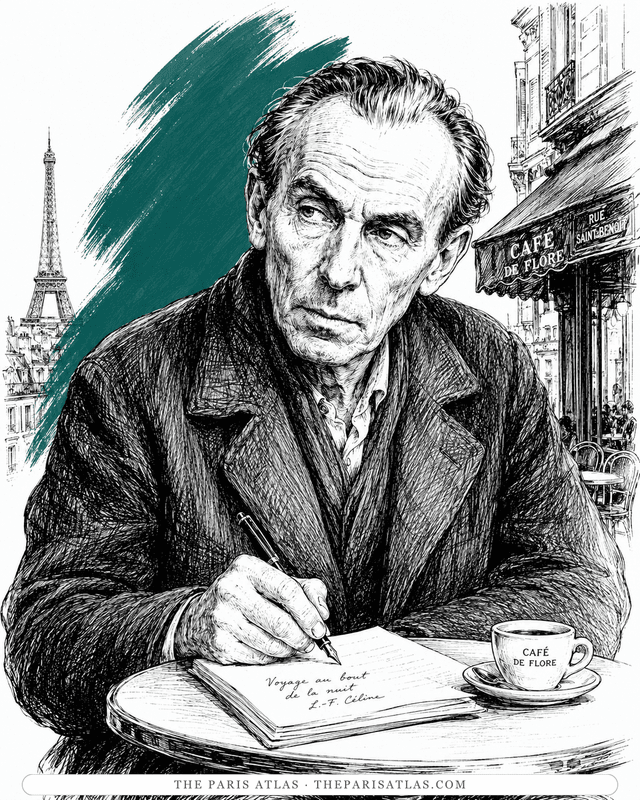
Louis-Ferdinand Céline
The doctor of the Paris slums who wrote the century's blackest, funniest novel — and changed the sound of French prose.
View author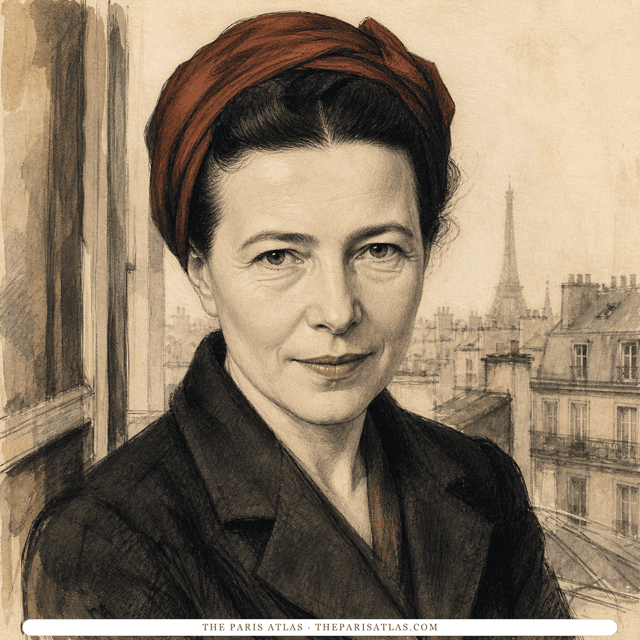
Simone de Beauvoir
French writer and philosopher whose novels, memoirs, and social analysis examined freedom, gender, responsibility, aging, and the material conditions that shape a life.
View author