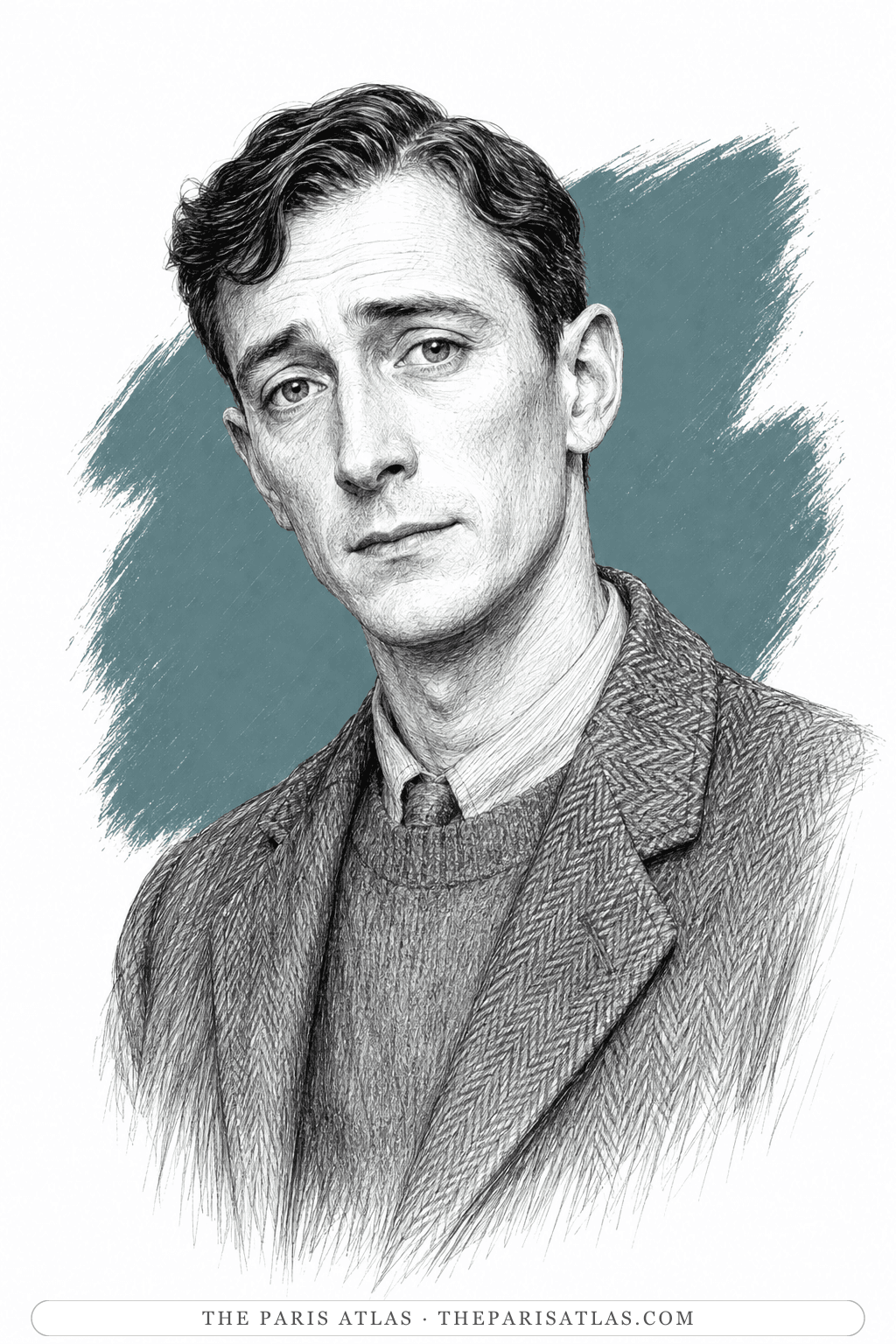
Philip Ravelston
Gordon's rich friend: editor and proprietor of a Socialist monthly called Antichrist, apologising in every moment of his life for the size of his income, and quite unable to say the word expensive out loud.
Not to be rich, or at least not to feel it. He edits an unpopular Socialist monthly at his own expense, wears an old tweed coat to expensive restaurants to show his contempt for upper-class conventions, and thinks about the unemployed in Middlesbrough whenever his own comfort becomes visible to him.
The book

At a glance
- Editor and proprietor of Antichrist, a Socialist monthly; Gordon's closest friend
- A year older than Gordon, and looks much younger
- Lives on about eight hundred a year; after tax it is probably two thousand
- A four-roomed flat in the Regent's Park district, above the magazine's offices
- Hermione Slater, rich, who yawns at Socialism and will not read Antichrist
- Socialist. He has tried for years to convert Gordon and has never once interested him
Who they are in the book
Spoiler-freeThe brass plate on his street door reads P. W. H. RAVELSTON and, under it, ANTICHRIST. He lives on the first floor of a house in the Regent's Park district; the editorial offices of the magazine are downstairs. Antichrist is a middle- to high-brow monthly, Socialist in a vehement but ill-defined way, and it prints practically anything if Ravelston suspects the author is starving. He is a year older than Gordon Comstock and looks much younger: very tall, wide-shouldered, with the lounging grace of an upper-class youth and something permanently apologetic in the way he moves, as though always in the act of stepping out of somebody else's way.
He is rich, and George Orwell makes the wealth the whole substance of the character. Ravelston lives on eight hundred a year and is acutely ashamed of it; his income after tax is probably two thousand. He gives away his time and much of his money, and a tribe of cadgers ranging from poets to pavement artists browses on him unceasingly. He chose Regent's Park because he thinks of it as practically the same thing as living in the slums. Orwell's judgement on the whole project is one line: no rich man ever succeeds in disguising himself as a poor man, for money, like murder, will out.
The friendship runs on rules neither of them states. Gordon announces himself by throwing a pebble at the window rather than set foot in the flat, which makes him feel mean and out of place. They meet in the street or in a pub, never over a meal. Gordon always buys the first round. Both of them have had no dinner and each pretends otherwise, and Ravelston knows that Gordon knows he knows. What Gordon says about being poor embarrasses Ravelston horribly, and he can never contradict it, because how can you argue about poverty with someone who is genuinely poor?
How Philip Ravelston Is Portrayed
- His faceGiven once, at the window in Chapter 5: an over-sensitive, boyish face framed by nice dark-brown hair. He is a year older than Gordon Comstock and looks a good deal younger. It is a pale face that flushes easily, at the bar, at any mention of money, when a restaurant turns round to laugh at them; and under strain it goes pale, harassed and almost hunted.
- How he speaksIn a rather Bloomsbury voice, and deferentially. Orwell notes that he defers even to the opinions of the dead. When he walks into a public bar in a poor district there is a moment's hush and people glance at him, because he is so obviously a gentleman and they do not see his type in there often.
- The gestureHe rubs his nose with the back of his left forefinger whenever he is about to venture an opinion, and again whenever the subject of money comes anywhere near him. It happens perhaps a dozen times in the book, and it is always the tell.
- The clothesAn old tweed coat made by a good tailor and growing more aristocratic as it ages, very loose grey flannels, a grey pullover, much-worn brown shoes. He wears them to fashionable houses on purpose, and does not fully realise that only the upper classes can do that.
- Two double whiskies, pleaseOrdered in a beer house in a poor district, twice, before the landlady tells him they have no spirit licence. He had not known until that moment that some pubs cannot afford one. A navvy at the bar watches the whole thing and smiles under his moustache.
- The words he cannot sayExpensive. Poor. You haven't got any money. He gets as far as "Modigliani's is very—" on the telephone and then cannot finish the sentence. Offering to keep Gordon for a month, he has to say it all in one burst, and his face goes faintly pink.
- MiddlesbroughThe unemployed there, seven in a room on twenty-five bob a week, is the fact he reaches for whenever his own comfort becomes visible to him. He reaches for it in a taxi with Hermione asleep against his chest, and again over the rumpsteak he settles down to with the shameful joy of a dog with a stolen leg of mutton.
- Never firmThe night out ends with two girls on a pavement, and Ravelston has never in his life been firm. Once he has looked them in the face he is lost, and the same instinct that puts his hand in his pocket at the sight of a beggar makes him helpless. He gets through it by working out that he can pay without doing anything.
- The rescueHe is up before dawn looking for Gordon, hangs about the magistrate's court all day, pays the fine before Gordon reaches the door, then takes him home, lends him a razor and clean clothes and goes out to buy him a toothbrush.
- What the charity doesNothing could have exceeded his delicacy: he never once admits that Gordon is sponging on him, and calls the money a loan between friends. It ruins the friendship anyway. Orwell's summary is three words — charity kills friendship.
He pays the five-pound fine, settles the arrears of rent, fetches the two cardboard suitcases and keeps Gordon at the flat for a week that neither of them can stand.
If you like Keep the Aspidistra Flying


If you like George Orwell
Explore authors with a similar voice, perspective, and influence.

Henry Miller
The Brooklyn dropout who arrived in Paris broke at thirty-eight and wrote the exuberant, banned books that ended American censorship.
View author
Louis-Ferdinand Céline
The doctor of the Paris slums who wrote the century's blackest, funniest novel — and changed the sound of French prose.
View author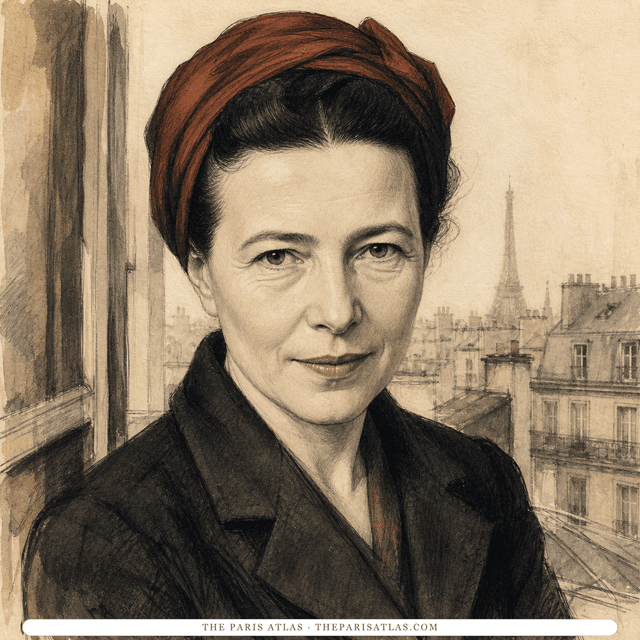
Simone de Beauvoir
French writer and philosopher whose novels, memoirs, and social analysis examined freedom, gender, responsibility, aging, and the material conditions that shape a life.
View author