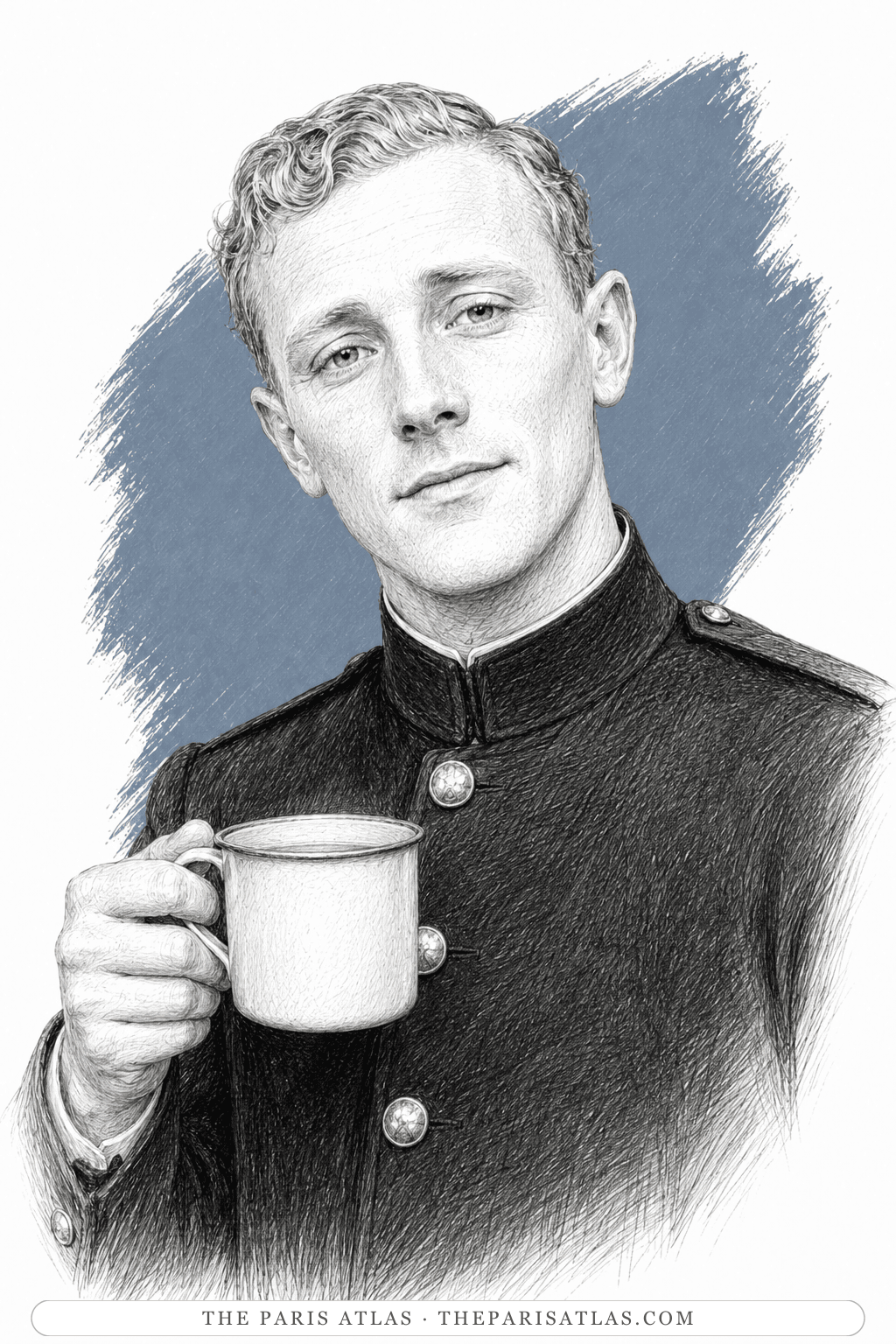
The police constable
The young officer at the police station after Gordon Comstock's arrest: a solid rosy man of about twenty-five with a kind face, white eyelashes and a chest that reminds Gordon of a carthorse's. He brings tea, tells Gordon he was not half bad last night, advises him to plead guilty and say he will not do it again, and takes his tie away because they had a bloke hang himself with one once. George Orwell says his gentleness was astonishing, and that he handled Gordon almost like a nurse handling a child.
To get his prisoner cleaned up and into court in a fit state. He works at it steadily for a morning.
The book

At a glance
- The constable on duty in the cells after Gordon's arrest; never named
- About twenty-five
- Drunk and disorderly, after Gordon hit the desk sergeant
- Five pounds or fourteen days, before a magistrate named Mr Groom
- Chapter 9, the morning after the night out
Who they are in the book
Spoiler-freeThis is the young policeman on duty at the station where Gordon Comstock wakes up in a cell. Gordon is the poet whose year is followed in Keep the Aspidistra Flying, the novel George Orwell published in 1936, and he has come into money for the first time in years and spent a night drinking it. He has been charged with being drunk and disorderly, and he does not remember most of the evening.
The constable is never named. Orwell describes him as a solid rosy young man of about twenty-five, with a kind face, white eyelashes and a chest so big it makes Gordon think of a carthorse. He speaks in a good accent with rough turns of phrase, and he treats a hungover prisoner as a normal thing that happens on a Tuesday.
Everyone else who is kind to Gordon in the book has a reason to be: his sister, his girlfriend, his rich friend, his old employer. The constable has no reason at all. He has never met Gordon, will never see him again, and spends a morning looking after him anyway.
How The police constable Is Portrayed
- The cup of tea"'Ja do with a cup of tea?" is the first thing Gordon hears. It comes through a hatch in the top of the cell door in a thick white mug, and it has sugar in it. Gordon knows sugar will make him ill, drinks it anyway because it is warm, and brings it back up in the passage twenty minutes later.
- How he explains the charge"You weren't half bad last night." Gordon has hit the desk sergeant, which he does not remember. The constable acts out the sergeant's reaction, holding his own ear: if that man wasn't too drunk to stand, I'd knock his block off. The charge sheet says drunk and disorderly. Without the punch it would only have said drunk and incapable.
- The forecast"Five quid or fourteen days. You'll go up before Mr Groom. Lucky for you it wasn't Mr Walker. He'd give you a month without the option, Mr Walker would. Very severe on the drunks he is. Teetotaller." Five pounds is two and a half weeks of the wages Gordon has been living on.
- The washingGordon collapses in the corridor and is sick over the constable's arm while the sergeant watches from the far end and calls him a dirty little tyke. The constable says come on, old chap, half carries him to a big stone sink, helps him strip to the waist, and hands him a torn towel. Orwell writes that his gentleness was astonishing, and that he handled Gordon almost the way a nurse handles a child.
- The advice"When you go up to the court, you plead guilty and say you won't do it again. Mr Groom won't be hard on you." Nobody has asked him for it and he gets nothing for giving it.
- The collar and tieGordon asks where they are. They were taken off him the night before and will be given back before court. The reason is given without any softening: they had a bloke hang himself with his tie once.
If you like Keep the Aspidistra Flying


If you like George Orwell
Explore authors with a similar voice, perspective, and influence.

Henry Miller
The Brooklyn dropout who arrived in Paris broke at thirty-eight and wrote the exuberant, banned books that ended American censorship.
View author
Louis-Ferdinand Céline
The doctor of the Paris slums who wrote the century's blackest, funniest novel — and changed the sound of French prose.
View author
Simone de Beauvoir
French writer and philosopher whose novels, memoirs, and social analysis examined freedom, gender, responsibility, aging, and the material conditions that shape a life.
View author