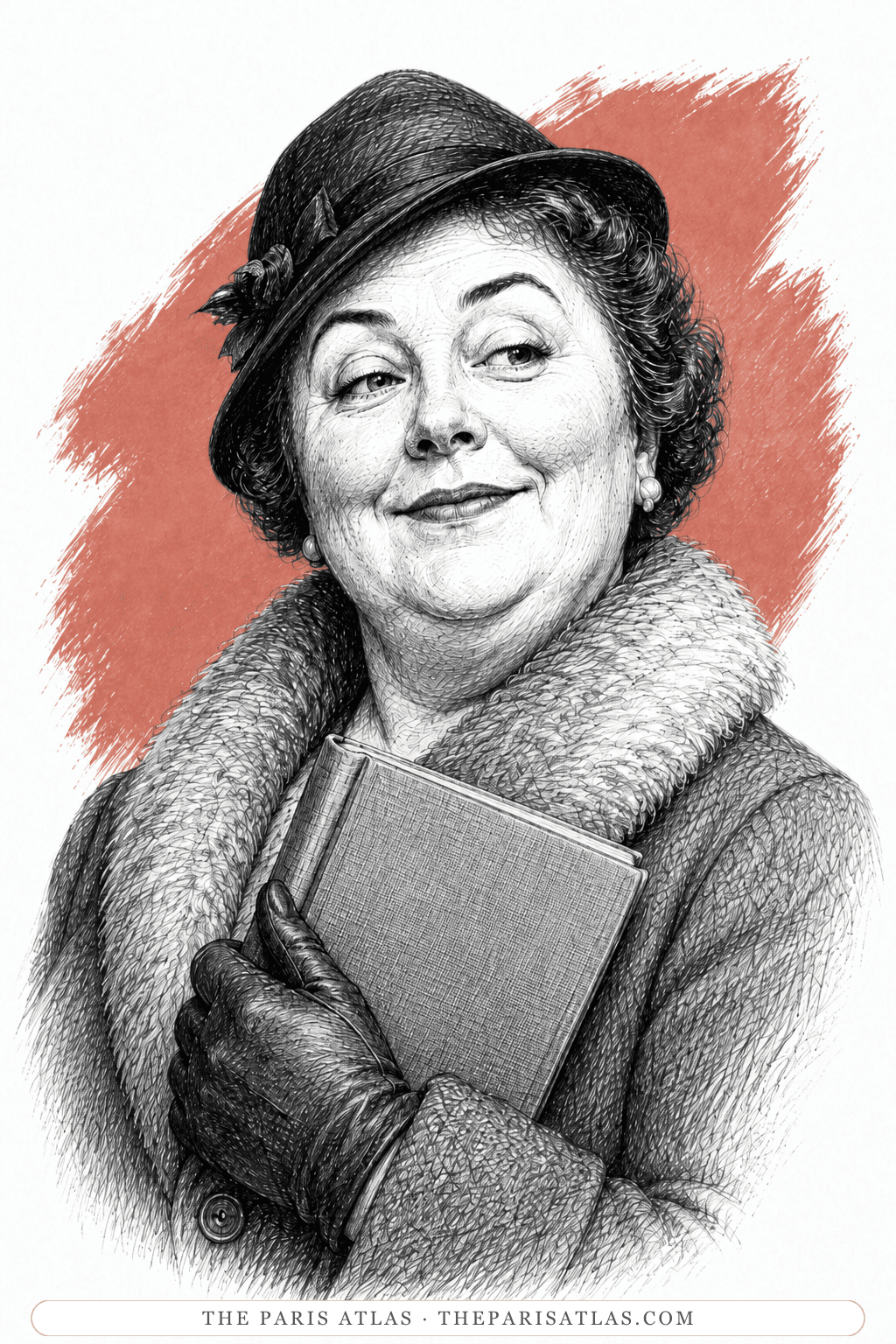
Mrs Penn
A regular at the twopenny lending library: a plump little sparrow of a woman, red-cheeked and middle-middle class, who carries The Forsyte Saga title outwards and calls Gordon Comstock Mister Comstock although he is a shopwalker. She signals highbrow irony with her eye, winces at the mention of Burroughs, and turns her back markedly on the other customer in the shop.
To be taken for a serious reader. She carries her book with the title turned outwards, tells Gordon she has read The Forsyte Saga four times, and calls it an epic.
The book

At a glance
- A regular subscriber at the twopenny lending library in Gordon's shop
- Middle-middle class, in George Orwell's phrase
- John Galsworthy first, Hugh Walpole second, J. B. Priestley approved
- Twopence a book, no deposit
- Chapter 1, one November afternoon in the shop
Who they are in the book
Spoiler-freeMrs Penn borrows novels from the lending library at the back of the second-hand bookshop where Gordon Comstock works. Gordon Comstock is the main character of Keep the Aspidistra Flying, the novel George Orwell published in 1936, and he is a poet who has taken a badly paid job selling books in London. The library is the cheap end of the shop: eight hundred novels on three walls, arranged alphabetically, twopence to borrow one and no deposit asked.
She comes in on the afternoon the novel opens, the thirtieth of November. George Orwell describes her as a plump little sparrow of a woman, red-cheeked and middle-middle class, and she hops in behind Mrs Weaver, the other customer of the moment. Under her arm is a copy of The Forsyte Saga, John Galsworthy's sequence of novels about a wealthy English family, carried with the title facing outwards so that people in the street can see what she reads.
What she is really after in the shop is the pleasure of being one of the two serious readers in the room. She calls Gordon Mister Comstock, which is more respect than a shop assistant would usually be shown, and she stops for a literary conversation every visit. Orwell describes the two of them as members of a private society with a secret handshake. Gordon plays along and despises the whole performance, because she is a good steady customer and he is being paid two pounds a week.
How Mrs Penn Is Portrayed
- The book held title outwardsShe arrives carrying The Forsyte Saga so that passers-by can see the cover. It is the fourth time she has read it. "What a perfectly MARVELLOUS achievement that book is, Mr Comstock!" she says. "An epic, a real epic!"
- The same words for every writer she likesGalsworthy is big, broad, universal, thoroughly English in spirit and human, and his books are real human documents. Hugh Walpole is a really great writer, second only to Galsworthy, and also big, and human with it. She puts the emphasis on a word in almost every sentence. Gordon offers J. B. Priestley back to her in the same vocabulary and she agrees at once.
- How she treats the other borrowerMrs Weaver, the other customer in the library with her, mentions that her son-in-law is keen on Burroughs. A spasm passes over Mrs Penn's face and she turns her back on her, markedly, and goes on talking to Gordon about Galsworthy.
- The signals over the head of the woman next to herMrs Weaver drops a much-thumbed copy of an Ethel M. Dell romance on the shop floor. Mrs Penn's eye lights on it and she smiles up at Gordon behind Mrs Weaver's back, one educated person to another. Later, when Gordon says of Mrs Weaver's choice that it is certainly astonishingly popular, Mrs Penn echoes the word back to him with heavy irony, her eye on his.
- What she takes homeShe feels in the mood this week for something epic, something big, so she leaves with Hugh Walpole's Rogue Herries and pays her twopence at the counter like everybody else.
If you like Keep the Aspidistra Flying


If you like George Orwell
Explore authors with a similar voice, perspective, and influence.

Henry Miller
The Brooklyn dropout who arrived in Paris broke at thirty-eight and wrote the exuberant, banned books that ended American censorship.
View author
Louis-Ferdinand Céline
The doctor of the Paris slums who wrote the century's blackest, funniest novel — and changed the sound of French prose.
View author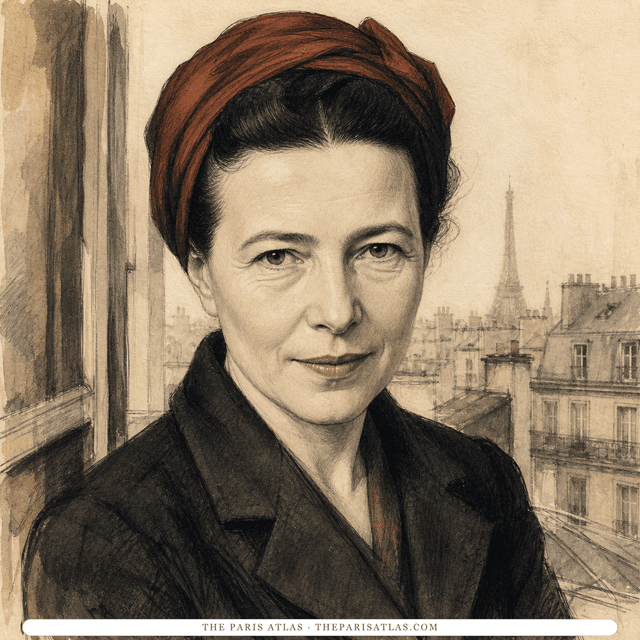
Simone de Beauvoir
French writer and philosopher whose novels, memoirs, and social analysis examined freedom, gender, responsibility, aging, and the material conditions that shape a life.
View author