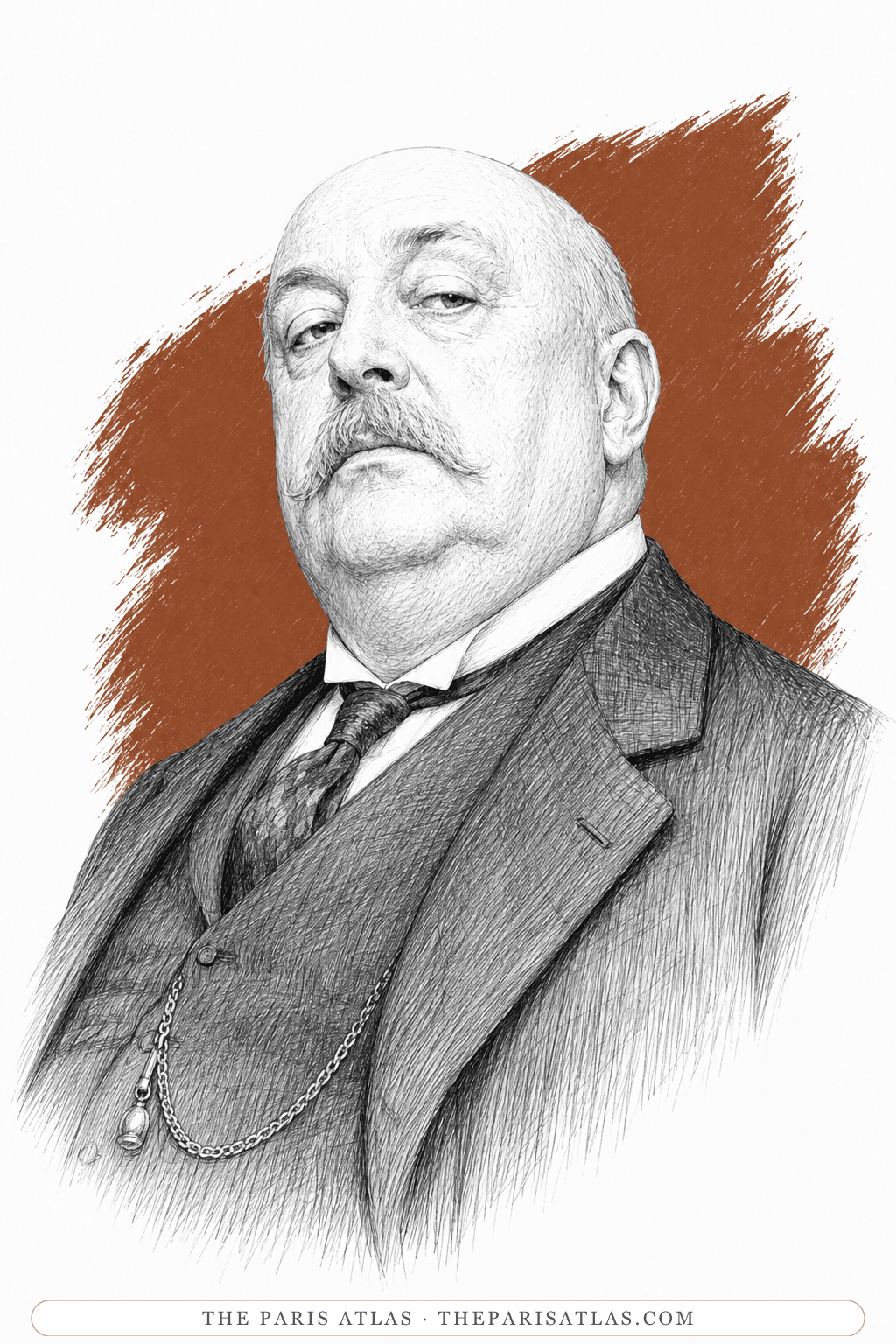
Uncle Walter
Gordon's uncle, sixty-seven, living in a cheap boarding house on perhaps three pounds a week from short-lived 'agencies' and the last of his inheritance. His one inexhaustible subject is his diseases.
An audience for his symptoms. He suffers, by his own account, from every disease in the medical dictionary, and Orwell says he is never weary of talking about them.
The book

At a glance
- Gordon's uncle, and the family's one contact in the business world
- Sixty-seven
- Perhaps three pounds a week, from short-lived 'agencies' and what is left of a five-thousand-pound inheritance
- A tiny cabin of a room off Cursitor Street
- A cheap boarding house in Holland Park
- Chapter 3; by letter in the later chapters
Who they are in the book
Spoiler-freeWalter Comstock is the uncle of Gordon Comstock, the London bookshop assistant whose year the novel follows, and the nearest thing the family has to a business connection. He is sixty-seven. He works from a tiny cabin of an office off Cursitor Street, lives in a cheap boarding house in Holland Park, and makes perhaps three pounds a week out of short-lived 'agencies' for this and that and the remains of the five thousand pounds he inherited.
George Orwell describes him once, in Chapter 3, in a single long sentence, and every clause of it is a separate feature: a large tremulous belly, a bronchitic voice, a broad, pale, timidly pompous face compared to Sargent's portrait of Henry James, an entirely hairless head, pale pouchy eyes, and an ever-drooping moustache to which he tries vainly to give an upward twirl. The conclusion the sentence is built towards is that you find it totally impossible to believe he had ever been young.
He acts twice in the family history, and after that he is only a correspondent. When Gordon leaves school it is Uncle Walter, fat and interfering, who produces a friend of a friend who can get him a 'good' job in the accounts department of a red lead firm. Gordon refuses it, his mother collapses at the supper table, and he takes the job after all. Years later, out of work after her death, he applies to his uncle again and gets nothing: the old man's influence in the business world, never large, is by then practically nil.
How Uncle Walter Is Portrayed
- The faceBroad, pale and timidly pompous, which Orwell compares to Sargent's portrait of Henry James. Above it an entirely hairless head, and in it a pair of pale, pouchy eyes.
- The moustacheEver-drooping, and he tries, vainly, to give it an upward twirl. It is the only thing the description shows him doing.
- The belly and the voiceA large tremulous belly and a bronchitic voice. Earlier in the same chapter he is simply "fat interfering Uncle Walter".
- Impossible to believe he was ever youngOrwell tests the claim by asking. Had he ever climbed a tree, taken a header off a springboard, or been in love? Had he ever had a brain in working order? The most that is allowed him is a few furtive half-hearted frolics back in the early nineties, and after that business failure and boarding houses.
- The diseasesHis one hobby of never-failing interest, and the thing he is never weary of talking about. The last family news the novel gives of him is that he is complaining of bladder trouble.
- The boarding-house drawing roomGordon has been there. Ageing, discoloured people sit about in couples all over the darkish room discussing symptoms, and Orwell compares the talk to the dripping of stalactite to stalagmite: how is your lumbago, and I find my Kruschen Salts are doing me good.
- The lettersWhen Gordon has cut himself off from everyone, his uncle keeps writing. Gordon's word for what the letters do is bleating, and he does not answer them.
If you like Keep the Aspidistra Flying


If you like George Orwell
Explore authors with a similar voice, perspective, and influence.

Henry Miller
The Brooklyn dropout who arrived in Paris broke at thirty-eight and wrote the exuberant, banned books that ended American censorship.
View author
Louis-Ferdinand Céline
The doctor of the Paris slums who wrote the century's blackest, funniest novel — and changed the sound of French prose.
View author
Simone de Beauvoir
French writer and philosopher whose novels, memoirs, and social analysis examined freedom, gender, responsibility, aging, and the material conditions that shape a life.
View author